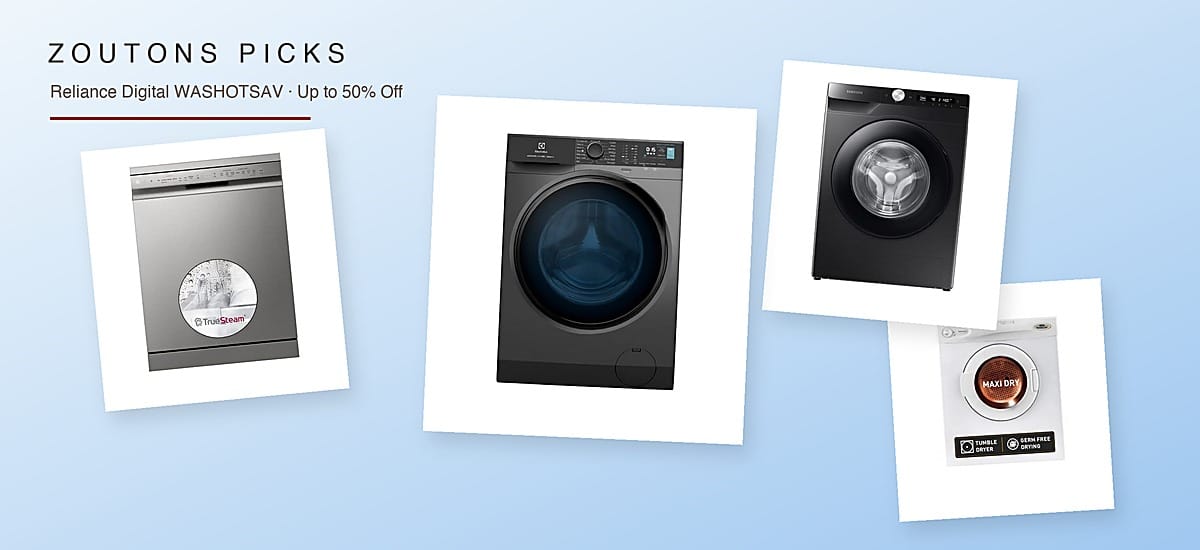
Reliance Digital's homepage this week belongs to WASHOTSAV — a monsoon laundry event powered by LG and co-powered by Bosch, Haier, IFB and Godrej, advertising up to 50% off washing machines, dryers and dishwashers with up to 20% cashback on leading bank cards. We swept the live racks on July 23, 2026 and kept 20 machines that earn a slot: an Electrolux 10kg front-loader at 46% off (the event's genuine headline), Samsung's AI Wi-Fi front load, a 14-place Kelvinator dishwasher at 42%, the IFB tumble dryer that solves August outright, and the German dishwasher ladder priced honestly. The RD750 code and the bank cashback stack on top. Roles, not rankings: biggest cut, the monsoon essential, cheapest thrill.
Lenovo India's own deals page carried a Freedom Sale heading when we read it on 18 August 2026, and our homepage sweep the same morning recorded the sale running to 24 August. Ten deals came back with both a selling price and a higher list price: eight laptops and two tablets, from Rs. 28,999 for an Idea Tab with a pen in the box to Rs. 1,26,990 for a Core Ultra 5 Yoga Slim 7i. The badges run from 12 to 52 per cent, and that spread is explained by list prices from Rs. 86,490 to Rs. 1,89,991 rather than by how good any deal is - the Lenovo V15 and the IdeaPad Slim 3 sit at an identical Rs. 65,990 while showing 52 and 23 per cent off. Four things sit alongside the price cuts on Lenovo's page: FLAT Rs. 1,000 and FLAT Rs. 2,000 Freedom Sale cashback markers, an exchange offer, accessory offers from Rs. 499, and an extra 10% off sitewide for verified corporate employees - which on a Rs. 99,991 ThinkPad is the largest lever here.
We read Amazon's own search results across four charger and power-bank queries on 18 August 2026 and got 47 unique non-sponsored listings with a price; 25 are wall chargers under Rs. 2,000 and all 25 are seated here. Every one of them is rated at either 45W or 65W, and they run from Rs. 329 to Rs. 1,899 - a 5.8 times spread across two figures that differ by twenty watts. One pair makes the point: the same seller lists a 45W adapter at Rs. 377 and its 65W at Rs. 378, both claiming 81 per cent off a stated Rs. 1,999. That Rs. 1,999 figure appears on seven separate listings priced from Rs. 377 to Rs. 1,899, producing badges from 81 per cent down to five. What does move with price is the port count - single-port bricks from Rs. 329, dual-port from Rs. 660, triple-port from Rs. 1,218 - and whether a recognised brand stands behind the box. The best-evidenced listing in the read is not the dearest: it is an unbranded 65W combo at Rs. 649 with 6,813 reviews at 4.4.
We read Croma's own catalogue across three television queries on 18 August 2026 - 66 unique models with a price and a stated MRP, running as high as Rs. 141,990 - and seated the 21 under Rs. 30,000. The pattern is that the specification does not track the price. Two Croma 43-inch sets sit at exactly Rs. 19,990: one is 4K Ultra HD on Google TV, the other Full HD on Croma's own Coolita platform. Four thousand rupees above them, another Croma 43-inch at Rs. 23,990 is also only Full HD, and it carries the smallest discount badge in the read at four per cent. At 32 inches the same thing happens: a TCL at Rs. 16,990 is Full HD while a Croma at the same price is HD Ready. The other finding is how little evidence this aisle carries - the rating counts run from zero to 37, so the panel line and BEE star rating are the only things worth reading. The most sensible row on the page is the Rs. 19,990 4K Google TV, which costs Rs. 1,600 more than the dearest 32-inch set here.
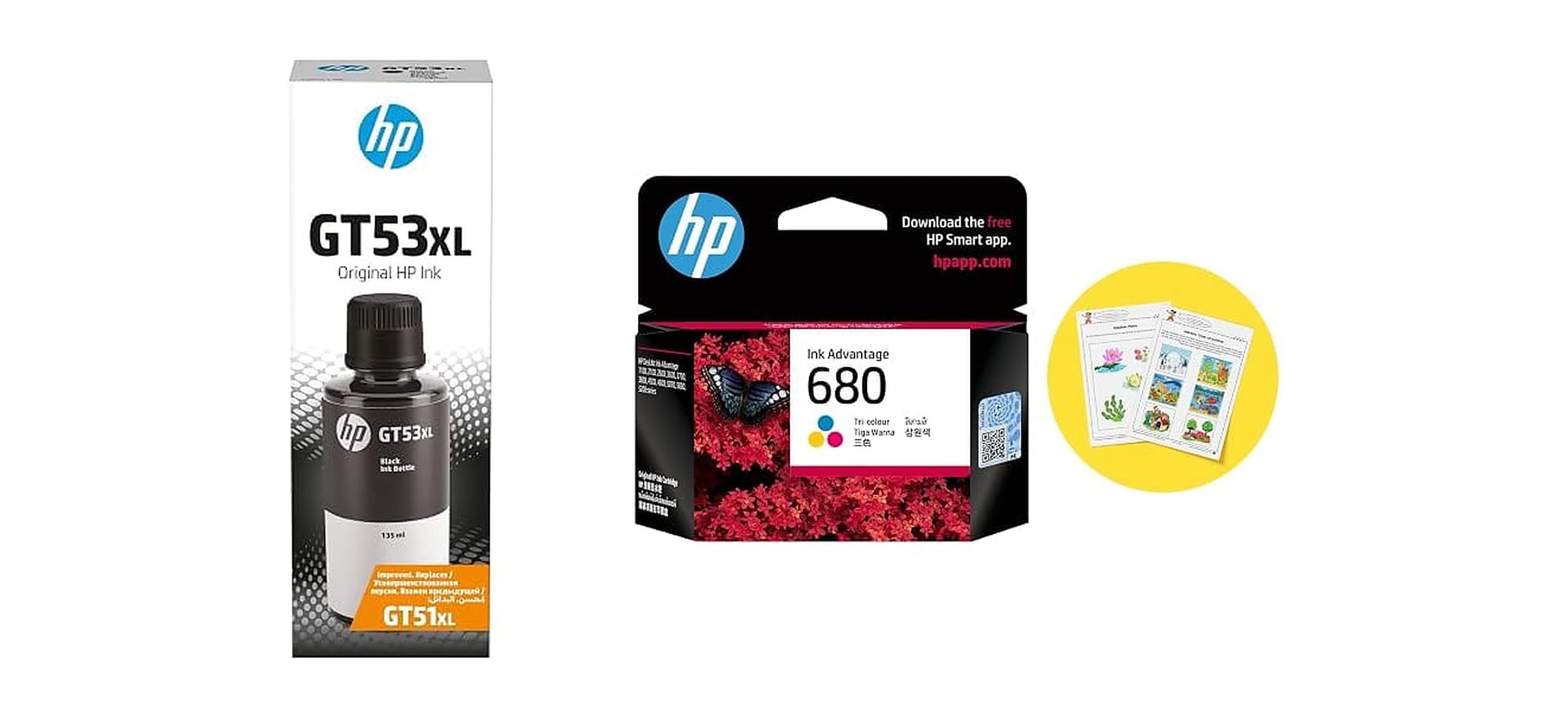
We read Amazon's own search results across six printer and ink queries on 18 August 2026 and got 85 unique non-sponsored listings with a price; 45 are under Rs. 1,100 and 20 are seated here. The pattern is clean enough to shop by. Manufacturer ink - Canon, HP and Brother - is discounted between 0 and 12 per cent and carries between 2,347 and 12,149 reviews per listing: HP's 805 cartridge is one rupee off its stated Rs. 829, HP's 680 tri-colour is 1 per cent off with the largest crowd in the read, and Brother's own bottle is 3 per cent off. Third-party compatibles are discounted between 50 and 89 per cent and their review counts run from 15 upward: one toner claims 89 per cent off a stated Rs. 3,999 on 87 reviews, while two sellers list the same 88A toner five rupees apart with badges six points apart. The row that settles it sits at Rs. 549, where amazon basics' Canon-compatible refill costs exactly what Canon's own bottle costs.
We read Vijay Sales' own television catalogue on 18 August 2026 - 27 models, from a SANSUI 32-inch QLED at Rs. 13,490 to a Sony BRAVIA 7 II 55-inch at Rs. 2,09,392 - and then checked every one of them against the 66 televisions we read from Croma the same day. On the national brands the two chains are not competing: four models appear in both catalogues at identical prices to the rupee, including a TCL 32-inch Full HD QLED at Rs. 16,990 and a Sony BRAVIA 2 43-inch at Rs. 47,990, while an LG NanoCell 55-inch differs by Rs. 100 and a Sony BRAVIA 2 55-inch by Rs. 500. Where the chains genuinely differ is their own labels. VISE by Vijay Sales carries the three deepest badges in either read - 46, 48 and 53 per cent off stated MRPs of Rs. 42,000 to Rs. 90,000 - and its 43-inch Full HD set at Rs. 25,990 sits six thousand rupees above Croma's own 43-inch 4K set at Rs. 19,990. The 43-inch shelf is where resolution changes: Full HD at Rs. 21,990 to Rs. 26,990, and 4K from Rs. 29,990.
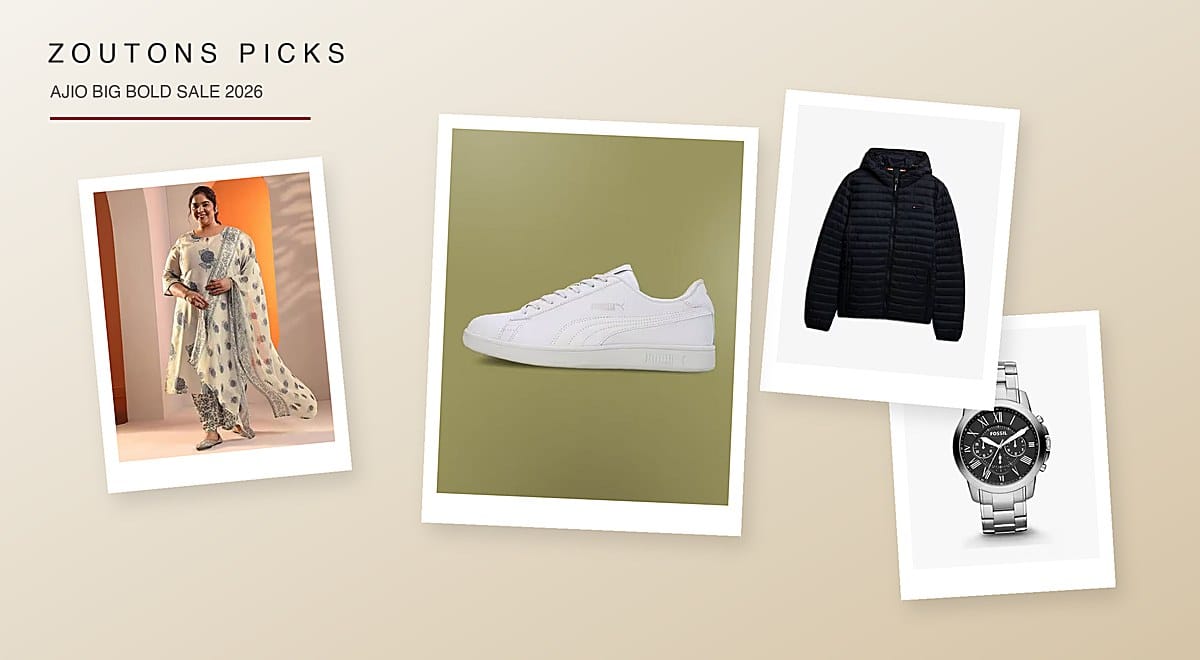
AJIO's Big Bold Sale banner promises 50-90% off, and for once the checkout numbers back the poster: we pulled live prices from ajio.com on July 25, 2026 and verified cuts from 50% (Nike, GAP, Crocs, Tommy Hilfiger) to a genuine 86% (Red Tape sneakers at Rs. 896). This edition of Zoutons Picks walks the four walls of the sale — sneakers, the men's wardrobe, the women's ethnic edit, and the accessories corner — in 21 verified listings: an Adidas Grand Court at Rs. 1,980, Levi's 512 at Rs. 900, a complete Libas kurta set at Rs. 986 three weeks before Rakhi, and the July trick nobody uses: a Superdry puffer at half price while it's raining. Every pick carries its checkout price, MRP and discount as scraped from the listing, plus the season logic for buying it now.
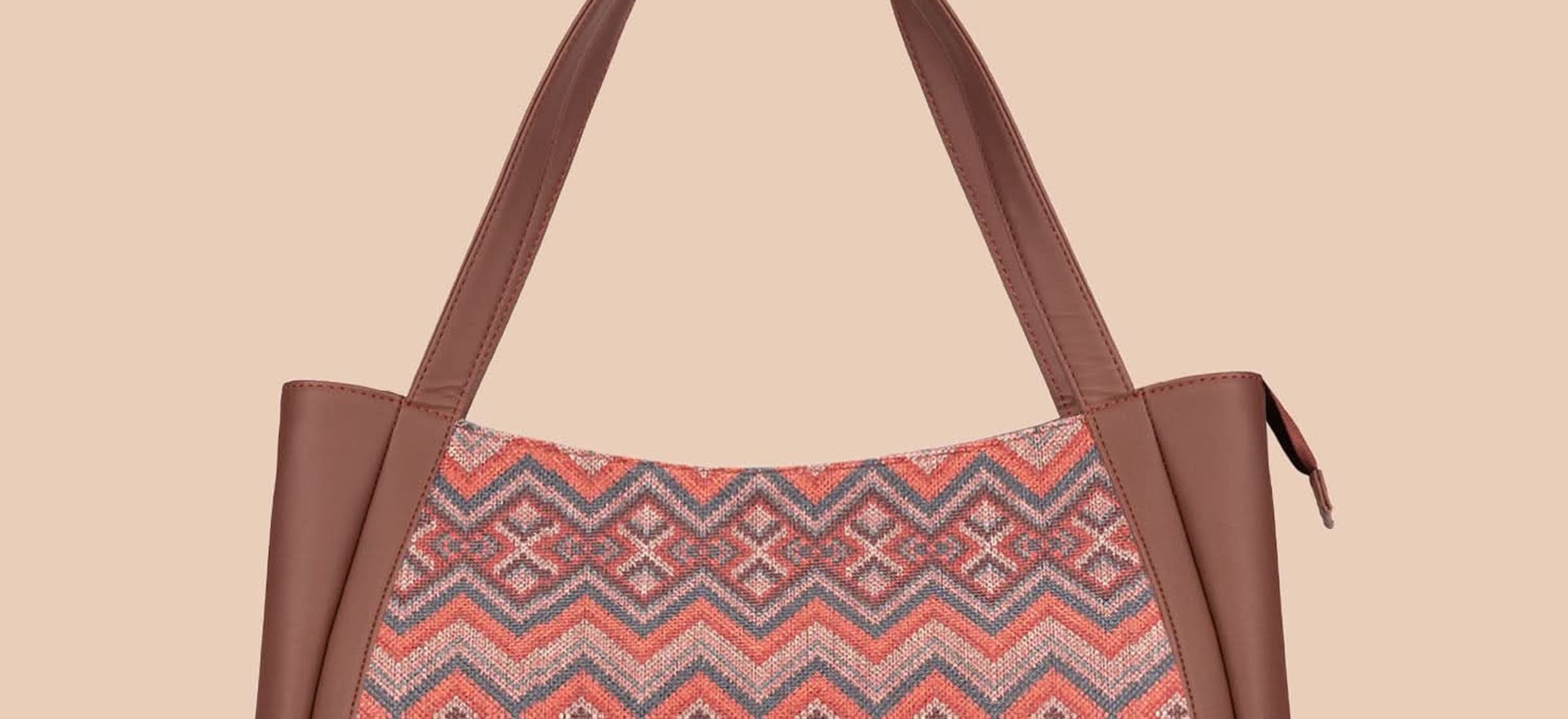
We read Myntra's own listing data across three pages of women's handbags and one of wallets on 18 August 2026 - 64 listings with a price and a stated MRP - and seated 24 under Rs. 2,000. The pattern is not about the bags. Five listings carry no discount whatsoever: WALKWAY by Metro at Rs. 599, TURBOMAX at Rs. 999, Anouk at Rs. 1,499, Nike's Heritage tote at Rs. 1,995 and H&M's crossbody bucket bag at Rs. 1,999 are each priced at exactly their stated MRP. In the same read, a Mast & Harbour tote sells at Rs. 629 claiming 82 per cent off Rs. 3,499, and a ROSS BROWN satchel at Rs. 675 claiming 83 per cent off Rs. 3,999 - both stated MRPs higher than what Nike actually charges. The evidence sits elsewhere: 11,765 ratings on a Rs. 497 sling, 9,710 on a Rs. 899 Lavie tote and 7,492 on that Rs. 629 tote, while six listings carry no rating at all. Sort by price and crowd and this aisle is legible; sort by badge and it is noise.
We read AJIO's own catalogue across three queries - kurta, kurta set and kurti - on 18 August 2026, took the 189 unique listings that came back with a price and an MRP, and seated 23 under Rs. 1,000. The prices are real and they range ten-fold, from a Rs. 90 floral kurta to a Rs. 927 embroidered set. The MRPs range thirty-fold and describe nothing at all. Seven listings state exactly Rs. 4,345 - and they belong to three unrelated labels, GOSRIKI, SVARAA and AAGHNYA FASHION. Six more state exactly Rs. 4,596, across two brands. Seven state Rs. 1,999, across six. Against that, the chains price like shops: V-MART's cotton kurta is Rs. 191 at four per cent off Rs. 199, MAX runs 10 to 20 per cent off Rs. 499 to Rs. 699, and Reliance's AVAASA and YOUSTA sit at 20 to 49 per cent off Rs. 399 to Rs. 599. Both systems deliver garments between Rs. 300 and Rs. 950. The only genuine price step we could find is the garment count: about Rs. 80 to Rs. 150 for each extra piece.
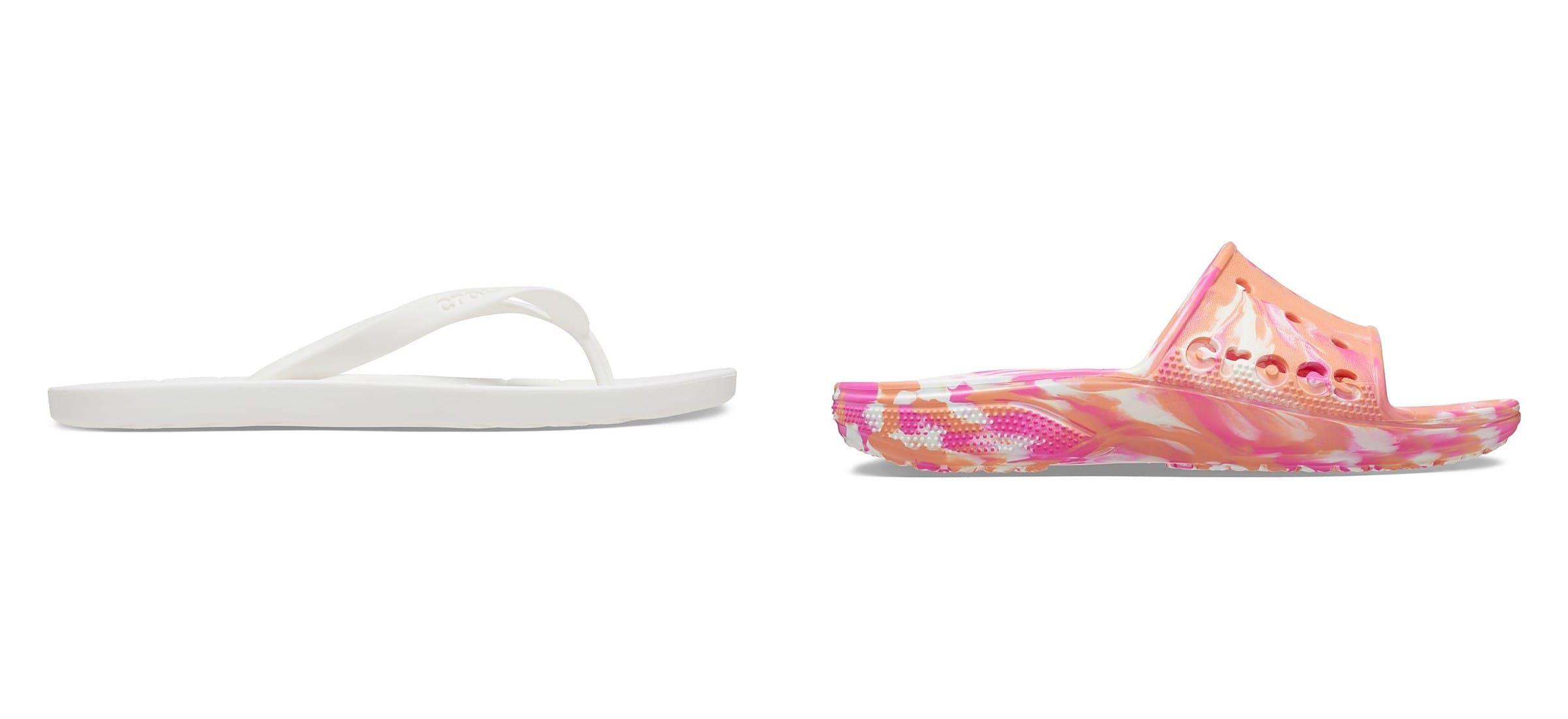
We read crocs.in's own catalogue on 18 August 2026 across seven category paths - the two sale shelves, clogs, sandals, slides, flip-flops and kids - and got 109 listings carrying a price and a higher MRP. Twenty of them are under Rs. 2,000, and all twenty are seated here. The finding that decides whether this page is for you: under Rs. 2,000 Crocs India sells no clog at all. The cheapest clog in the whole read is a Rs. 2,097 toddler Baya, and the cheapest adult clog is Rs. 3,497 - three and a half times the Rs. 1,017 floor. Everything under Rs. 2,000 is an open shoe. Below that line the catalogue uses exactly four prices - Rs. 1,017, Rs. 1,317, Rs. 1,797 and Rs. 1,947 - and fourteen of the twenty share one identical stated MRP of Rs. 2,995, which is why the badge only ever reads 40 or 35 per cent. Colourways are priced identically, a platform sole costs the same as a flat one, and eighteen of the twenty listings carry no rating at all.
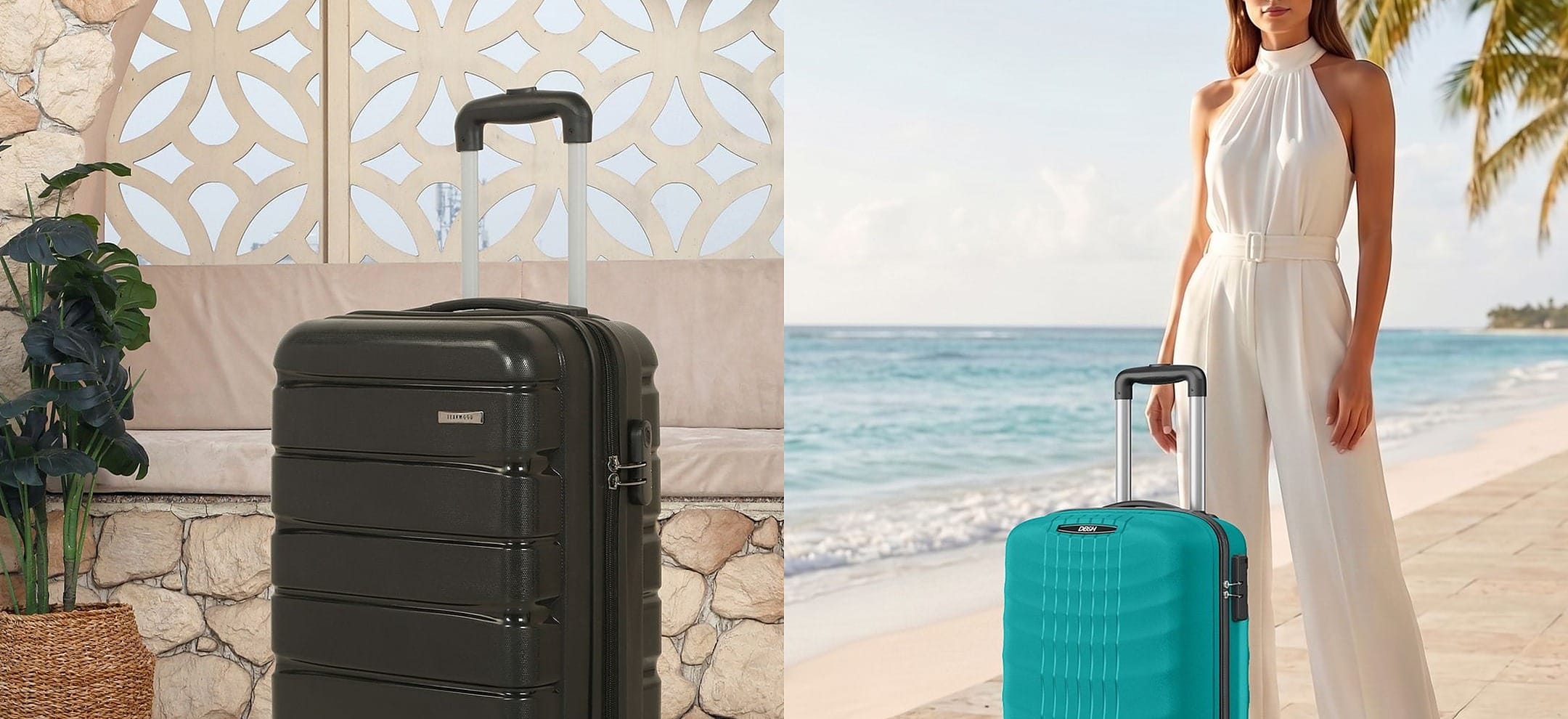
We read Myntra's own listing data across four paths - trolley bags, luggage and trolley bags, laptop bags and duffel bags - on 18 August 2026, and got 128 listings carrying a price and a higher MRP. Sixty are under Rs. 2,000 and twenty are seated here. The badge on this wall runs from 20 to 87 per cent and it sorts by brand rather than by value: Teakwood Leathers' median discount across the read is 86 per cent, ZOUK's 85, Aristocrat's and Safari's 82, against Fastrack at 34, Puma and MANGO at 35 and CULT at 28. The luggage houses print four- and five-figure MRPs on bags selling under Rs. 2,000; the accessory brands price close to their MRP. What is unusually solid here is the evidence: 102 of the 128 listings carry a rating with a count, and the cheapest hard-sided cabin trolley on the page - Rs. 1,149, 360-degree wheels, 86 per cent off a stated Rs. 8,199 - has been rated by 12,145 people. That trolley costs less than the Rs. 1,554 laptop sleeve on the same page.
GoDaddy India advertises web hosting from Rs. 89 a month, and we read the four shared-hosting plans off GoDaddy's own en-in pricing page on 18 August 2026 to find out what that means. Every advertised price is a first-term rate on a three-year plan - the cards say 'For first 3-yr term' - so the Rs. 89 rate is Rs. 3,204 paid up front for 36 months, and the struck-through figure beside it is the standard rate the plan moves to afterwards. Starter is Rs. 89 then Rs. 299, Economy Rs. 219 then Rs. 599, Deluxe Rs. 329 then Rs. 849, and Ultimate Rs. 399 then Rs. 1,099. The plan with the largest badge has the steepest increase: Starter's 'Save 70%' is the same fact as it costing 3.4 times more in year four, while Deluxe's smaller 61 per cent badge comes with the gentlest step at 2.6 times. Starter and Economy both host one website; Deluxe is the first plan with more, at ten sites, 50 GB and unlimited SSL.
We read both brands' own Indian pricing pages on 18 August 2026 - four shared-hosting plans each - and the comparison is closer than the advertised prices suggest. Hostinger starts at Rs. 69 a month and GoDaddy at Rs. 89, but both are first-term rates: Hostinger's needs a 48-month commitment costing Rs. 3,312 up front, GoDaddy's a 36-month one costing Rs. 3,204 - so GoDaddy is the smaller cheque and the shorter lock-in. At renewal the two are ten rupees apart, Rs. 289 against Rs. 299 a month. What genuinely separates them is the entry plan's contents: Hostinger's Single lists a free domain, weekly backups and a CDN, while GoDaddy's Starter includes no domain, no email and no SSL, which begin at its Rs. 219 Economy plan. On multi-site plans Hostinger's Rs. 249 Unlimited tier beats GoDaddy's Rs. 329 Deluxe on both price and site count. One caveat on every figure: Hostinger's page states its prices exclude GST, and GoDaddy's cards do not say either way.
Fragrance is the most blind-bought category in beauty, which makes review volume the only spec that matters — and Nykaa's perfume wall carries crowds no other Indian platform can match. We swept it live on July 23, 2026 and re-verified every price on August 11: 16 picks with real ratings behind them, including the Moi discovery combo with 7.3 lakh ratings at 30% off, a Rs. 173 EDP with 94,000 reviews, Skinn's counter classics and an under-Rs. 250 rack for pocket-money buyers. The refresh overturned the original finding: Nykaa has pulled its house labels back to 10-35%, and the deepest cuts on the wall now belong to Bella Vita at 41-47%. Roles, not rankings: best overall, cheapest thrill, the date-night bottle.
MuscleBlaze is running its Birthday Sale from 18 to 22 August 2026, and the dates and prices are printed on the brand's own homepage creatives, which we read on the morning the sale opened. Six products carry a named sale price: CRE-AMP creatine 320 g at Rs. 749 against a stated Rs. 1,349, Yeast Protein 1 kg at Rs. 2,099 with a stated 24-hour limit, 2 kg of Biozyme Performance Whey at Rs. 6,499 with a free shaker, WrathX pre-workout at Rs. 1,599, Liquid L-Carnitine Pro at Rs. 1,299 and MB Fit High Protein Oats 2 kg at Rs. 979 - all with an extra 5% MB Cash stated on prepaid orders only, alongside 5% instant discount on RBL Bank credit cards and up to Rs. 200 cashback via MobiKwik UPI. Separately we read eighteen MuscleBlaze product pages the same morning: a pound of powder costs anywhere from Rs. 417 to Rs. 2,700 depending almost entirely on pack size, and the two 0.37 lb travel packs are the most expensive protein per pound in the store.