Tata CLiQ Cookware Deals August 2026: Tawa and Kadhai by Metal
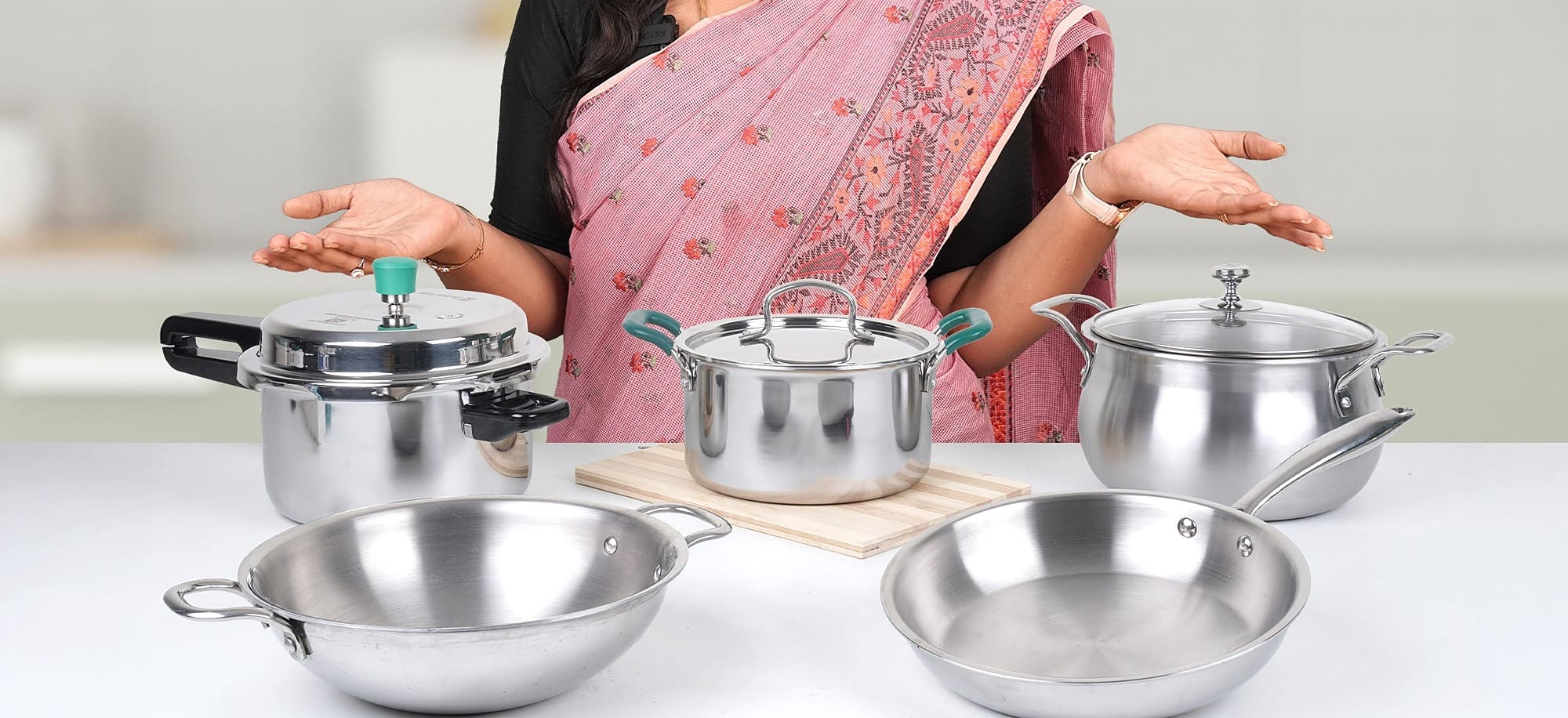
Eighty Tata CLiQ cookware listings read on August 6 and grouped by object, not by price. A tawa spans Rs. 749 to Rs. 3,739 across four materials - and five two-litre pressure cookers span just Rs. 640 across four.
Cookware is the rare shelf where the same object genuinely exists in several materials, so a price ladder actually means something rather than just tracking brand. On August 6, 2026 we read 80 Tata CLiQ cookware listings and grouped them by what the object is - tawa, kadhai, two-litre pressure cooker, frying pan - instead of by price, which is the only way the material becomes visible. A tawa on this shelf costs Rs. 749 in hard-anodised aluminium and Rs. 3,739 in light cast iron, a five-fold spread on a pan that makes the same roti. A kadhai runs from Rs. 529 to Rs. 2,799. And two kadhais claim the identical tri-ply construction at Rs. 949 and Rs. 2,799, with nothing on either page explaining the Rs. 1,850 between them. Then the argument breaks, which is the more interesting half: five two-litre pressure cookers sit within Rs. 640 of one another, and there triply steel costs Rs. 84 more than plain aluminium rather than Rs. 1,850. So material sets a floor and brand sets the rest, and how far the rest runs depends entirely on the object. One caveat throughout: this shelf's ratings are close to unusable - the median rating count across all 80 listings is three - so nothing here is ranked by score. We read where this retailer's rating evidence actually sits earlier today.
Every price below was pulled from Tata CLiQ on August 6, 2026 and checked against the MRP on the listing. Stack them with the live codes on our Tata CLiQ coupons page, which the deals desk re-verifies daily.
Jump to a pick
- Cheapest tawa on the shelf — Borosil Hard Anodized Concave Tawa
- Rs. 130 for a coating — Borosil Non-Stick Induction Tawa 25 cm
- Cheapest cast iron here — The Indus Valley Cast Iron Tawa
- Best-evidenced tawa here — Prestige Dura Cast Iron Tawa 30 cm
- Rs. 1,345 more, 2 cm smaller — Meyer Pre-Seasoned Cast Iron Dosa Tawa
- Five times the cheapest tawa — Bergner Excalibur Light Cast Iron Tawa
- Cheapest kadhai on the shelf — HAZEL Copper Bottom Kadhai 1500 ml
- Lowest score on the page — HAZEL Black Iron Kadhai 26 cm
- Triply steel at Rs. 949 — Milton Triply Stainless Steel Kadhai
- Ceramic coating, largest capacity — Prestige Ceraglide Kadhai 24 cm
- Cast iron, Rs. 2,624 — Hawkins Cast Iron Kadhai 2.5 L
- Dearest kadhai here — Borosil Cookfresh Tri-Ply Kadhai
- Plain aluminium, Rs. 1,915 — Prestige 2 L Pressure Cooker
- Cheapest cooker, better material — Borosil Pronto Hard Anodized 2 L
- Triply for Rs. 110 more — Bergner Tripro Triply Cooker 2 L
- Steel and a thick base — Hawkins Hevibase 2 L Cooker
- Dearest cooker here — Allo Cooksafe Triply 2 L
- Cheapest pan on the page — Bergner Amarone Non-Stick Frypan
- Cheapest triply on the shelf — Bergner Tripro Triply Saucepan
- Treated, not coated — Borosil Hard Anodized Fry Pan 20 cm
- Cast iron, Rs. 2,381 — Hawkins Cast Iron Frying Pan 26 cm
- Dearest pan, smallest capacity — Prestige Castlite Enamel Fry Pan
22 Picks From 80 Tata CLiQ Cookware Listings, Grouped by Object
One Tawa, Four Materials, Rs. 749 to Rs. 3,739
Six tawas doing an identical job. Hard-anodised aluminium at the bottom, non-stick aluminium Rs. 130 above it, and then cast iron - which starts at Rs. 1,029 and runs to Rs. 3,739 within the same material. So the metal sets the floor and the brand sets everything above it. Note also that the best-evidenced tawa here carries 37 ratings, and it is the second-best-evidenced listing among all 80 cookware rows we read.
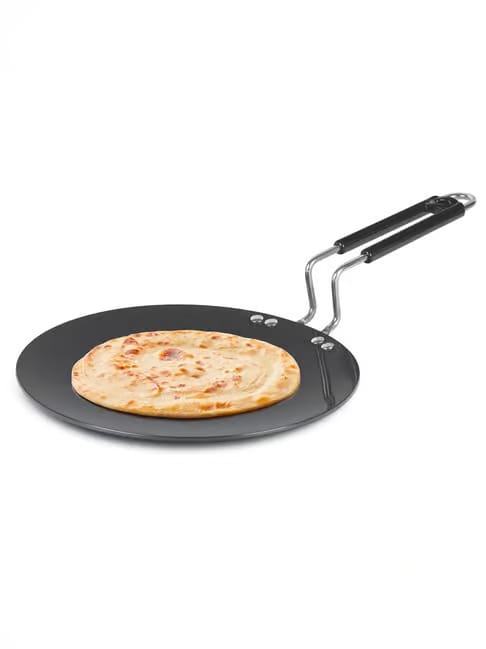
Borosil Hard Anodized Aluminium Grade 3003 Concave Tawa, 22 cm
Rs. 749 for a 22 cm hard-anodised tawa - the floor of the whole chapter.
Why it earned its spot Opens the page at the bottom of the ladder, on the material that costs least to make.
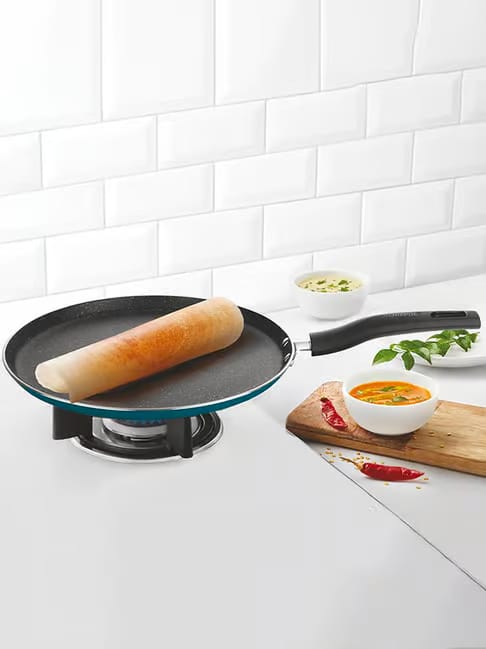
Borosil Aluminium 25 cm Induction Non-Stick Tawa with Wood-Finish Handle
Rs. 879 - the same aluminium, with a non-stick layer on top.
Why it earned its spot The page's first material comparison, and the cheapest one to reason about.
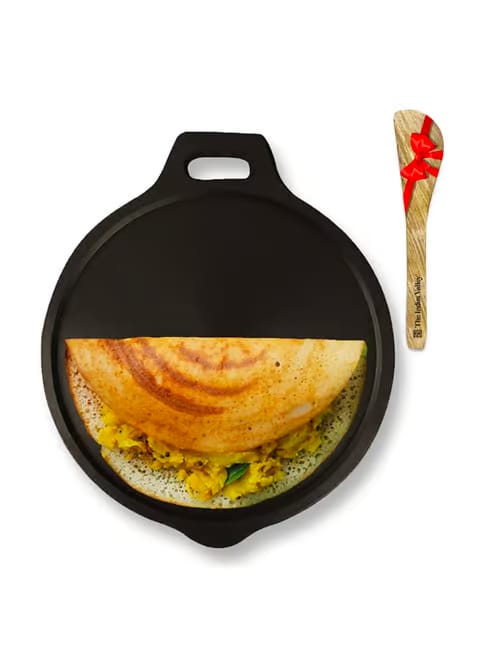
The Indus Valley Black Cast Iron Tawa with Free Wooden Spatula
Rs. 1,029 - cast iron starts Rs. 280 above the cheapest aluminium.
Why it earned its spot The material step that actually costs something, and it is smaller than most people expect.
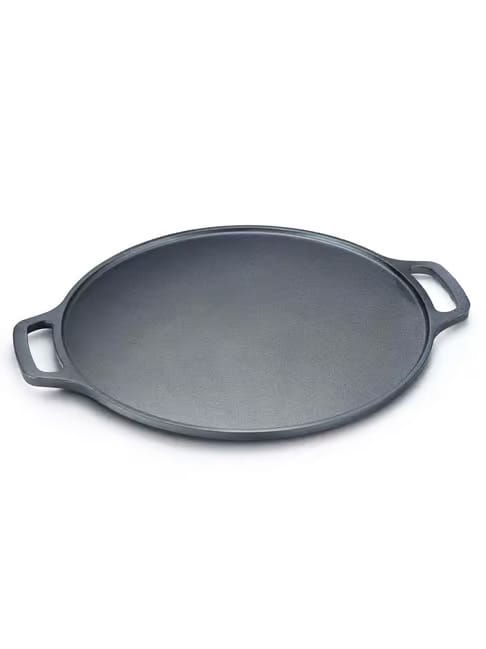
Prestige Dura Cast Iron Tawa 30 cm, Heavy Gauge, Induction Bottom
37 ratings - the most of any tawa on this shelf - at Rs. 1,315 for 30 cm.
Why it earned its spot On a shelf where the median rating count is three, thirty-seven is worth pointing at.
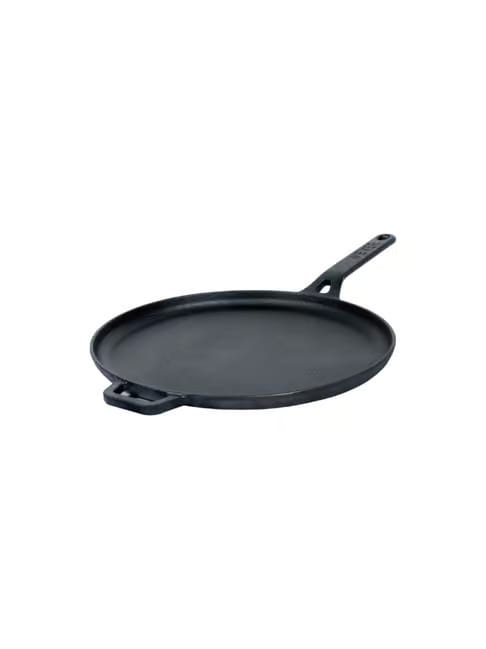
Meyer Pre-Seasoned Cast Iron Flat Dosa Tawa, 28 cm, Black
Rs. 2,660 for 28 cm of pre-seasoned cast iron, against Rs. 1,315 for 30 cm.
Why it earned its spot Where the material stops explaining the price and the brand starts.
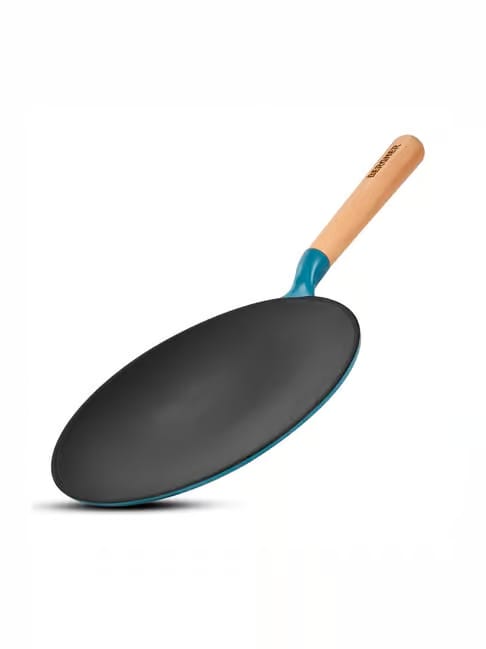
Bergner Blue Excalibur Light Cast Iron Roti Tawa 26 cm, Induction Bottom
Rs. 3,739 for a 26 cm roti tawa - the top of a ladder that starts at Rs. 749.
Why it earned its spot Closes the chapter on its full range: one object, one job, a five-fold price spread.
One Kadhai, Five Materials, and Two of Them Are the Same
Copper-bottom steel at Rs. 529, sheet iron at Rs. 549, triply stainless at Rs. 949, ceramic-coated at Rs. 1,595, cast iron at Rs. 2,624, and tri-ply stainless again at Rs. 2,799. That last pair is the seat to read twice: two listings claiming the same construction, Rs. 1,850 apart, with nothing on either page to explain the gap.
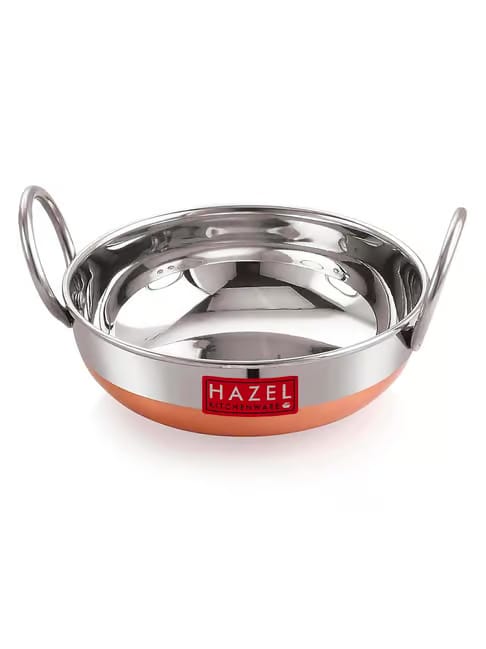
HAZEL 1500 ml Copper Bottom Kadhai
Rs. 529 - a fifth of what the dearest kadhai here costs.
Why it earned its spot Opens the kadhai ladder at Rs. 529, and the top of it is Rs. 2,799.
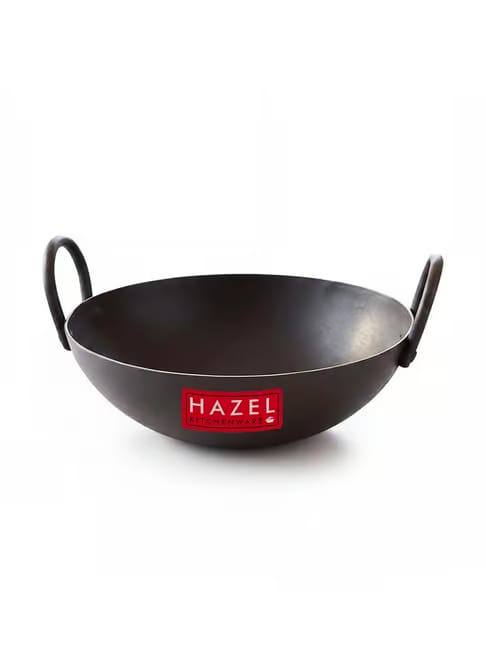
HAZEL Black Iron Kadhai with Black Handle, 26 cm, 2.3 Litre
Rs. 549 for plain sheet iron - and a 2.8, from four people.
Why it earned its spot The cheapest material here, and the only negative signal the shelf offers.
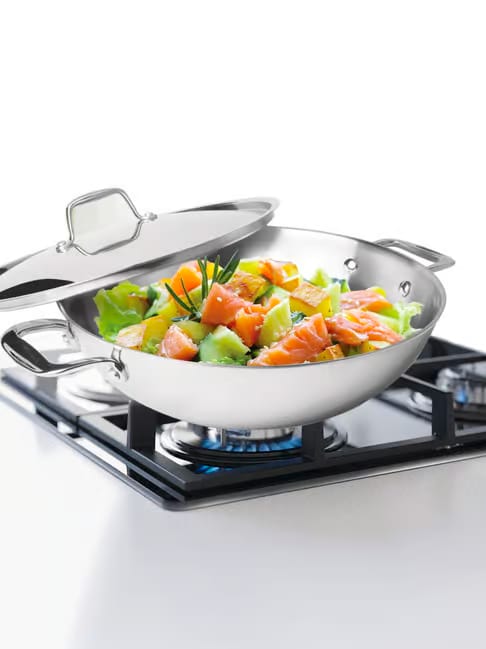
Milton Silver Stainless Steel Triply Kadhai with Lid, 1600 ml
The same stated construction as the Rs. 2,799 kadhai, at a third of the price.
Why it earned its spot The page's sharpest same-material comparison, and it is worth Rs. 1,850.
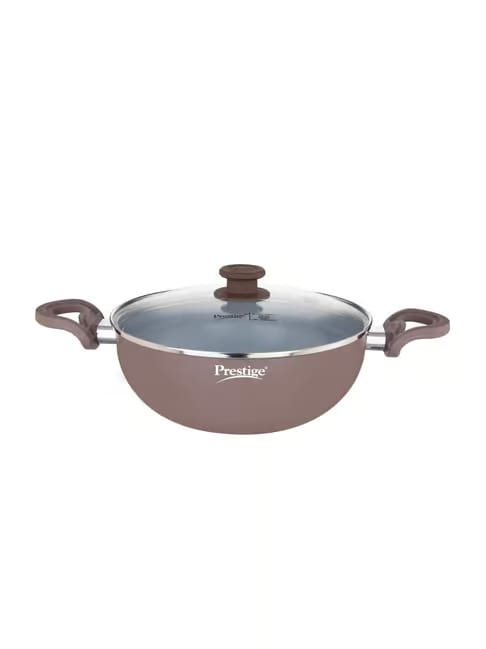
Prestige Ceraglide Brown 24 cm Kadhai, 3000 ml
Rs. 1,595 for 3000 ml - the biggest kadhai in this chapter.
Why it earned its spot A third surface technology on the same object, at a price between the two extremes.
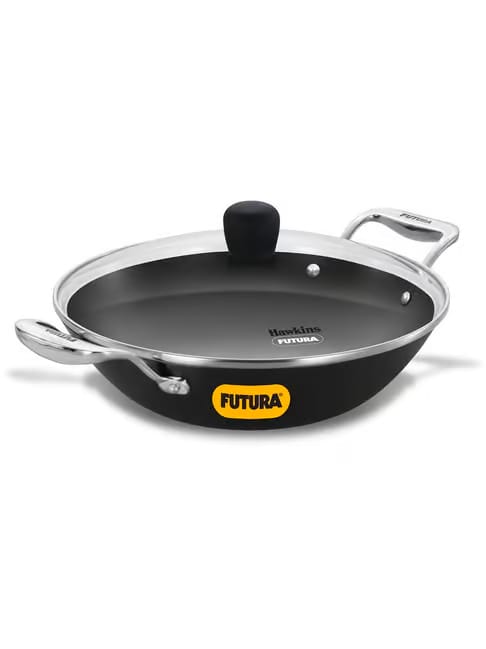
Hawkins Black 2.5 L Cast Iron Kadhai with Glass Lid
Nearly five times the sheet-iron kadhai, and the same shape.
Why it earned its spot Two iron pans on one shelf, Rs. 2,075 apart, and the difference is how the iron was formed.
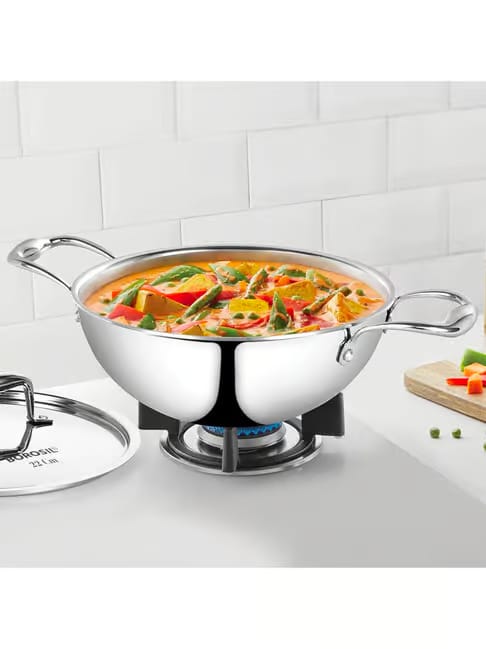
Borosil Cookfresh 22 cm Tri-Ply Stainless Steel Deep Kadhai, 2500 ml
Rs. 2,799 for tri-ply steel - the same words as the Rs. 949 listing.
Why it earned its spot Closes the chapter on the comparison the shelf cannot explain to you.
Five Two-Litre Pressure Cookers Within Rs. 640
The most controlled comparison on the page: same capacity, four materials, and a total spread of Rs. 640. The result overturns the rest of the article - the cheapest of the five is also the one with the better surface treatment, and triply steel costs just Rs. 84 more than plain aluminium here, against Rs. 1,850 for the same words in the kadhai aisle.
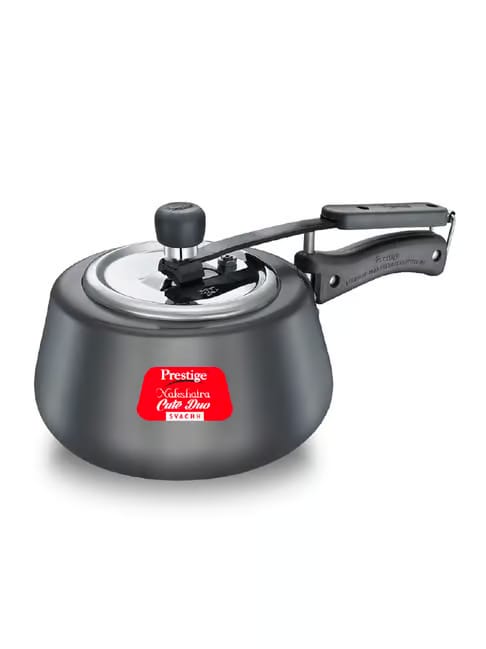
Prestige Black Pressure Cooker, 2000 ml
The traditional material, at Rs. 1,915 for two litres.
Why it earned its spot Opens the tightest chapter on the page: five 2 L cookers within Rs. 640 of each other.
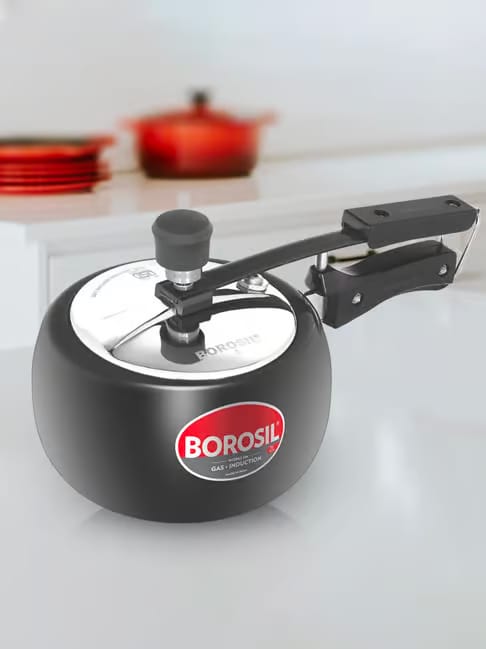
Borosil Pronto 2 L Hard Anodized Inner Lid Pressure Cooker, Gas and Induction
Rs. 1,889 - the cheapest cooker here, and hard-anodised rather than plain.
Why it earned its spot The chapter's clearest result: the better surface is also the lower price.
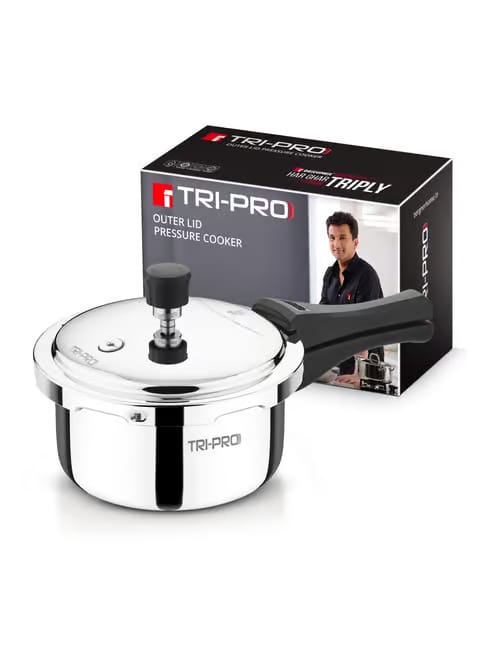
Bergner Tripro Triply Outer Lid Pressure Cooker, 2 Litres
Rs. 1,999 for a triply steel cooker - Rs. 84 above the plain aluminium one.
Why it earned its spot The smallest material premium anywhere on this page, and by a wide margin.
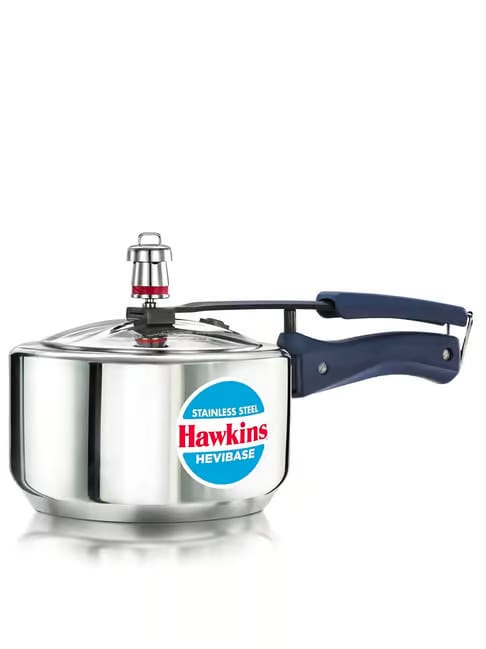
Hawkins Silver 2 L Stainless Steel Hevibase Pressure Cooker
Rs. 2,316 for stainless steel with a heavy sandwiched base.
Why it earned its spot Shows the middle of the cooker ladder, where you pay for base thickness rather than cladding.
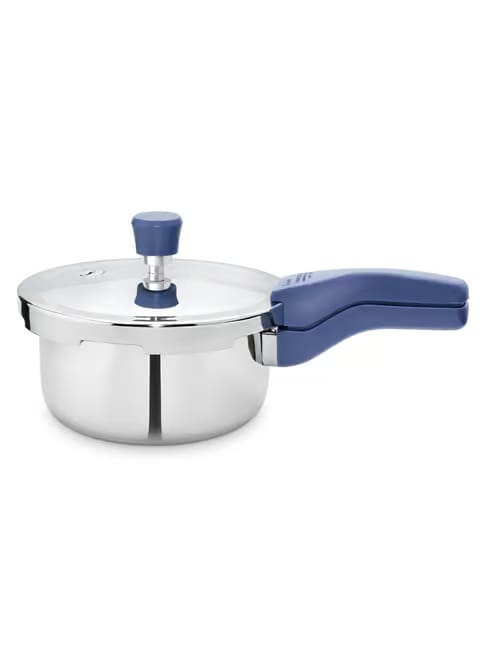
Allo Cooksafe 2 L Triply Stainless Steel Pressure Cooker, Slate Blue
Rs. 2,529 for the same triply construction Bergner sells at Rs. 1,999.
Why it earned its spot Closes the chapter Rs. 640 above where it began, with the same material as its cheapest triply.
The Frying Pan, and What a Surface Costs
Five pans from Rs. 719 to Rs. 2,885, and the whole range is a question about surfaces: a coating that wears out, a treatment that does not, bare cast iron that improves, and enamel that is glass. The right answer depends less on the money than on whether you will maintain the pan, which is the one variable no listing on this shelf can see.
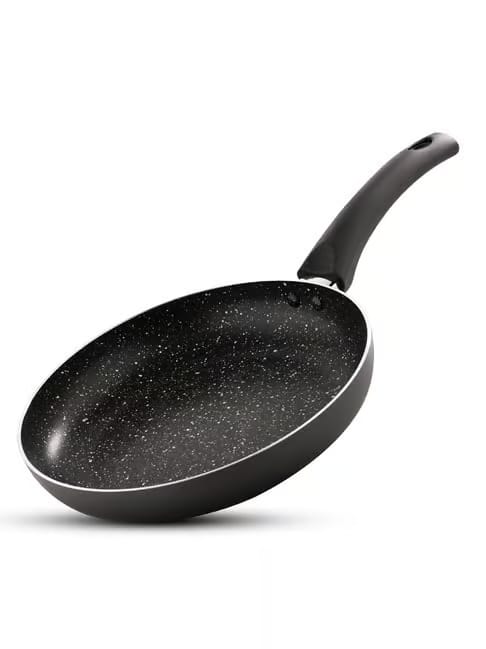
Bergner Black Aluminium Amarone Non-Stick Frypan, 24 cm
Rs. 719 for a 24 cm non-stick aluminium pan.
Why it earned its spot Opens the last chapter at the floor, where the pan is a consumable rather than an heirloom.
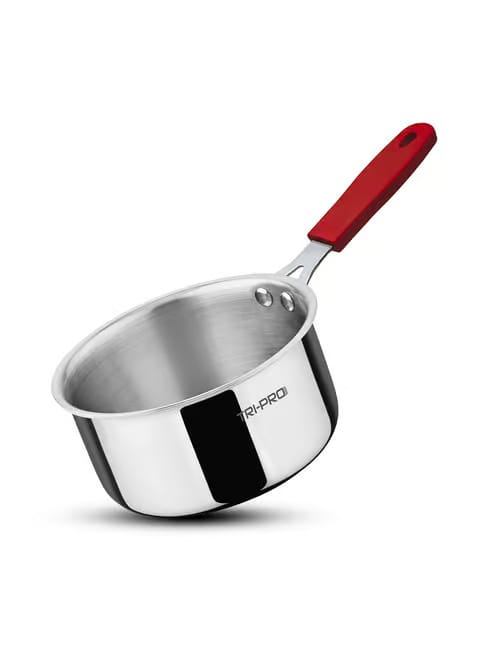
Bergner Tripro Triply Stainless Steel Saucepan, 14 cm, 1.1 L
Rs. 799 for a 1.1 L triply stainless steel saucepan.
Why it earned its spot The lowest price at which this shelf will sell you triply construction at all.
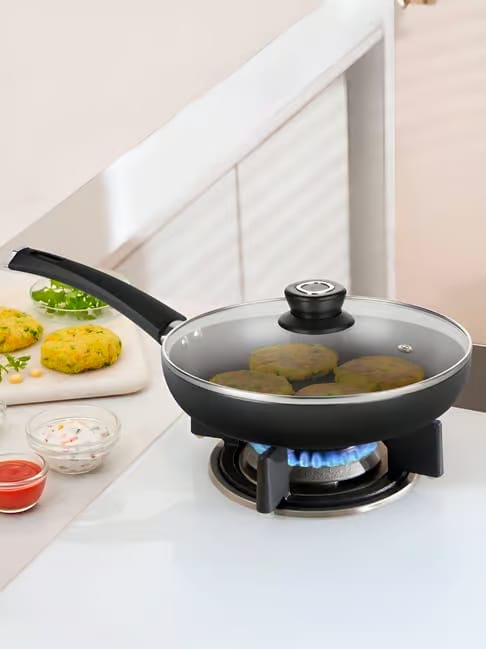
Borosil 1.2 L (20 cm) Hard Anodized Fry Pan with Glass Lid, Black
Rs. 1,319 - Rs. 600 above the non-stick pan, for a surface that cannot flake.
Why it earned its spot The coating-versus-treatment question again, this time with Rs. 600 attached.
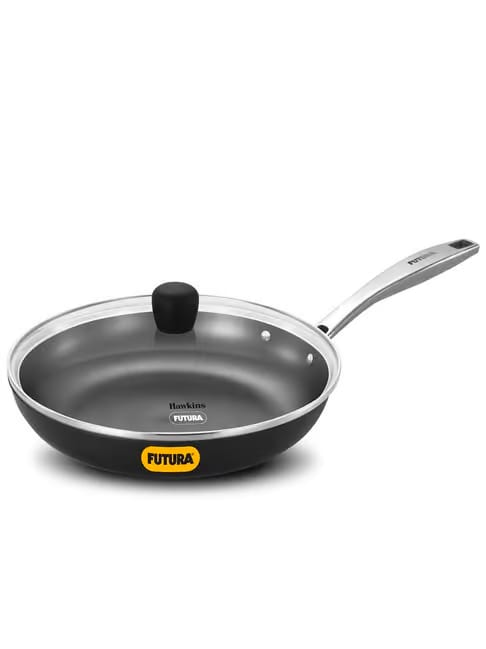
Hawkins Black 26 cm Cast Iron Frying Pan with Lid
Three and a half times the aluminium pan, and it will outlive both of you.
Why it earned its spot The material premium at its clearest: same object, same job, Rs. 1,662 apart.
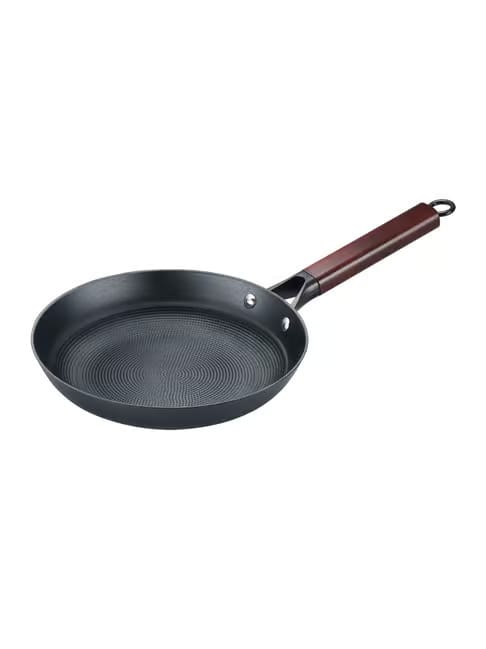
Prestige Castlite Patterned Enamel Black Fry Pan, 20 cm, 0.9 L
Rs. 2,885 for 0.9 litres - the most expensive pan here and the smallest.
Why it earned its spot Ends the page where the material argument stops being about performance.
How to choose a material rather than a price
A short field guide, because these words appear on every listing and are almost never explained. Non-stick is a coating applied on top of aluminium: it releases food superbly when new, wears out, and should be treated as a consumable you replace every few years. Hard anodised is not a coating at all - it is the aluminium itself hardened electrochemically, so nothing can flake, it tolerates metal utensils and high heat, and it is not non-stick, so it needs oil. Ceramic is a mineral coating marketed as PTFE-free; it releases well and typically fades faster than conventional non-stick. Triply or tri-ply is aluminium sandwiched between two layers of stainless steel through the whole vessel, so heat spreads up the walls as well as across the base - the reason it costs more and the reason serious cooks ask for it. A copper bottom does the same job at the base only, which is why food catches on the walls. Cast iron is poured at thickness: heavy, slow to heat, superb at holding it, needs seasoning, lasts a lifetime. Sheet iron is pressed thin: light, fast, cheap, and warps. Enamel is glass fused to metal - non-reactive and handsome, and it chips. Match the material to how you actually cook, then compare prices within it. Bank and card offers that stack on these prices are on our Tata CLiQ coupons page.
How our picks compare
| Product | Sale price | MRP | Discount |
|---|---|---|---|
| Borosil Hard Anodized Aluminium Grade 3003 Concave Tawa, 22 cm | Rs. 749 | Rs. 790 | 5% |
| Borosil Aluminium 25 cm Induction Non-Stick Tawa with Wood-Finish Handle | Rs. 879 | Rs. 975 | 10% |
| The Indus Valley Black Cast Iron Tawa with Free Wooden Spatula | Rs. 1,029 | Rs. 1,739 | 41% |
| Prestige Dura Cast Iron Tawa 30 cm, Heavy Gauge, Induction Bottom | Rs. 1,315 | Rs. 1,645 | 20% |
| Meyer Pre-Seasoned Cast Iron Flat Dosa Tawa, 28 cm, Black | Rs. 2,660 | Rs. 3,325 | 20% |
| Bergner Blue Excalibur Light Cast Iron Roti Tawa 26 cm, Induction Bottom | Rs. 3,739 | Rs. 4,395 | 15% |
| HAZEL 1500 ml Copper Bottom Kadhai | Rs. 529 | Rs. 959 | 45% |
| HAZEL Black Iron Kadhai with Black Handle, 26 cm, 2.3 Litre | Rs. 549 | Rs. 699 | 21% |
| Milton Silver Stainless Steel Triply Kadhai with Lid, 1600 ml | Rs. 949 | Rs. 1,075 | 12% |
| Prestige Ceraglide Brown 24 cm Kadhai, 3000 ml | Rs. 1,595 | Rs. 1,995 | 20% |
| Hawkins Black 2.5 L Cast Iron Kadhai with Glass Lid | Rs. 2,624 | Rs. 2,975 | 12% |
| Borosil Cookfresh 22 cm Tri-Ply Stainless Steel Deep Kadhai, 2500 ml | Rs. 2,799 | Rs. 3,290 | 15% |
| Prestige Black Pressure Cooker, 2000 ml | Rs. 1,915 | Rs. 2,250 | 15% |
| Borosil Pronto 2 L Hard Anodized Inner Lid Pressure Cooker, Gas and Induction | Rs. 1,889 | Rs. 2,095 | 10% |
| Bergner Tripro Triply Outer Lid Pressure Cooker, 2 Litres | Rs. 1,999 | Rs. 2,495 | 20% |
| Hawkins Silver 2 L Stainless Steel Hevibase Pressure Cooker | Rs. 2,316 | Rs. 2,625 | 12% |
| Allo Cooksafe 2 L Triply Stainless Steel Pressure Cooker, Slate Blue | Rs. 2,529 | Rs. 4,122 | 39% |
| Bergner Black Aluminium Amarone Non-Stick Frypan, 24 cm | Rs. 719 | Rs. 995 | 28% |
| Bergner Tripro Triply Stainless Steel Saucepan, 14 cm, 1.1 L | Rs. 799 | Rs. 995 | 20% |
| Borosil 1.2 L (20 cm) Hard Anodized Fry Pan with Glass Lid, Black | Rs. 1,319 | Rs. 1,390 | 5% |
| Hawkins Black 26 cm Cast Iron Frying Pan with Lid | Rs. 2,381 | Rs. 2,700 | 12% |
| Prestige Castlite Patterned Enamel Black Fry Pan, 20 cm, 0.9 L | Rs. 2,885 | Rs. 3,845 | 25% |
What we skipped — and why
What we look for
Eighty cookware listings read, and grouped by object before price
On August 6, 2026 we read 134 live listings from tatacliq.com across three queries, of which 80 were cookware, and this page uses the cookware rows only. Rather than ranking them by price or by discount, we grouped them by what the object actually is - tawa, kadhai, two-litre pressure cooker, frying pan - so that each chapter compares like with like and the material becomes the visible variable. That grouping is the whole method. A shelf sorted by price tells you what things cost; a shelf sorted by object tells you what you are paying for. Every price, stated MRP, capacity and material description here is Tata CLiQ's own as it displayed that afternoon.
Material claims were taken from the listing and reported as claims
Every material named on this page - hard-anodised aluminium, non-stick coating, ceramic coating, sheet iron, cast iron, copper-bottom steel, triply and tri-ply stainless steel, enamel - is the seller's own description, and we have not cut, weighed, tested or cooked in anything. Where a listing is vague we say so rather than filling the gap: the Prestige Castlite pan is described only as 'patterned enamel' and never states what metal sits under the enamel, which at Rs. 2,885 is worth a reader knowing. Where two listings state the same construction at very different prices - the Rs. 949 and Rs. 2,799 triply kadhais - we have set out what could legitimately explain the gap, noted that none of it appears on either page, and declined to invent a justification.
The controlled comparison was run on pressure cookers on purpose
Chapter Three holds capacity constant at two litres across five cookers, and it exists to test the page's own argument rather than to illustrate it. The result partly contradicts the rest: the material premium there is tiny, with triply stainless costing Rs. 84 more than plain aluminium and the cheapest cooker of the five also carrying the better surface treatment. Compare that with the kadhai aisle, where triply commanded Rs. 1,850 over another listing making the identical claim. So the honest conclusion is narrower than 'material sets the price' - material sets a floor, the spread above that floor is brand and finish, and how wide the spread runs varies enormously by object. We have said that in the chapter rather than only here.
Ratings were read, counted, and then deliberately not used
Forty-four of the 80 cookware listings carry a star rating, and the median number of ratings behind those scores is three. Only four listings in the entire set clear twenty ratings. A 5.0 from one buyer and a 2.8 from four cannot support any ranking, so no rating pill is set on any pick on this page and nothing here is ordered by score. We print the counts in every seat anyway, because a reader deserves to know how thin the evidence is rather than being told nothing. Two numbers are called out in the text: a Prestige cast iron tawa with 37 ratings, which is unusually well documented for this shelf, and a HAZEL iron kadhai showing 2.8 from four people, which is the only negative signal in the pull and is reported without being treated as a verdict.
FAQs
Is a triply stainless steel kadhai worth three times a copper-bottom one?
It depends on what goes wrong for you now. Triply construction runs a layer of aluminium between two layers of stainless steel through the entire vessel, walls included, so heat spreads evenly everywhere the food touches. A copper bottom does that job at the base only, which is why food catches and burns on the sides of a copper-bottom pan while the base behaves perfectly. If your complaint about your current kadhai is that things stick to the walls when you are stirring a masala, triply solves it and the money is well spent. If you mostly boil, deep-fry or cook things that spend their time at the bottom of the pan, you will not notice the difference and the Rs. 529 copper-bottom pan on this page is enough. One caution specific to this shelf: two listings here claim triply construction at Rs. 949 and Rs. 2,799, and neither states layer thickness or steel grade, so the price difference between two triply pans can be larger than the difference between triply and copper-bottom.
Should I buy a cast iron tawa or a non-stick one?
Answer the maintenance question first, because it decides everything else. A cast iron tawa needs to be dried immediately after washing, wiped with a little oil, and never left to soak - perhaps twenty minutes of attention a year in total. Do that and the pan lasts indefinitely, holds heat well enough to give rotis proper spots, and gets better as its seasoning builds. Skip it and it will rust, stick, and end up at the back of a cupboard, and Rs. 1,029 to Rs. 3,739 will have been wasted. A non-stick tawa asks nothing of you and gives you two to four years of easy release before the coating degrades and you replace it. Over fifteen years, cast iron is cheaper. Over fifteen years in a household that will not season it, non-stick is cheaper. There is also a middle option this page argues for: the Rs. 749 hard-anodised tawa needs no seasoning, has no coating to wear out, and takes metal utensils.
What is the difference between hard anodised and non-stick?
They are different in kind, not in degree, and the words being adjacent on a shelf hides that. Non-stick is a layer of PTFE or a similar polymer sprayed or rolled onto the metal - a separate substance sitting on top of the pan. It is what makes an egg slide, and because it is a separate layer it can scratch, degrade at high heat and eventually flake, which is why non-stick pans have a service life. Hard anodising is not applied to the pan; it is done to the pan. Passing the aluminium through an electrochemical bath converts the surface itself into a much harder, denser oxide - there is no added substance and therefore nothing to come off. That makes a hard-anodised pan safe with metal utensils, tolerant of high heat, and effectively permanent, at the cost of being only mildly food-releasing: you still need oil. On this shelf the two are Rs. 130 apart in tawas and Rs. 600 apart in frying pans.
Why do two pressure cookers of the same size cost so differently?
On the five two-litre cookers we read here, the honest answer is mostly brand and partly base construction, and the price spread is far smaller than the rest of this shelf would lead you to expect - Rs. 640 from cheapest to dearest. The materials divide three ways. Plain aluminium is light, conducts heat superbly and is the traditional choice, but reacts with acidic food and pits over years. Hard-anodised aluminium fixes the reactivity and the pitting. Stainless steel with a thick sandwiched base, or full triply cladding, gives you a non-reactive interior and a base that will not warp on a gas ring. Notably, the cheapest cooker in our set is also hard anodised, and the triply one costs just Rs. 84 more than plain aluminium - so material barely explains the ladder here. What does explain the dearest listing on it is a brand name, and what would justify a real premium is something no listing states: spare-part and gasket availability over the fifteen or twenty years a cooker actually lasts.
Can I trust the star ratings on Tata CLiQ's cookware?
Not for choosing between products, no - and the reason is arithmetic rather than suspicion. Forty-four of the 80 cookware listings we read carry a star rating, and the median number of ratings behind those scores is three. Only four listings in the whole set reach twenty ratings. A score built on one, two or three buyers cannot distinguish a good pan from a lucky one, because a single dissatisfied customer moves the average by a full point or more, which is exactly why this shelf shows both perfect 5.0s and a 2.8 among its thinnest samples. That is why no rating badge appears on any pick on this page and why nothing here is ordered by score. Two counts are worth having: a Prestige cast iron tawa carries 37 ratings, which makes it the best-documented tawa on the shelf, and a HAZEL iron kadhai shows 2.8 from four people, which we report as the only negative signal in the pull rather than as a verdict. For cookware generally, the material, the weight in your hand and the brand's spare-part availability are better guides than any star on this site.
More Tata CLiQ coverage on Zoutons

Trending
 Flipkart Big Billion Days 2026 Is Live: General Access Open October 9
  Myntra Sale Calendar 2026: Big Fashion Festival Live Now, Winter EORS Dates
  Amazon Upcoming Sale Calendar 2026: Next Sale Dates India, GIF & More
  Nykaa Sale Calendar 2026: Diwali Dhamaka & Pink Friday Dates, Next Sale
  Udemy Upcoming Sale 2026: Next Sale Dates, Black Friday & Coupons
  Ajio Sale Calendar 2026: All Star Sale Live Oct 7-18, Festive Dates
 More From Tata Cliq
 Booking com
  Hostinger
  Dell
Dell  Udemy
Udemy  Agoda
Agoda  Nykaa
Nykaa  Myntra
  Ajio
Ajio