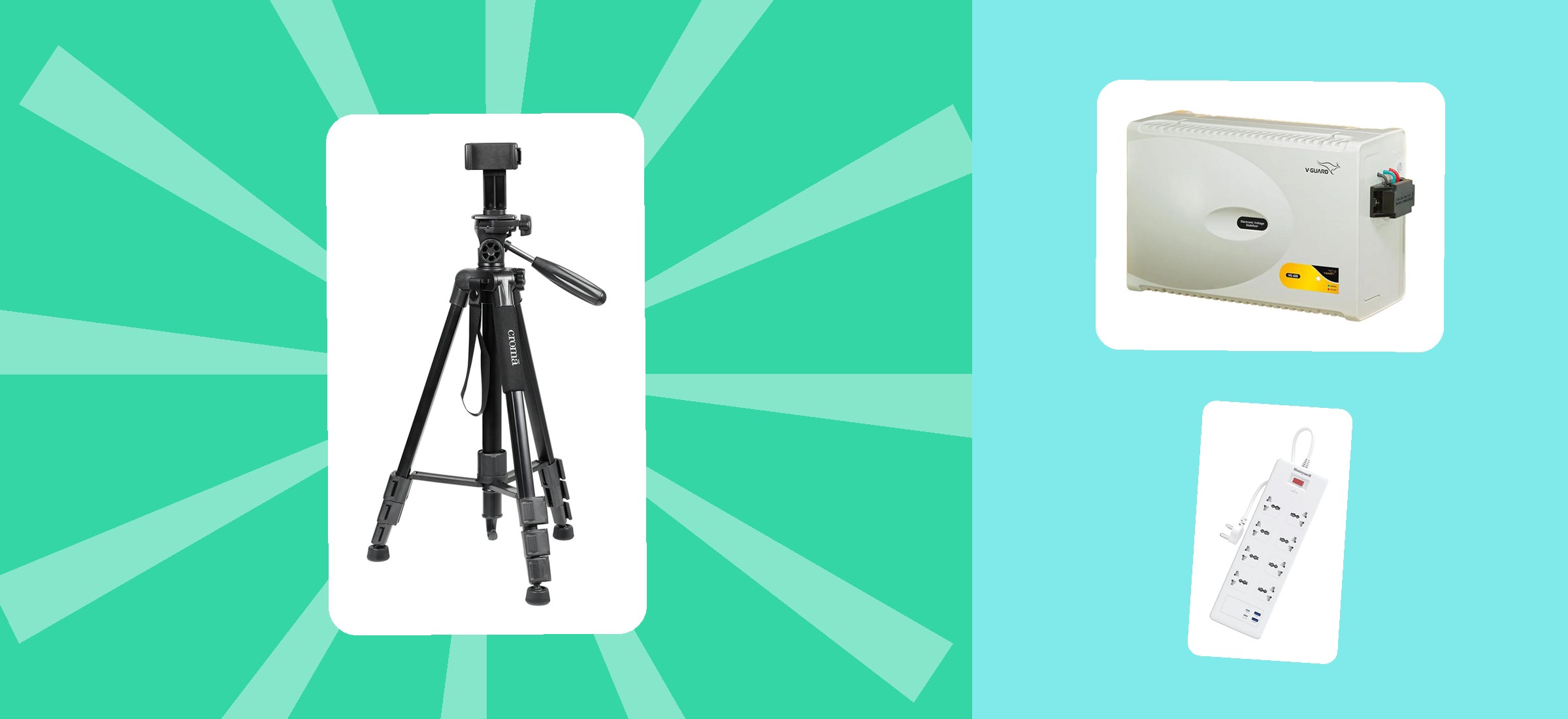
![Electronics of the kind bought on a marketplace — a tripod, a voltage stabilizer and a surge protector — on this page about who is liable when a Flipkart order arrives damaged or wrong]()
Almost every argument that follows a bad Flipkart order turns on one question: who did you actually buy from? Flipkart answers it plainly in its own Terms of Use, and the answer is not Flipkart.
The document says the company is not a party to your transaction, never takes possession of the goods and never gains title to them. The seller sets the price, the delivery date, the warranty and the after-sales service — and one three-day clause buried further down is the most useful sentence in it for anyone chasing a refund.
📄 Terms of Use read 15 September 2026
Flipkart: “not and cannot be a party to” your transaction
Seller has 3 days to close a refund ticket, or it settles in your favour
📅 Update log:
15 Sep 2026 — first published. Every clause and quotation on this page was read from flipkart.com/pages/terms on 15 September 2026, logged out, in India. Marketplaces revise their terms without notice and the live document is always authoritative; we re-read this page periodically and log what has changed here.
Flipkart's own terms say Flipkart is not selling you anything
Almost every sentence people argue about after a bad Flipkart order turns on one question, and Flipkart answers it plainly in its own Terms of Use: it is not the seller.
The document read on 15 September 2026 states that “Flipkart is not and cannot be a party to or control in any manner any transaction between the Platform’s Users”. It goes further — the company says it does not “at any point of time … come into or take possession of any of the products” and never gains “title to or have any rights or claims over” them.
That is not a technicality buried in a footnote. It is the frame for everything else on this page: when an order goes wrong, the counterparty is a third-party seller, and Flipkart's stated role is that of an ‘intermediary’ under the Information Technology Act, 2000.
| What the terms establish | Flipkart's own wording | What it means for you |
|---|
| Flipkart is not a party to your purchase | “Flipkart is not and cannot be a party to or control in any manner any transaction between the Platform’s Users” | Your contract is with the seller, not with Flipkart |
| It never owns what you bought | “does not at any point of time … come into or take possession of any of the products … nor does it at any point gain title to” them | The goods are the seller’s property until they are yours |
| Its legal role is 'intermediary' | “Flipkart’s role is that of an ‘intermediary’ as defined under the Information Technology Act, 2000” | A conduit for the listing, in its own description |
| It does not vouch for the product | “does not make any representation or Warranty as to specifics (such as quality, value, saleability, etc) of the products” | Quality claims are the seller’s, not the platform’s |
| It does not vouch for the seller either | “does not make any representation or warranty as to the item-specifics (such as legal title, creditworthiness, identity, etc) of any of its Users” | You are told to verify the seller yourself |
The seller sets the price, the delivery date and the warranty
The terms are specific about which parts of a purchase belong to the seller rather than to the platform, and the list is longer than most buyers would guess.
“All commercial/contractual terms are offered by and agreed to between Buyers and Sellers alone,” the document says, and it spells out what those terms include: price, shipping costs, payment methods, payment terms, date, period and mode of delivery, warranties related to products and services and after sales services.
Flipkart adds that it “does not have any control or does not determine or advise or in any way involve itself in the offering or acceptance of such commercial/contractual terms”. One line in the same section is worth reading twice if you shop the sales: “All discounts, offers (including exchange offers) are by the Seller/Brand and not by Flipkart.”
| What you might assume the platform sets | Who the terms say sets it |
|---|
| The price you pay | The seller |
| Shipping costs | The seller |
| Payment methods and payment terms | The seller |
| The delivery date, period and mode | The seller |
| The product warranty | The seller |
| After-sales service | The seller |
| Discounts and offers, including exchange offers | The Seller/Brand, “and not by Flipkart” |
Two sentences about mediation that point opposite ways
This is the part worth knowing before you need it, because the same page says two different things and both are operative.
In the Terms of Use, under the marketplace section: Flipkart “shall not and is not required to mediate or resolve any dispute or disagreement between Buyers and Sellers”.
In the Disputes (Resolutions) Policy, further down the same document: “In case the Seller rejects the return request of the Buyer, and Buyer raises a dispute, then Flipkart will try to mediate and resolve the dispute between both the parties.”
Read together, they describe a company that has reserved the right not to get involved and then committed to trying anyway. For a buyer the practical reading is that the dispute process is real and worth using, while the obligation behind it is one Flipkart has expressly declined to accept. We are quoting both because quoting either one alone would misrepresent the document.
| The question | What the Terms of Use say | What the Disputes Policy says |
|---|
| Will Flipkart step into a buyer-seller dispute? | “shall not and is not required to mediate or resolve any dispute” | “Flipkart will try to mediate and resolve the dispute between both the parties” |
The three-day clause, and three other numbers that matter
Buried in the Buyer Protection section is the single most useful sentence in the whole document for anyone waiting on a refund.
“In case the Seller doesn’t close the ticket in 3 days from the date of intimation to the Seller about the refund request, the refund request shall be settled in favor of the Buyer.” A seller who simply ignores your refund request runs out of time after three days.
Two other mechanics are worth knowing. Raising a dispute freezes the seller's payment for that order immediately until the matter is resolved — which is the leverage the process actually runs on. And if the dispute goes your way, “a refund is provided once the product is returned to the Seller”, so the goods move before the money does.
The clause that cuts the other way: “In case Buyer orders a wrong item, Buyer shall not be entitled to any return/refund.” Ordering the wrong size or model yourself is, in the terms as written, not a covered event.
| The situation | The clock | What the terms say happens |
|---|
| Seller fails to close a refund ticket | 3 days | “the refund request shall be settled in favor of the Buyer” |
| Buyer raises a dispute | Immediately | The seller’s payment for that order is put on hold until it is resolved |
| Dispute resolved in the buyer’s favour | After return | “a refund is provided once the product is returned to the Seller” |
| Buyer ordered the wrong item | No window | “Buyer shall not be entitled to any return/refund” |
Four ways a seller can close your return, and only two get the item back
When you raise a return, the terms give the seller four options for closing the ticket, and they differ in whether you have to send anything back.
Two of them — ‘refund without shipment collection’ and ‘replace without shipment collection’ — let you keep the original item. That is the seller's choice to make, not yours, and it is usually a calculation about whether collecting a low-value item is worth the logistics.
One sale-season caveat sits in the same section and is easy to miss: “On certain select days as specified by Flipkart (such as ‘The Big Billion Day’) separate policies may be applicable.” If you are buying during a headline sale, the return terms you are agreeing to may not be the ones on the standard page.
| How the seller closes the ticket | What happens to the product |
|---|
| Replace after shipment collection | You send it back, then it is replaced |
| Refund after shipment collection | You send it back, then you are refunded |
| Refund without shipment collection | You keep it and are refunded |
| Replace without shipment collection | You keep it and it is replaced |
You are told to check the seller, on a platform that rarely shows you one
The clause that sits least comfortably with how the site actually works is this one: Flipkart “does not make any representation or warranty as to the item-specifics (such as legal title, creditworthiness, identity, etc) of any of its Users”, and buyers are “advised to independently verify the bona fides of any particular User that You choose to deal with”.
In practice the seller name is a line of small text on the product page, and the practical form that verification can take is limited: read the seller name and its rating before ordering anything expensive, keep the invoice, and note that the same product is often sold by several different sellers at different prices with different return handling.
The same logic extends to product recalls, where Flipkart's wording is unusually direct: “As a marketplace, we relay recall information as provided and do not independently verify its accuracy.” For a recall the document points you to the manufacturer first and the seller second.
None of this is unique to Flipkart — it is broadly how marketplace terms in India are written, and it is why the distinction between a marketplace and a retailer matters when something breaks. It is also not the whole legal picture: consumer law in India gives buyers rights that a platform's terms of use do not describe and cannot remove. This page reports what the document says. It is not legal advice, and for a dispute that matters, a consumer lawyer or the National Consumer Helpline is the right next step rather than a shopping page.
Frequently Asked Questions
Does Flipkart sell the products on its site?
Not according to its own Terms of Use. The document read on 15 September 2026 states that “Flipkart is not and cannot be a party to or control in any manner any transaction between the Platform’s Users”, and that it does not “at any point of time … come into or take possession of any of the products” nor “gain title to” them. Flipkart describes its role as that of an ‘intermediary’ under the Information Technology Act, 2000. Your purchase contract is with a third-party seller listed on the platform.
Who is responsible if a Flipkart order arrives damaged or wrong?
The seller, in the first instance. Flipkart's terms place price, shipping costs, payment terms, delivery date, warranties and after-sales service with the seller alone, and say Flipkart “is not responsible for any non-performance or breach of any contract entered into between Buyers and Sellers”. The platform does run a Disputes Resolution process: raise a return, and if the seller rejects it, raise a dispute through the Flipkart help centre. Consumer law may also give you rights the terms do not describe.
Will Flipkart mediate a dispute with a seller?
Its own document says both yes and no, and it is worth knowing both. The Terms of Use say Flipkart “shall not and is not required to mediate or resolve any dispute”. The Disputes (Resolutions) Policy on the same page says that when a seller rejects a return and the buyer raises a dispute, “Flipkart will try to mediate and resolve the dispute between both the parties”. So the process exists and is worth using, but the terms reserve the right not to be bound by it.
How long does a Flipkart seller have to respond to a refund request?
Three days. The Buyer Protection section states that “In case the Seller doesn’t close the ticket in 3 days from the date of intimation to the Seller about the refund request, the refund request shall be settled in favor of the Buyer”. It is also worth knowing that raising a dispute puts the seller's payment for that order on hold immediately until the issue is resolved. If the dispute is decided in your favour, the refund follows once the product has been returned to the seller.
Can I return something on Flipkart if I ordered the wrong item?
Not under the terms as written. The Buyer Protection section says plainly: “In case Buyer orders a wrong item, Buyer shall not be entitled to any return/refund”, and encourages buyers to review the listing before purchasing. Returns for a defect, a wrong item sent, damage, a missing part or an incorrect description are the covered categories the disputes section lists. Return windows themselves vary by category and by seller — we set those out separately in our guide to Flipkart's return policy.
Prices & codes last verified: 15 September 2026
Every clause, phrase and quotation on this page was read on 15 September 2026 from flipkart.com/pages/terms, the Flipkart Terms of Use and the policies published within that same document, as served to a logged-out visitor in India, with nothing purchased, no account used, no order placed and no dispute raised. Quotations are reproduced as published and are identified as Flipkart's own wording throughout; the groupings, tables, summaries and the description of two passages as pointing in opposite directions are ours, and readers should consult the full document rather than rely on any summary of it, including this one. Nothing on this page is legal advice, and it is not a substitute for advice from a qualified lawyer. This page reports what one commercial document says; it does not set out Indian consumer law, and consumers in India have statutory rights under the Consumer Protection Act, 2019 and the rules made under it, including the Consumer Protection (E-Commerce) Rules, 2020, which exist independently of a platform's terms of use and which a contract cannot remove. Where a platform's terms and a statutory right appear to conflict, that is a question for a lawyer, a consumer forum or the National Consumer Helpline, and not one this page attempts to resolve. No clause quoted here has been tested by us, litigated by us or put to Flipkart for comment, and we do not assert that any clause is enforceable, unenforceable, unfair or in breach of any law. No wrongdoing by Flipkart, by any seller on its platform or by any brand is alleged or implied; describing Flipkart as an intermediary that is not a party to the transaction repeats Flipkart's own characterisation of its role. Terms of use are revised without notice, category-level and seller-level policies differ from the general terms, and separate policies may apply during sale events, so the live document on flipkart.com is authoritative and this page describes one reading of it on one day. Zoutons may earn a commission if you buy through links on this page; it does not change what you pay and does not affect what is reported here.










 Booking com
  Hostinger
  Dell
Dell  Udemy
Udemy  Agoda
Agoda  Nykaa
Nykaa  Myntra
  Ajio
Ajio