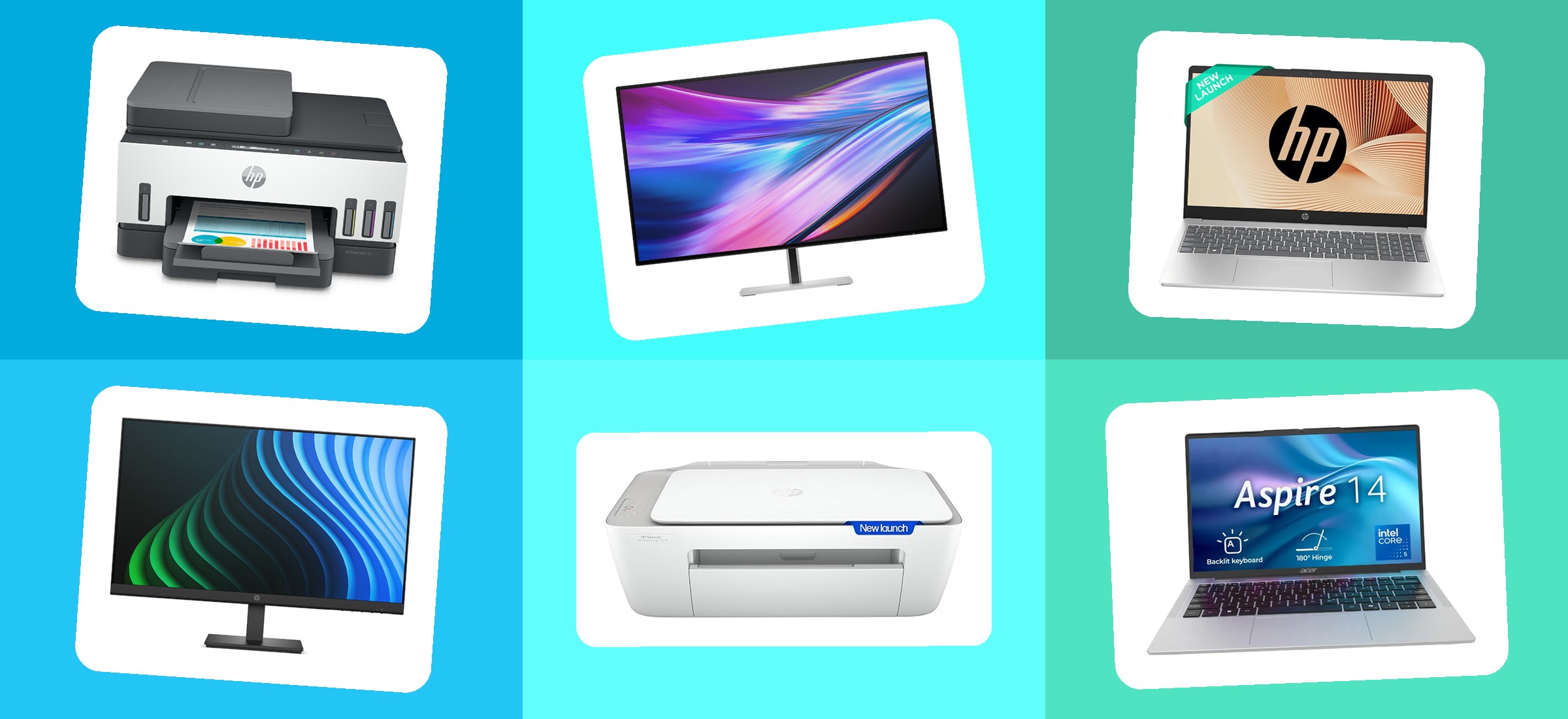
![Six office hardware categories businesses commonly buy on a GST invoice — all-in-one printers, monitors and laptops — arranged as a colour-block panel, on this page explaining Flipkart's GST invoice and input tax credit rules]()
Flipkart's business-purchase clauses are short, and they put almost all of the risk on the buyer. The sentence to know before you spend company money: “Flipkart and Seller shall not entertain any request for any revision in the GST Invoice.” Nothing is verified when you type the GSTIN, and nothing can be amended after the order.
Below: which products can even issue a tax invoice and who decides, the state-mismatch rule that quietly kills the credit, what happens if you forget to enter a GSTIN at all, and the liability and indemnity wording that sits underneath it. This is a summary of a marketplace's terms, not tax advice.
📅 Read 13 September 2026 from flipkart.com's Terms of Use
No revision of a GST invoice · GSTIN not verified by Flipkart
Delivery state must match the GSTIN or credit is denied
📅 Update log:
13 Sep 2026 — first published, from the business-purchase and GST section of the Terms of Use at flipkart.com/pages/terms as served to a logged-out visitor on 13 September 2026. Flipkart can change these clauses at any time, so we re-read the page and log any change to the eligibility wording, the no-revision rule, the state-mismatch warning or the liability and indemnity clauses here.
The clause that costs GST buyers money: a Flipkart tax invoice cannot be revised
If you take one sentence from Flipkart's business-purchase terms, take this one: “Flipkart and Seller shall not entertain any request for any revision in the GST Invoice.” Not a slow process, not a fee — no process. Whatever GSTIN and entity name were on the order are what the invoice carries.
That matters more than it would elsewhere because of the sentence beside it: “Flipkart is not responsible to verify the correctness of the GSTIN and/or entity name provided by You and You shall be entirely responsible to provide the accurate details.” Nothing is validated on the way in, and nothing can be corrected on the way out.
And the door closes at the moment of purchase in the other direction too: “If GSTIN and/or business entity details are not provided by You, it will be presumed that it is a personal purchase and not a business purchase.” An order placed without a GSTIN is a personal order, permanently.
⚠️ Every input in this flow is one-way. The GSTIN, the entity name and the decision to make it a business purchase at all are entered by you, unverified by Flipkart, and unamendable afterwards. That is three chances to lose the credit on a single order, and all three are avoided by checking before you click, not after.
Not every Flipkart product can give you a GST invoice
This is the step people skip. Business-purchase eligibility is not a property of your account — it is a property of the listing. Flipkart's terms state that “Not all products are eligible for business purchases on the Platform and the same is solely at the discretion of the Sellers”, and that “You will be able to view the eligibility of Tax Invoice on the product page on the Platform”.
So on a marketplace where the same laptop or printer is often sold by several sellers at similar prices, whether you can claim input tax credit on it can differ between two listings of the identical product. For a business buyer that is a sorting criterion, and it is one the price comparison will not show you.
The invoice itself, where it is issued, carries the GSTIN associated with your registered business as provided by you, along with the other details the policy lists as printed on a GST invoice.
| The rule | What Flipkart's terms say | Who carries the risk |
|---|
| Not every product qualifies | “Not all products are eligible for business purchases on the Platform and the same is solely at the discretion of the Sellers. You will be able to view the eligibility of Tax Invoice on the product page on the Platform” | The seller decides — check the product page before ordering |
| You must enter the GSTIN yourself | The tax invoice is issued “at your request” and carries the “GSTIN associated with your registered business, as provided by you” | You. Nothing happens automatically |
| No GSTIN means it was a personal purchase | “If GSTIN and/or business entity details are not provided by You, it will be presumed that it is a personal purchase and not a business purchase” | You — and there is no later correction route |
| Delivery and billing state must match the GSTIN | “Input tax credit will be denied by GST authority if the delivery address and GSTIN in the GST invoice are of different states”, and the terms ask you to use the address registered as your place of business | You — a warehouse in another state loses the credit |
| Flipkart does not check what you typed | “Flipkart is not responsible to verify the correctness of the GSTIN and/or entity name provided by You and You shall be entirely responsible to provide the accurate details” | You, entirely, per the wording |
| A GST invoice cannot be revised | “Flipkart and Seller shall not entertain any request for any revision in the GST Invoice. Flipkart and Seller shall not be liable for Your default including for reasons associated with details provided by You” | You — there is no amendment process |
| Denied credit is not Flipkart's problem | “Flipkart will not be liable in case You are not able to avail input tax credit or if input tax credit is denied to You for any reason whatsoever” | You, expressly |
| The invoice can be cancelled for suspected fraud | The seller “reserves the right to not issue Tax Invoice or issue a credit note against an already issued Tax Invoice to cancel the transaction, if any fraudulent activity is identified” | The seller retains the power |
The state-mismatch trap: where you take delivery decides whether you keep the credit
The most concrete warning in the whole section is about addresses, and it is worth quoting exactly: “The delivery and billing addresses will be required to be the same, please note that input tax credit will be denied by GST authority if the delivery address and GSTIN in the GST invoice are of different states.”
The terms also ask, for “seamless availment of input tax credit”, that you “mention the delivery address as the address which is mentioned as the registered place of business as per the records of GST authority”.
In practice this catches a very ordinary situation: a company registered in one state ordering a laptop to an employee's home or a site office in another. The price is the same, the product is the same, and the credit is gone. Flipkart adds that “availment of input tax credit is subject to provisions of GST Act and rules” — the marketplace is describing the tax rule, not creating it.
| Check before you place the order | Why it matters |
|---|
| Tax invoice eligibility on the product page | Eligibility is decided per product and per seller. The terms say you can see it on the product page, so it is a pre-purchase check, not a post-purchase request |
| The GSTIN, digit by digit | Flipkart states it does not verify the GSTIN or entity name you enter, and that no revision request will be entertained afterwards. A typo here is permanent |
| The registered entity name | The same non-verification and no-revision rules apply to the business name printed on the invoice |
| Delivery state against GSTIN state | The terms warn explicitly that credit “will be denied by GST authority” if the delivery address and the GSTIN on the invoice are in different states |
| Delivery address against registered place of business | For “seamless availment” the terms ask you to use the address recorded as your place of business with the GST authority |
| That you entered the GSTIN before placing the order | With no GSTIN, the purchase “will be presumed” to be personal, and the no-revision rule closes the door on fixing it later |
💡 Do the whole check on the product page, before payment. Tax-invoice eligibility, the GSTIN, the entity name and the delivery state are all pre-purchase decisions under these terms. After the order, the policy offers no revision of the invoice and no liability for a denied credit.
What Flipkart is not liable for — and what you indemnify it against
The liability wording is unusually direct: “Flipkart will not be liable in case You are not able to avail input tax credit or if input tax credit is denied to You for any reason whatsoever.” The phrase “for any reason whatsoever” is doing a lot of work — it is not limited to errors you made.
There is also an indemnity running the other way. You agree to hold Flipkart and the seller harmless from losses, claims, costs, suits and third-party claims “including any penalties imposed by governmental authorities” arising out of the GSTIN or entity name you provided, the input tax credit you claimed, your use or misuse of the GST invoice, your non-compliance with applicable laws, or your use of a third party's GSTIN.
And the seller keeps a cancellation power over the document itself: it “reserves the right to not issue Tax Invoice or issue a credit note against an already issued Tax Invoice to cancel the transaction, if any fraudulent activity is identified”.
None of this is unusual for an Indian marketplace, and none of it is hidden — it is in the terms every buyer accepts. But it does mean the GST invoice on a Flipkart order is a document you are responsible for getting right the first time.
How this page was read, and what it does not tell you
Everything here comes from the business-purchase and GST section of Flipkart's own Terms of Use at flipkart.com/pages/terms, read on 13 September 2026 as a logged-out visitor in India. The statement that select products may be eligible for business purchases and that eligibility is solely at the sellers' discretion and viewable on the product page, the description of the tax invoice as issued at your request carrying the GSTIN provided by you, the instruction to use the registered place of business as the delivery address, the warning that input tax credit will be denied where the delivery address and GSTIN are of different states, the presumption of a personal purchase where no GSTIN is provided, the statement that Flipkart is not responsible for verifying the GSTIN or entity name, the refusal to entertain any revision of a GST invoice, the exclusion of liability where input tax credit is denied for any reason whatsoever, the indemnity covering penalties imposed by governmental authorities, and the seller's right to withhold a tax invoice or issue a credit note where fraudulent activity is identified are all Flipkart's own published text, quoted or paraphrased without adjustment.
What that means for what you can conclude. We read the policy document only. We did not make a business purchase, enter a GSTIN, obtain a tax invoice, claim input tax credit or test any clause, and we did not measure how often or how consistently any of these rules is applied — so nothing here reports what happens on any individual order. This page is a summary of a marketplace's terms written for business buyers. It is not tax advice, not legal advice and not a statement of what the GST Act requires; eligibility for input tax credit is governed by the GST Act and rules and by your own circumstances, and Flipkart's own terms say as much. Anyone claiming credit on a marketplace purchase should take it to a qualified chartered accountant or tax adviser. Nothing here alleges that Flipkart or any seller issues incorrect invoices or wrongly denies anyone a tax benefit, and no wrongdoing is alleged or implied. Flipkart can change these terms at any time without notice and the live page is authoritative.
The short version
A Flipkart GST invoice cannot be revised. The terms say no revision request will be entertained — and Flipkart does not verify the GSTIN or entity name you type in the first place.
Eligibility is per listing, not per account. Not all products qualify, it is at the seller's discretion, and the terms say you can see it on the product page before you buy.
Deliver to the GSTIN's own state. The terms warn that credit “will be denied by GST authority” if the delivery address and the GSTIN are in different states, and ask you to use your registered place of business.
No GSTIN entered means a personal purchase, permanently — the presumption is stated in the terms and the no-revision rule closes the door on fixing it later.
Flipkart disclaims liability if the credit is denied “for any reason whatsoever”, and you indemnify it against penalties imposed by government authorities arising from the details you supplied.
Frequently Asked Questions
How do I get a GST invoice on Flipkart?
You request it at the point of purchase by entering your business GSTIN, and only on products that support it. Flipkart's terms state that “select products offered by sellers may be eligible for business purchases”, that “Not all products are eligible ... and the same is solely at the discretion of the Sellers”, and that “You will be able to view the eligibility of Tax Invoice on the product page”. Where it is available, an invoice carrying the “GSTIN associated with your registered business, as provided by you” is issued by the seller. If you do not provide a GSTIN, the terms say it “will be presumed that it is a personal purchase”.
Can I add or change the GSTIN on a Flipkart invoice after ordering?
Not under these terms. Flipkart states plainly that “Flipkart and Seller shall not entertain any request for any revision in the GST Invoice”, and adds that they “shall not be liable for Your default including for reasons associated with details provided by You”. Since the same section also says Flipkart is “not responsible to verify the correctness of the GSTIN and/or entity name provided by You”, nothing is checked when you enter it and nothing can be amended afterwards. Check the digits before you pay. This describes the published policy as read on 13 September 2026; we did not test it.
Why was my input tax credit denied on a Flipkart order?
The terms flag one cause explicitly: an address mismatch. “The delivery and billing addresses will be required to be the same, please note that input tax credit will be denied by GST authority if the delivery address and GSTIN in the GST invoice are of different states.” The terms also ask you to use the address registered as your place of business with the GST authority for “seamless availment”, and note that availment is in any case “subject to provisions of GST Act and rules”. Other causes lie outside the marketplace's terms entirely. This is not tax advice — a denied credit is a question for your chartered accountant.
Is Flipkart responsible if I lose the input tax credit?
No, and the terms say so in unusually broad language: “Flipkart will not be liable in case You are not able to avail input tax credit or if input tax credit is denied to You for any reason whatsoever.” The same section contains an indemnity running from you to Flipkart and the seller, covering losses, claims, costs and third-party claims “including any penalties imposed by governmental authorities” that arise from the GSTIN or entity name you provided, the credit you claimed, your use or misuse of the GST invoice, or your use of a third party's GSTIN. This is the published wording, not a comment on how it is enforced.
Can a Flipkart seller cancel a GST invoice after issuing it?
The terms reserve that right in one situation. The seller “reserves the right to not issue Tax Invoice or issue a credit note against an already issued Tax Invoice to cancel the transaction, if any fraudulent activity is identified”. That is the only circumstance the business-purchase section names for withdrawing an invoice already issued. Separately, and unrelated to GST, the terms require a scanned PAN card within four days on any purchase of Rs. 2,00,000 or more, failing which the purchase is cancelled — a threshold a business hardware order reaches easily.
Prices & codes last verified: 13 September 2026
Everything on this page is taken from the business-purchase and GST section of Flipkart's own Terms of Use, read on 13 September 2026 from flipkart.com/pages/terms as served to a logged-out visitor in India. The statement that select products may be eligible for business purchases, that not all products are eligible and eligibility is solely at the sellers' discretion, that eligibility is viewable on the product page, the description of the tax invoice as issued at the buyer's request carrying the GSTIN provided by the buyer, the instruction to use the registered place of business as the delivery address for seamless availment, the statement that availment is subject to the provisions of the GST Act and rules, the warning that input tax credit will be denied by the GST authority where the delivery address and the GSTIN on the invoice are of different states, the presumption of a personal purchase where no GSTIN or entity details are provided, the statement that Flipkart is not responsible for verifying the correctness of the GSTIN or entity name and that the buyer is entirely responsible for accurate details, the statement that Flipkart and the seller will not entertain any request for revision of a GST invoice and are not liable for the buyer's default, the exclusion of liability where input tax credit cannot be availed or is denied for any reason whatsoever, the indemnity covering losses, claims, costs, suits and third-party claims including penalties imposed by governmental authorities arising from the GSTIN or entity name provided, the credit claimed, use or misuse of the GST invoice, non-compliance with applicable laws or use of a third party's details, and the seller's right not to issue a tax invoice or to issue a credit note cancelling the transaction where fraudulent activity is identified are all Flipkart's own published text, quoted or paraphrased without adjustment. We read the published policy document only. We did not make a business purchase, enter a GSTIN, request or obtain a tax invoice, claim or attempt to claim input tax credit, trigger or test any clause, or measure how often or how consistently any of these rules is applied in practice; consequently nothing on this page reports what happens on any individual order or invoice. This page is a plain-language summary of a marketplace's terms written for business buyers and is expressly not tax advice, not legal advice, not accounting advice and not a statement of what the Goods and Services Tax Act, its rules or any notification require; entitlement to input tax credit depends on the GST law and on your own circumstances, and anyone claiming credit on a marketplace purchase should take it to a qualified chartered accountant or tax adviser before relying on anything written here. Nothing on this page alleges that Flipkart or any seller issues incorrect or non-compliant invoices, refuses invoices improperly, or wrongly denies any buyer a tax benefit, and no wrongdoing by Flipkart, by any seller or by any authority is alleged or implied. Flipkart may change these terms at any time without notice and the live Terms of Use page is authoritative. Zoutons earns affiliate commission on some links; this does not affect what is written above.










 Booking com
  Hostinger
  Dell
Dell  Udemy
Udemy  Agoda
Agoda  Nykaa
Nykaa  Myntra
  Ajio
Ajio