boAt Soundbar Deals August 2026: 10W to 700W, Rs. 999 Upwards
boAt's own feed, read on August 12. One brand, one day, and a 27x spread in what a watt costs - plus a 10W bar priced like a 160W one. Twenty-three picks.
We read boAt's own product feed on August 12, 2026 - 972 products, 40 of them in-stock soundbars with a stated MRP above the price - and seated 23. Priced per stated watt, one brand's range spans 27x: Rs. 22 a watt in the 500W systems and Rs. 600 in a 10W portable. Two listings sit at exactly Rs. 5,999, one 10W and one 160W. The badge runs 14 to 78 per cent and tells you nothing. No product in the feed carries a rating.
Every price below was pulled from boAt on August 12, 2026 and checked against the MRP on the listing. Stack them with the live codes on our boAt coupons page, which the deals desk re-verifies daily.
Jump to a pick
- Cheapest soundbar in the read — boAt Aavante Bar 480, 10W, Rs. 999
- Best watts-per-rupee under Rs. 3,000 — boAt Aavante Bar 950, 40W, Rs. 2,299
- Same 40 watts, Rs. 1,200 more — boAt Aavante Lyric, 40W 2.1, Rs. 3,499
- Fifty watts, Rs. 70 each — boAt Aavante Bar A1040, 50W, Rs. 3,499
- Two point two channels, 80W — boAt Aavante Octave Plus, 80W, Rs. 5,499
- Dearest watt in the read — boAt Aavante Bar Joy, 10W portable, Rs. 5,999
- 160 watts, Rs. 37 each — boAt Aavante 2.1 1600D, 160W, Rs. 5,999
- Cheapest watts under Rs. 7,000 — boAt Aavante 2.1 2000, 200W, Rs. 6,449
- 120 watts at Rs. 54 each — boAt Aavante Pulse, 120W 2.1, Rs. 6,499
- Wired subwoofer, 100W — boAt Aavante Bar Aroha, 100W, Rs. 6,599
- 160W, wireless sub — boAt Aavante Aura Plus, 160W, Rs. 6,999
- Best watts-per-rupee under Rs. 8,000 — boAt Aavante 2.1 2450, 240W, Rs. 7,499
- Two point two, 140W — boAt Aavante Raga Plus, 140W 2.2, Rs. 7,799
- 200W with a wireless sub — boAt Aavante Bar 2000 Pro, 200W, Rs. 7,999
- Smallest badge in the read but one — boAt Aavante Bar Quake, 200W, Rs. 8,999
- 160W at Rs. 58 a watt — boAt Aavante Bar Chord, 160W, Rs. 9,339
- Dolby decoding, 160W — boAt Aavante Bar A2060 Dolby, 160W, Rs. 9,999
- Cheapest watts in the catalogue — boAt Aavante Bar Prime B450, 450W 5.2, Rs. 9,999
- Five hundred watts, Rs. 22 each — boAt Aavante Prime 5.1 5000D, 500W, Rs. 10,999
- Dolby Atmos, 500W — boAt Aavante Prime 5.1 5000DA, 500W, Rs. 13,449
- Six hundred watts — boAt Aavante Bar Prime DA600, 600W, Rs. 15,999
- Seven hundred watts, 7.1.4 — boAt Aavante Prime 7.1.4 7050DA, 700W, Rs. 19,999
- Dearest listing in the catalogue — boAt Aavante Prime X, 700W 7.1.4, Rs. 34,999
23 boAt Soundbar Picks, Priced by the Watt
The Small Bars, Rs. 999 to Rs. 5,999
Six listings where a watt costs Rs. 57 to Rs. 600 - including a 10W portable and a 160W system at exactly the same price.
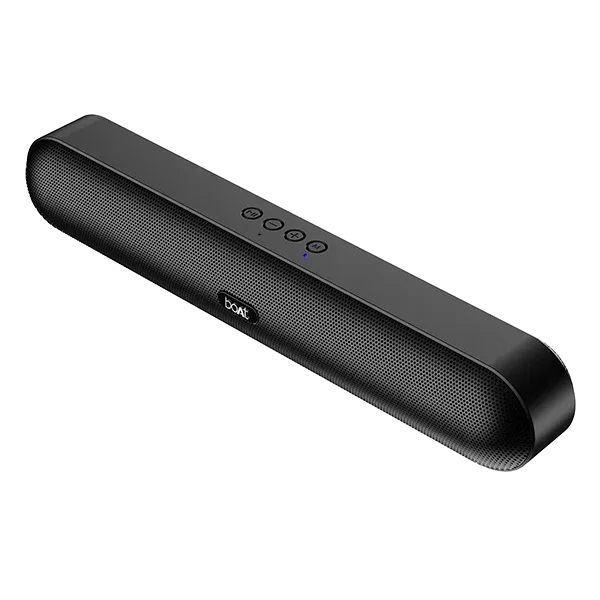
boAt Aavante Bar 480 Bluetooth Soundbar with 10W RMS Signature Sound, 2.0 Channel with 7 Hours Playb
Rs. 999 for a stated 10W - the lowest price in the range, and Rs. 100 a watt.
Why it earned its spot A thousand rupees is the floor, and ten watts is what it buys.
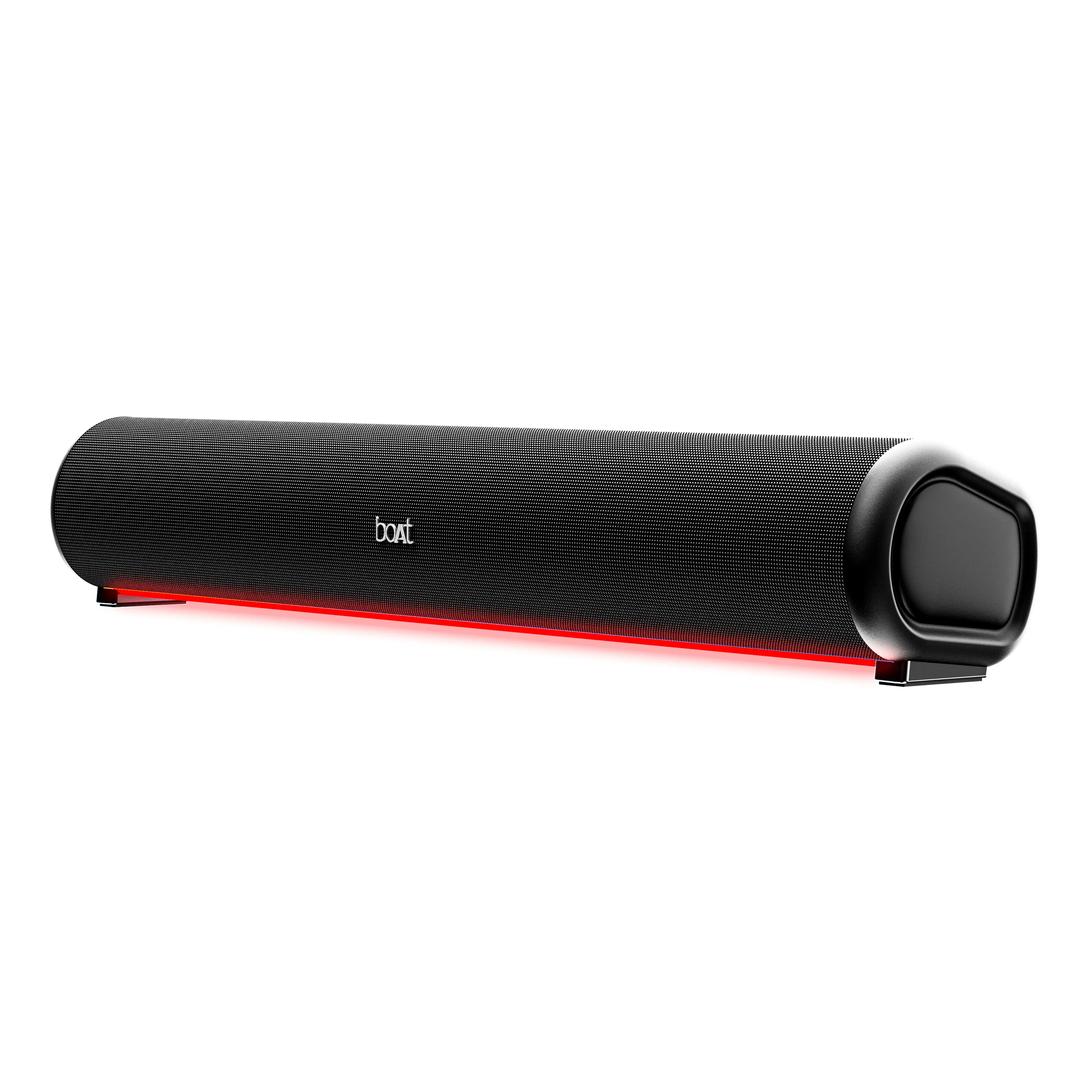
boAt Aavante Bar 950 40W boAt Signature Sound, TWS Feature, RGB Light, 7 Hours Playback, In-built Mi
Rs. 2,299 for a stated 40W - Rs. 57 a watt, with TWS pairing.
Why it earned its spot Four times the output of the Rs. 999 bar for 2.3 times the money.
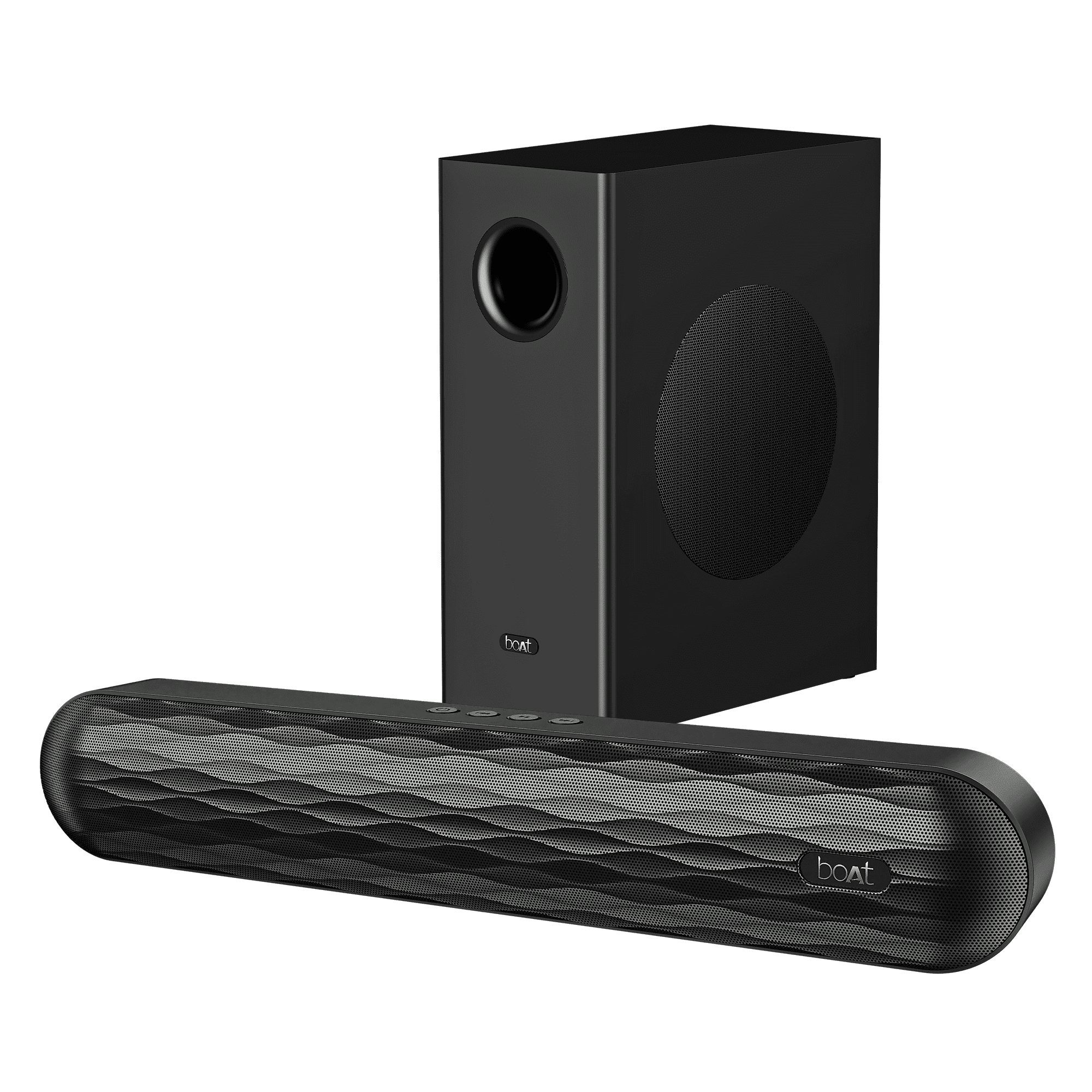
boAt Aavante Lyric 40W Powerful Sound with 2.1 Channel Audio & Wired Subwoofer
Rs. 3,499 for a stated 40W with a 2.1 channel layout - Rs. 87 a watt.
Why it earned its spot The same wattage as the Rs. 2,299 bar, with a subwoofer added.
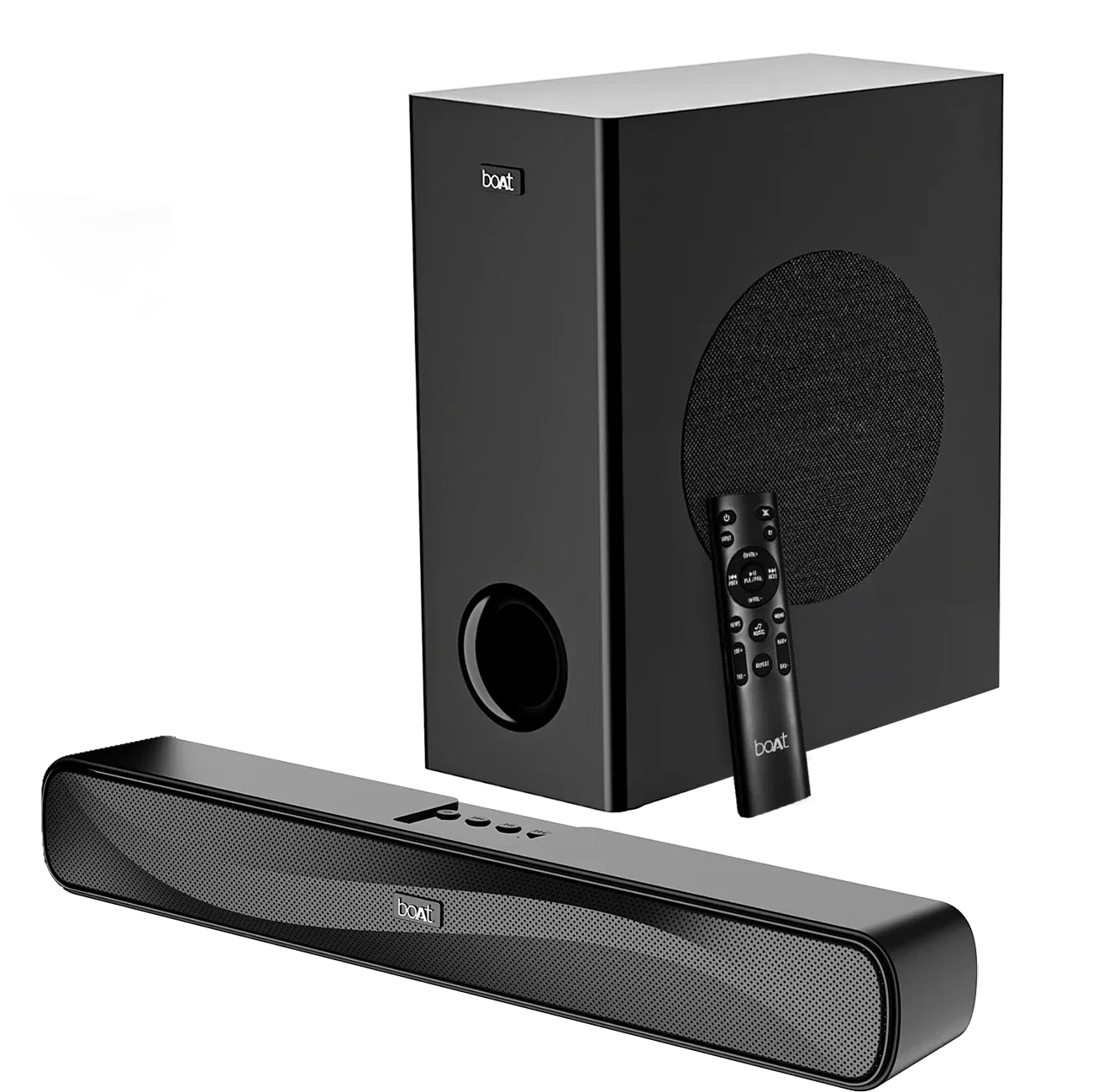
boAt Aavante Bar A1040 50W Bluetooth Soundbar, 2.1 Channel with Wired Subwoofer, Master Remote Contr
Rs. 3,499 for a stated 50W in 2.1 channels - the same price as the 40W bar above it.
Why it earned its spot Identical price, ten more stated watts, same channel layout.
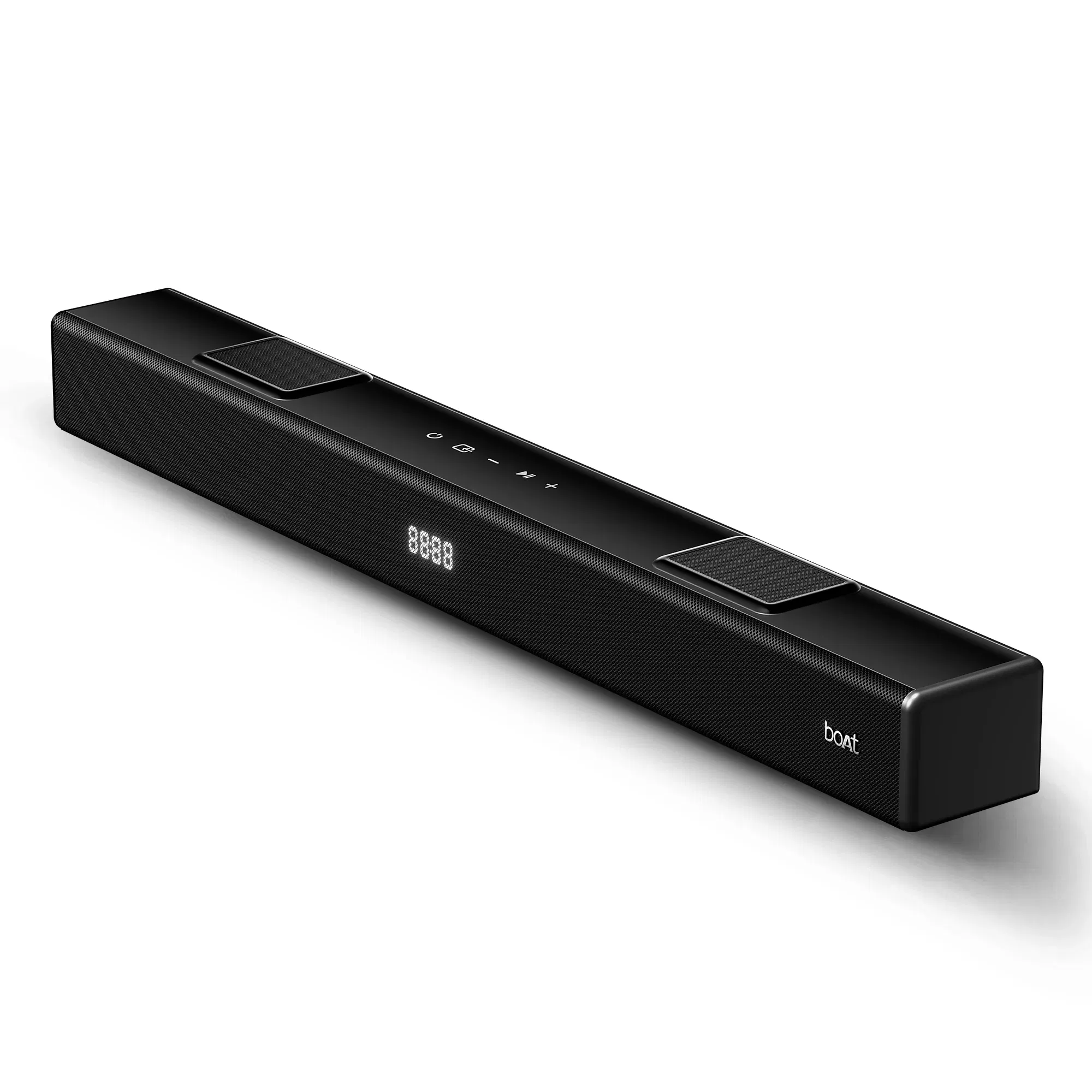
boAt Aavante Octave Plus 2.2 Channel Soundbar with 80W Audio, EQ Modes & Bluetooth v5.3
Rs. 5,499 for a stated 80W across 2.2 channels - Rs. 69 a watt with two subwoofers.
Why it earned its spot Two point two means two bass drivers rather than one.
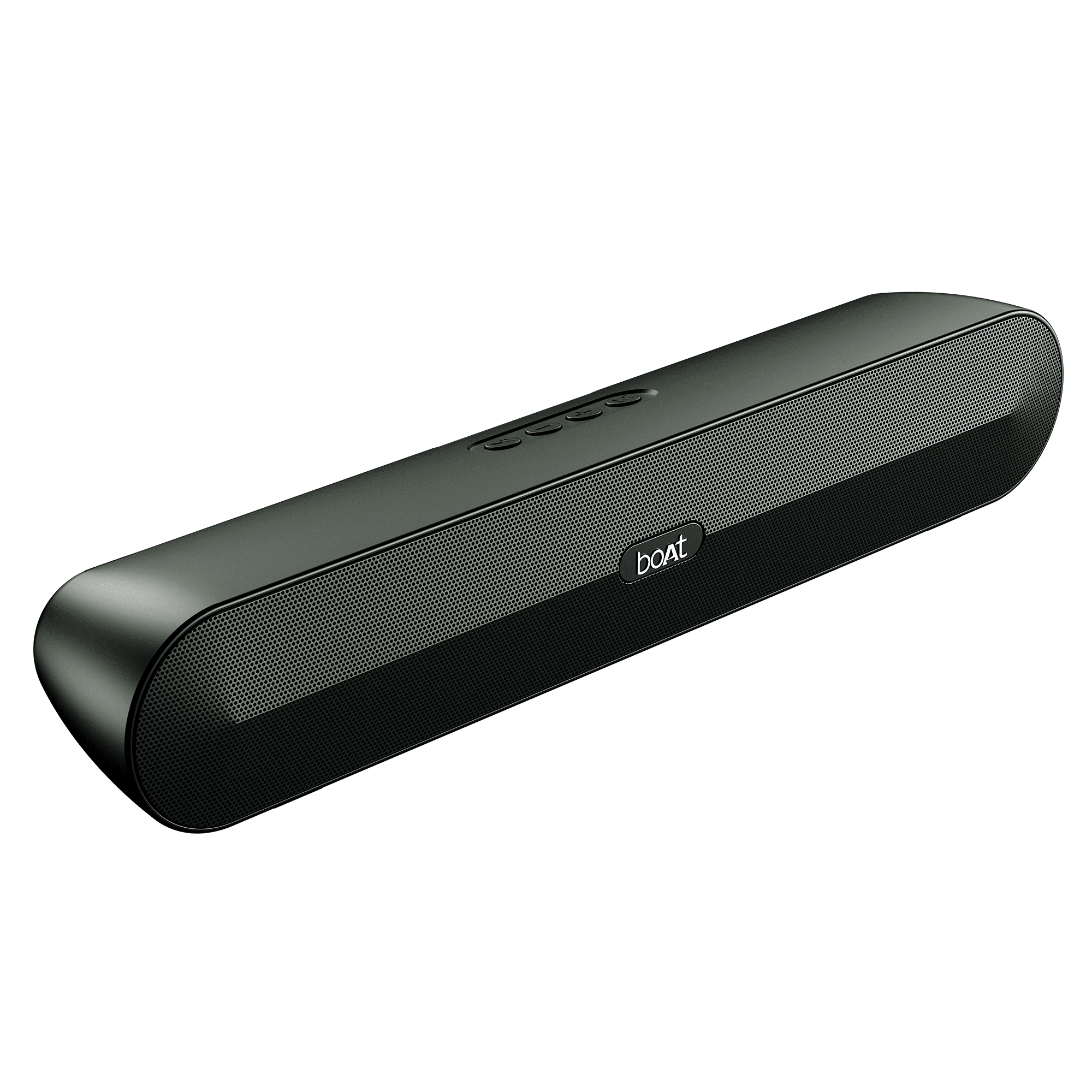
boAt Aavante Bar Joy 10W Portable Soundbar with TWS, Built-in Mic & Multi-Connectivity
Rs. 5,999 for a stated 10W - Rs. 600 a watt, twenty-seven times the cheapest on this page.
Why it earned its spot Six hundred rupees a watt, because you are buying a battery and a handle.
The 2.1 Middle, Where the Model Names Stop Making Sense
Eleven listings from Rs. 5,999 to Rs. 9,999, including a 200W bar that costs Rs. 50 less than a 120W one from the same brand on the same day.
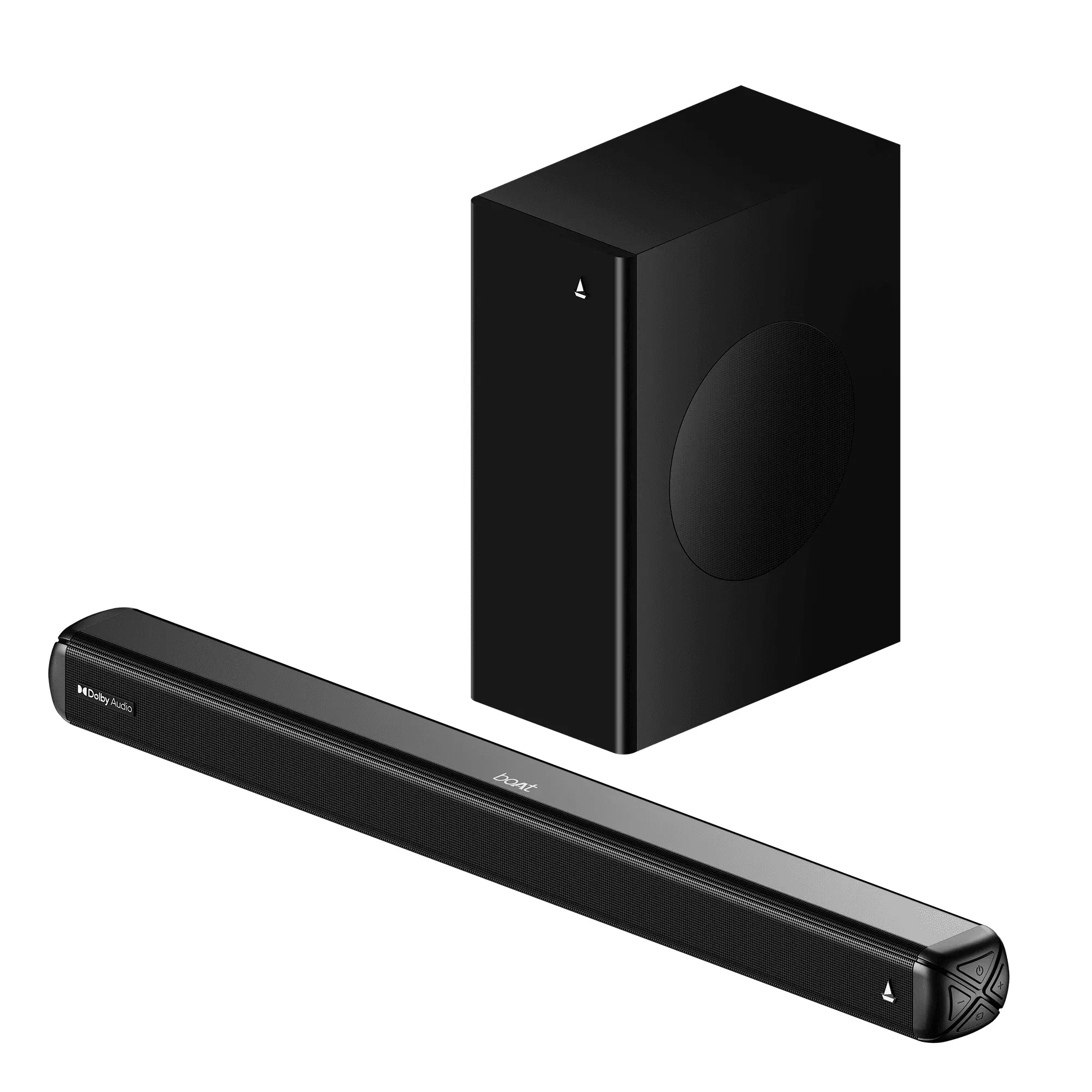
boAt Aavante 2.1 1600D 160W 2.1 Channel Soundbar with Wired Subwoofer, Multi-Connectivity & EQ Modes
Rs. 5,999 for a stated 160W in 2.1 channels - the same price as the 10W portable above it.
Why it earned its spot Sixteen times the stated output of the portable, at the identical price.
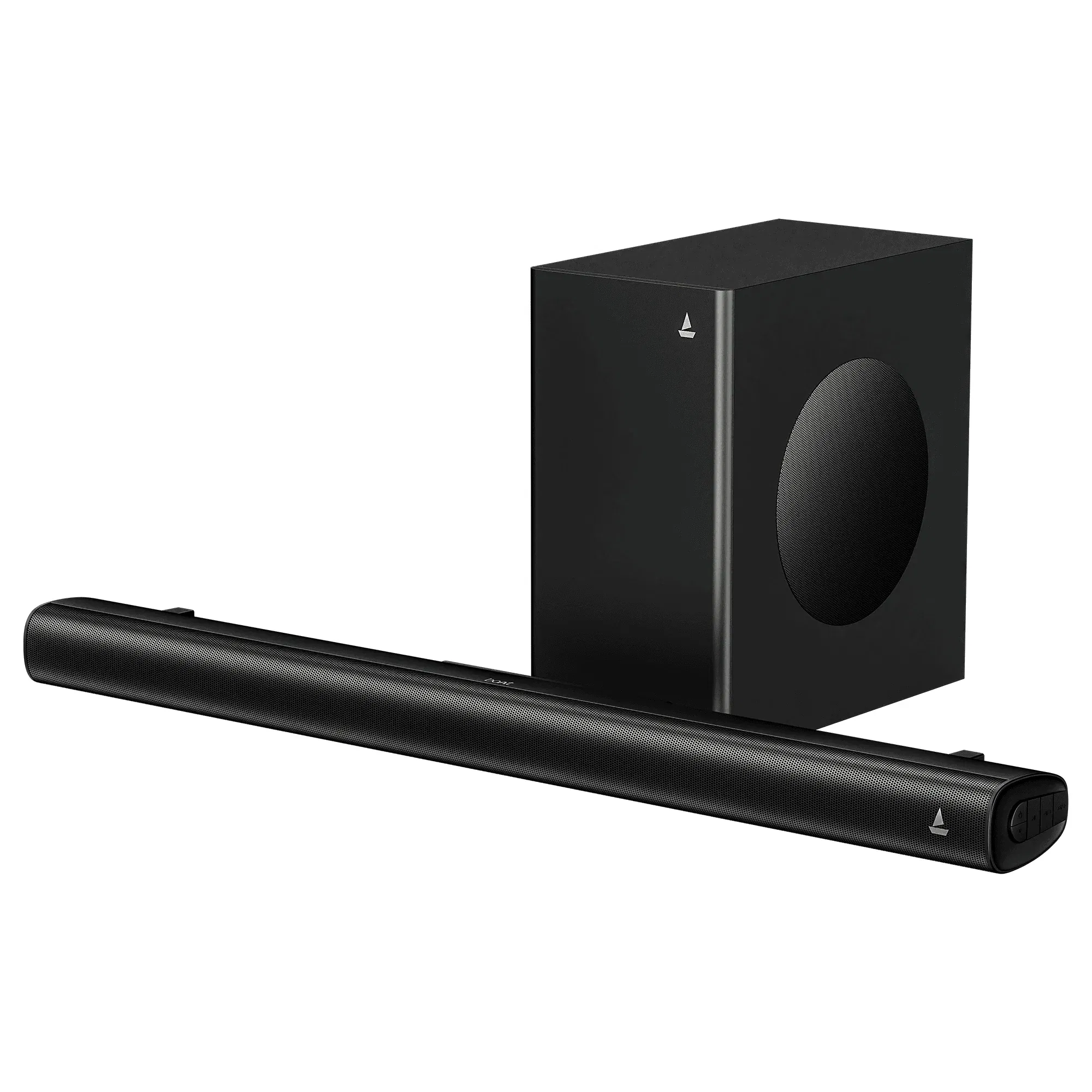
boAt Aavante 2.1 2000 200W Bluetooth Soundbar, 2.1 Channel with Wired Subwoofer, Multi-Connectivity,
Rs. 6,449 for a stated 200W - Rs. 32 a watt, the best ratio outside the 5.1 range.
Why it earned its spot Thirty-two rupees a watt, against Rs. 100 at the top of this page.
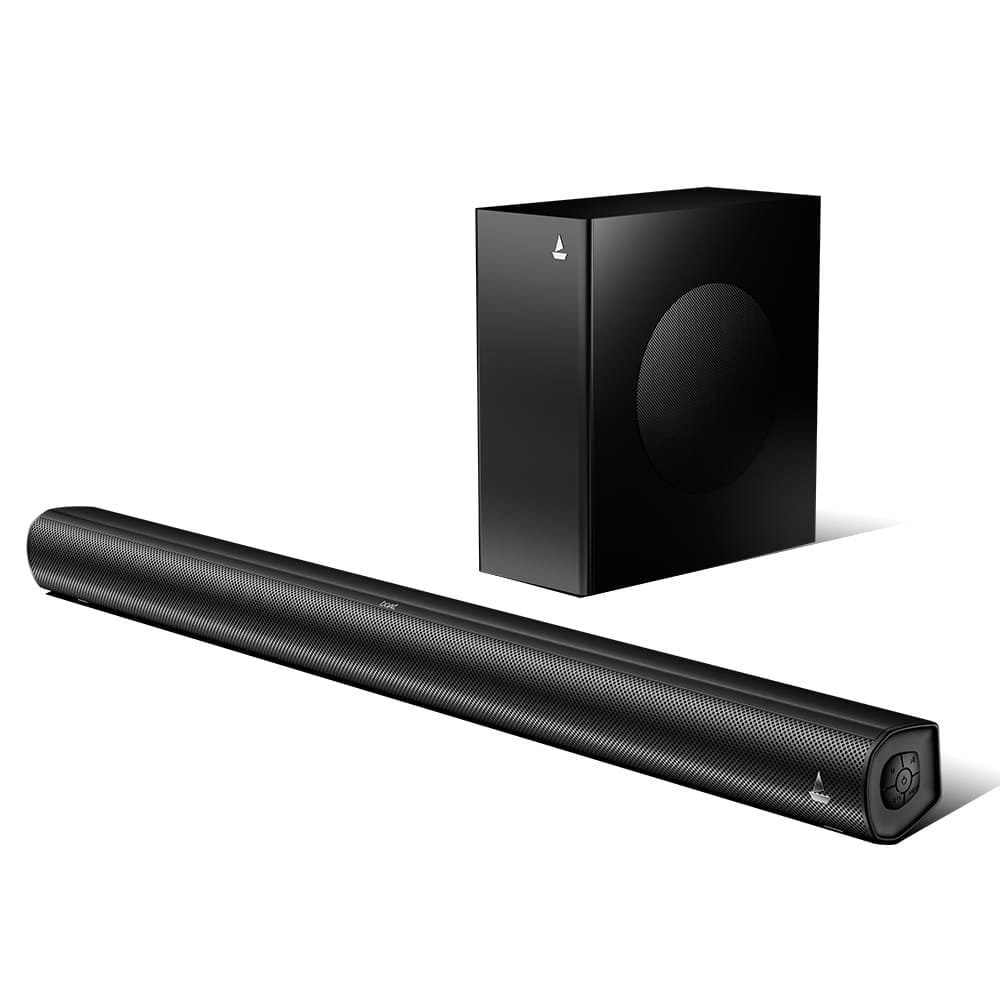
boAt Aavante Pulse 120W 2.1 Channel Soundbar with Bluetooth v5.4, EQ Modes & Master Remote
Rs. 6,499 for a stated 120W - Rs. 50 more than the 200W bar above it.
Why it earned its spot Fifty rupees more than the 200W listing, for 80 fewer stated watts.
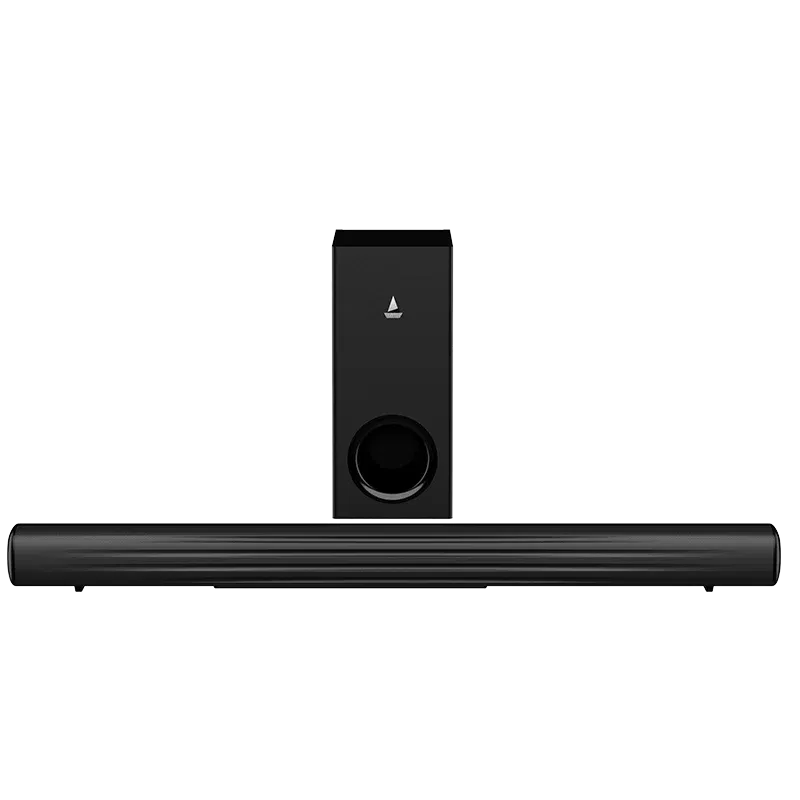
boAt Aavante Bar Aroha Bluetooth Soundbar with Wired Subwoofer, 100W RMS Sound, 2.1 channel, Multipl
Rs. 6,599 for a stated 100W with a wired subwoofer - Rs. 66 a watt.
Why it earned its spot A wired subwoofer is a cable you have to route across a room.
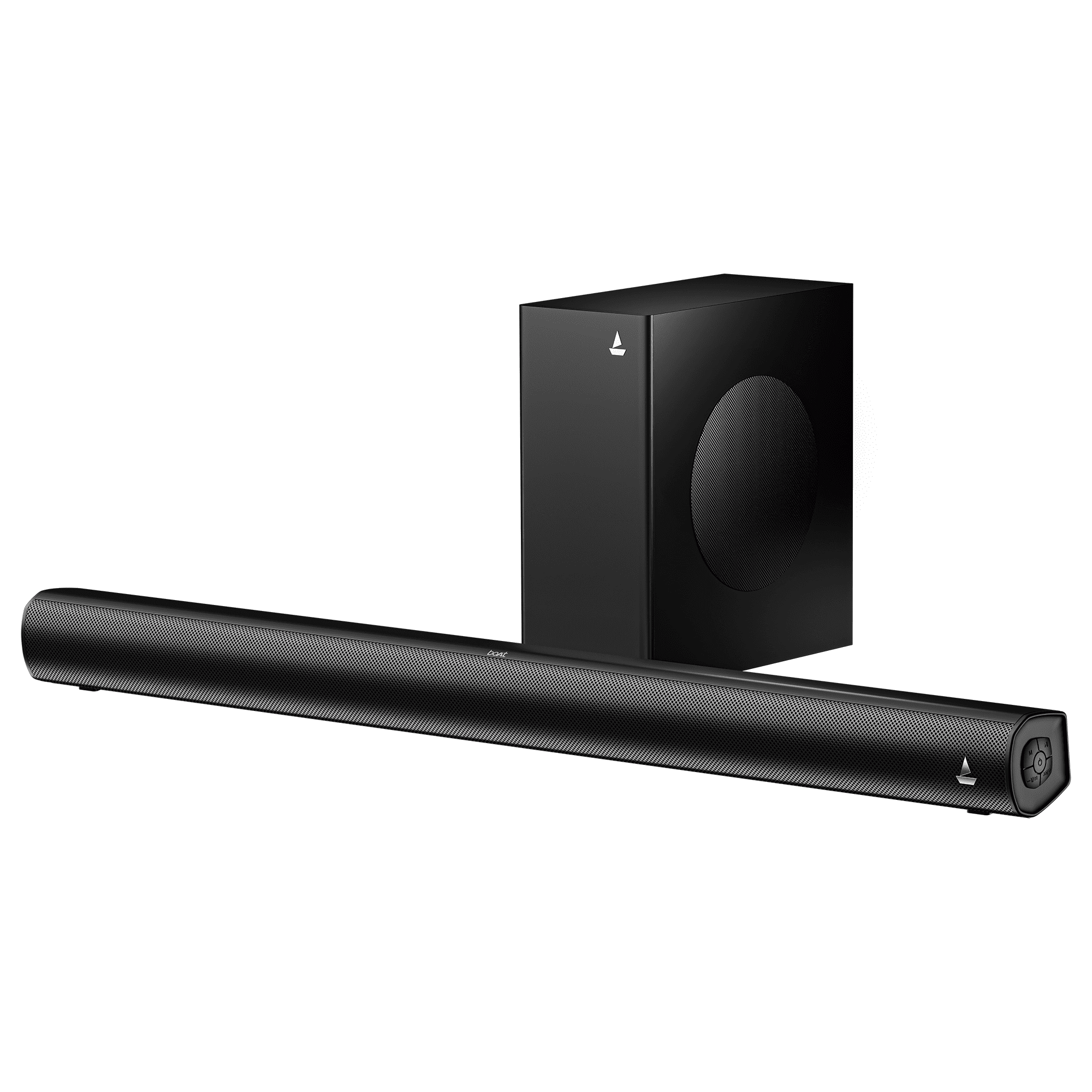
boAt Aavante Aura Plus 160W 2.1 Channel Soundbar with Bluetooth v5.4, EQ Modes & Master Remote
Rs. 6,999 for a stated 160W in 2.1 channels - Rs. 44 a watt.
Why it earned its spot A thousand rupees above the 1600D for the same stated 160 watts.
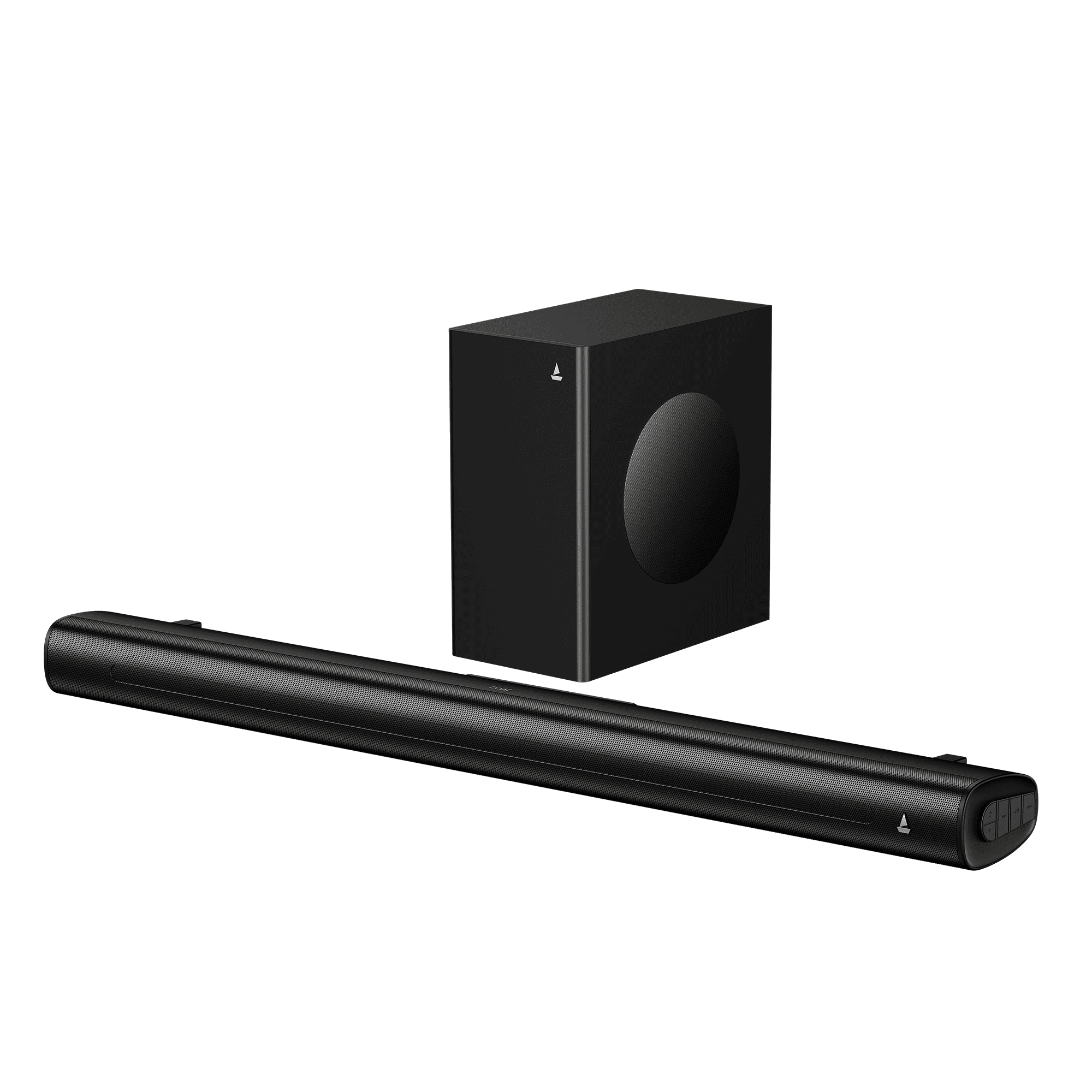
boAt Aavante 2.1 2450 Soundbar with 240W RMS, Wireless Subwoofer & Multi-Connectivity
Rs. 7,499 for a stated 240W - Rs. 31 a watt, the cheapest watts outside the 5.1 bars.
Why it earned its spot Thirty-one rupees a watt, and a wireless subwoofer.
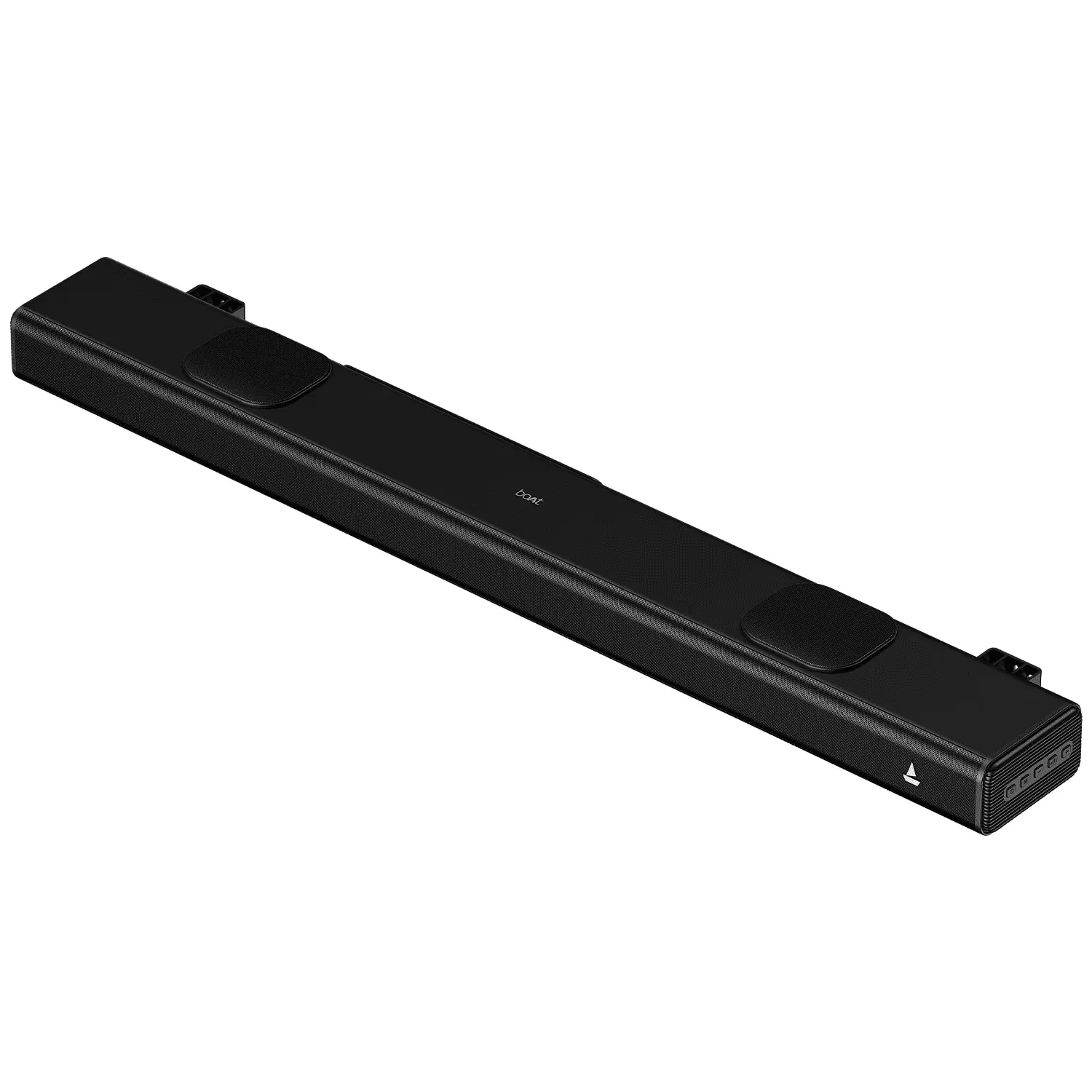
boAt Aavante Raga Plus 140W 2.2 Channel Soundbar with Built-in Subwoofer & Multi-Connectivity
Rs. 7,799 for a stated 140W across 2.2 channels - Rs. 56 a watt.
Why it earned its spot A built-in subwoofer keeps it to one object, and costs bass.
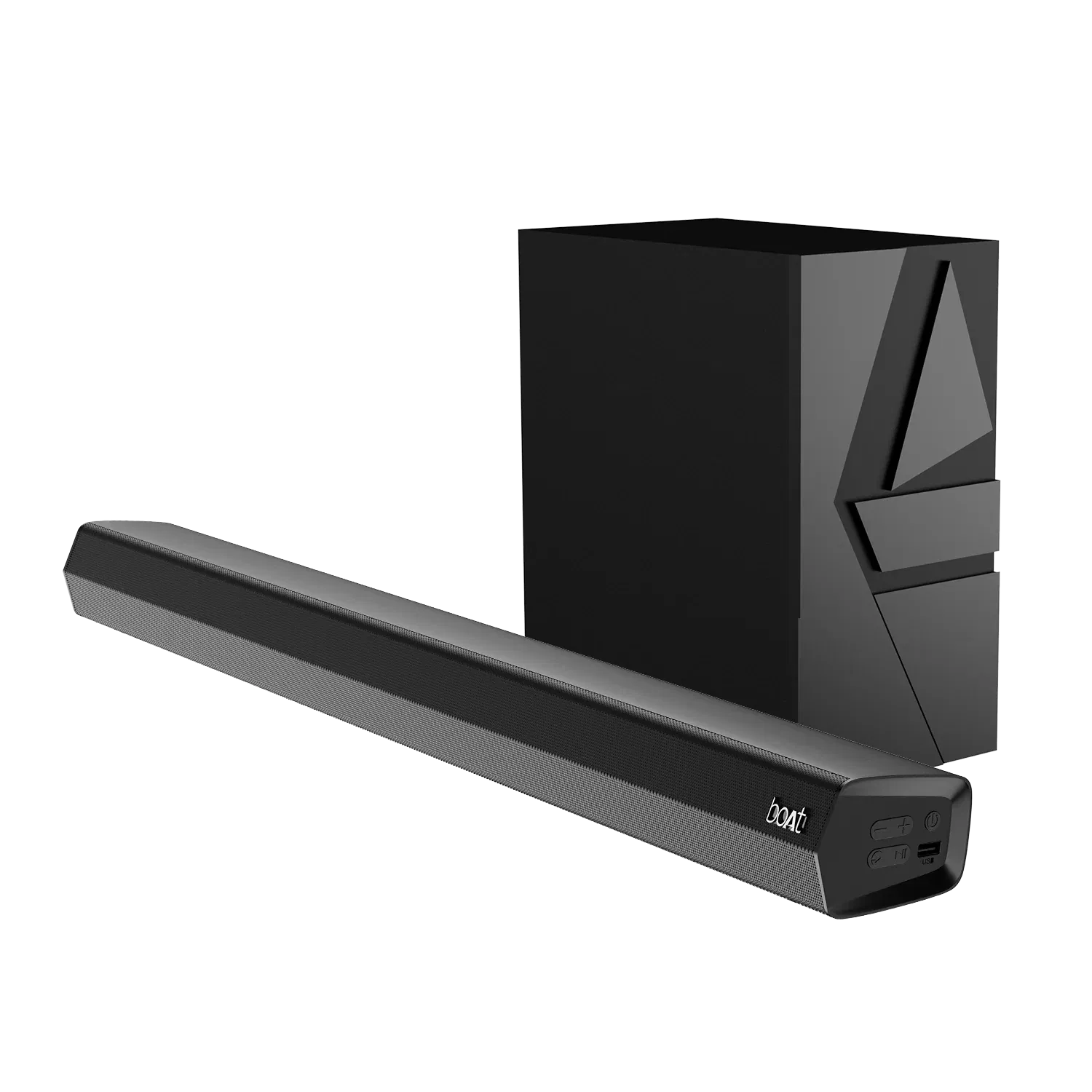
boAt Aavante Bar 2000 Pro Bluetooth Soundbar with Wireless Subwoofer, 200W RMS boAt Signature Sound,
Rs. 7,999 for a stated 200W - Rs. 40 a watt, at 65 per cent off, the catalogue median badge.
Why it earned its spot Exactly the catalogue's median badge, on exactly its middle specification.
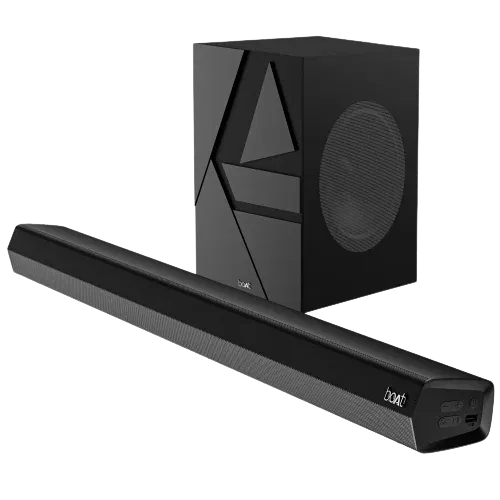
boAt Aavante Bar Quake 200W RMS boAt Signature Sound, 2.1 Channel Soundbar with Wired Subwoofer, Ent
Rs. 8,999 for a stated 200W at 44 per cent off - one of the shallowest discounts here.
Why it earned its spot Forty-four per cent, on a catalogue whose median is 65.
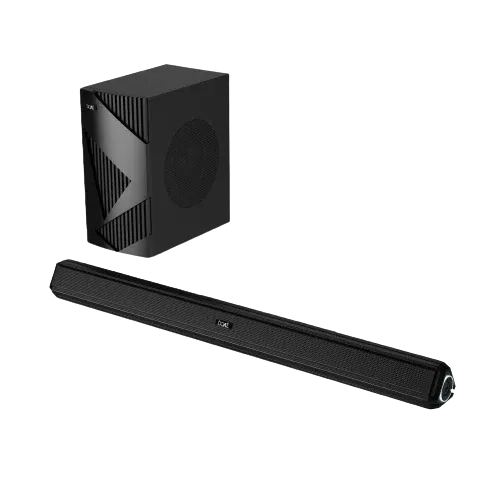
boAt Aavante Bar Chord 160W RMS 2.1 Channel Bluetooth Soundbar, 6.5 inch Wireless Subwoofer, EQ Mode
Rs. 9,339 for a stated 160W - Rs. 58 a watt, near the top of the 2.1 range.
Why it earned its spot Nine thousand rupees for the same stated output as a Rs. 5,999 bar.
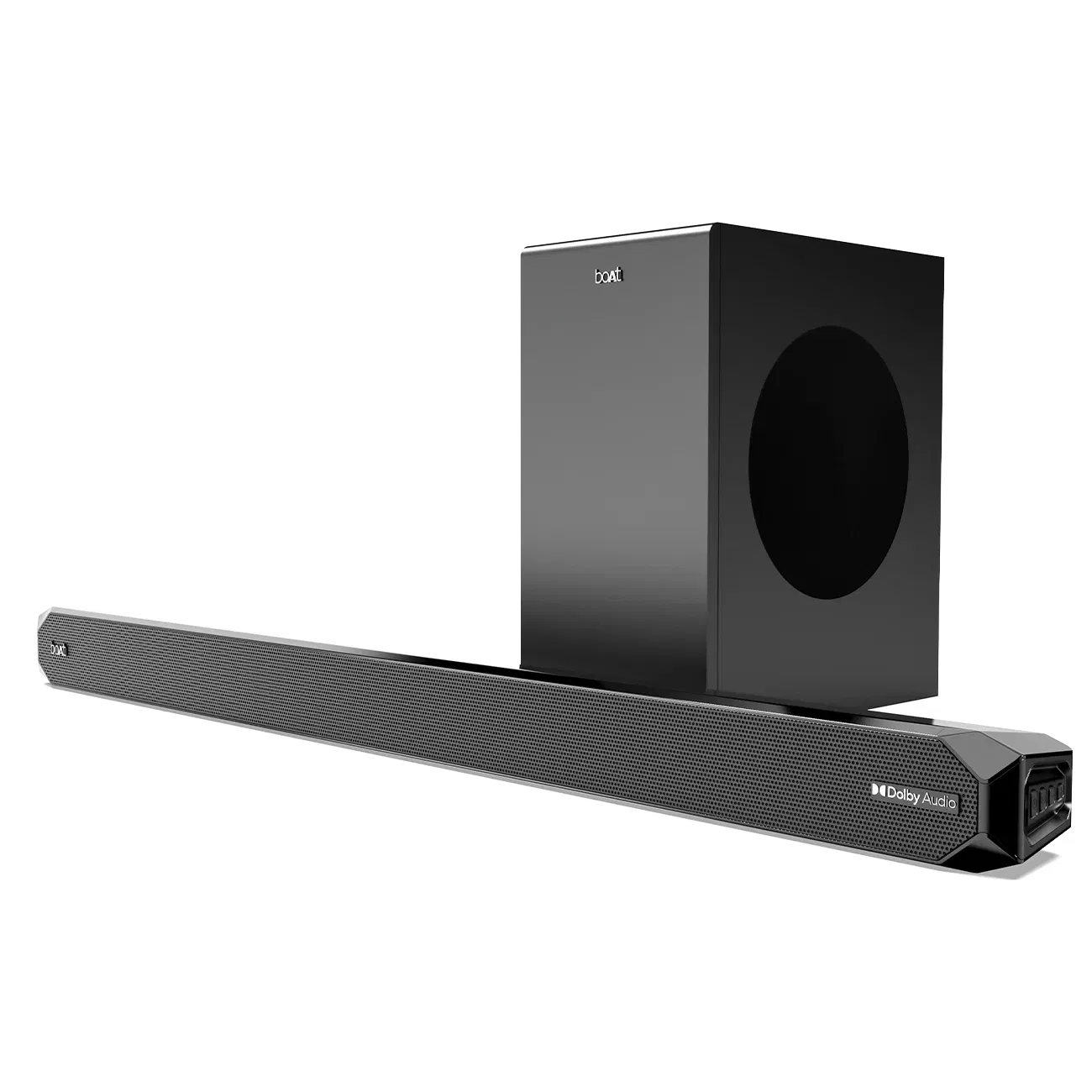
boAt Aavante Bar A2060 Dolby 160W Dolby Soundbar, 2.1 Channel with Wired Subwoofer, Master Remote Co
Rs. 9,999 for a stated 160W with Dolby audio decoding - Rs. 62 a watt.
Why it earned its spot Dolby decoding matters only if your source actually sends it.
The 5.1 Range, Where the Watts Get Cheap
Six systems from Rs. 9,999 to Rs. 34,999 at Rs. 22 to Rs. 50 a watt - and the wired rear satellites that decide whether you ever hear them.
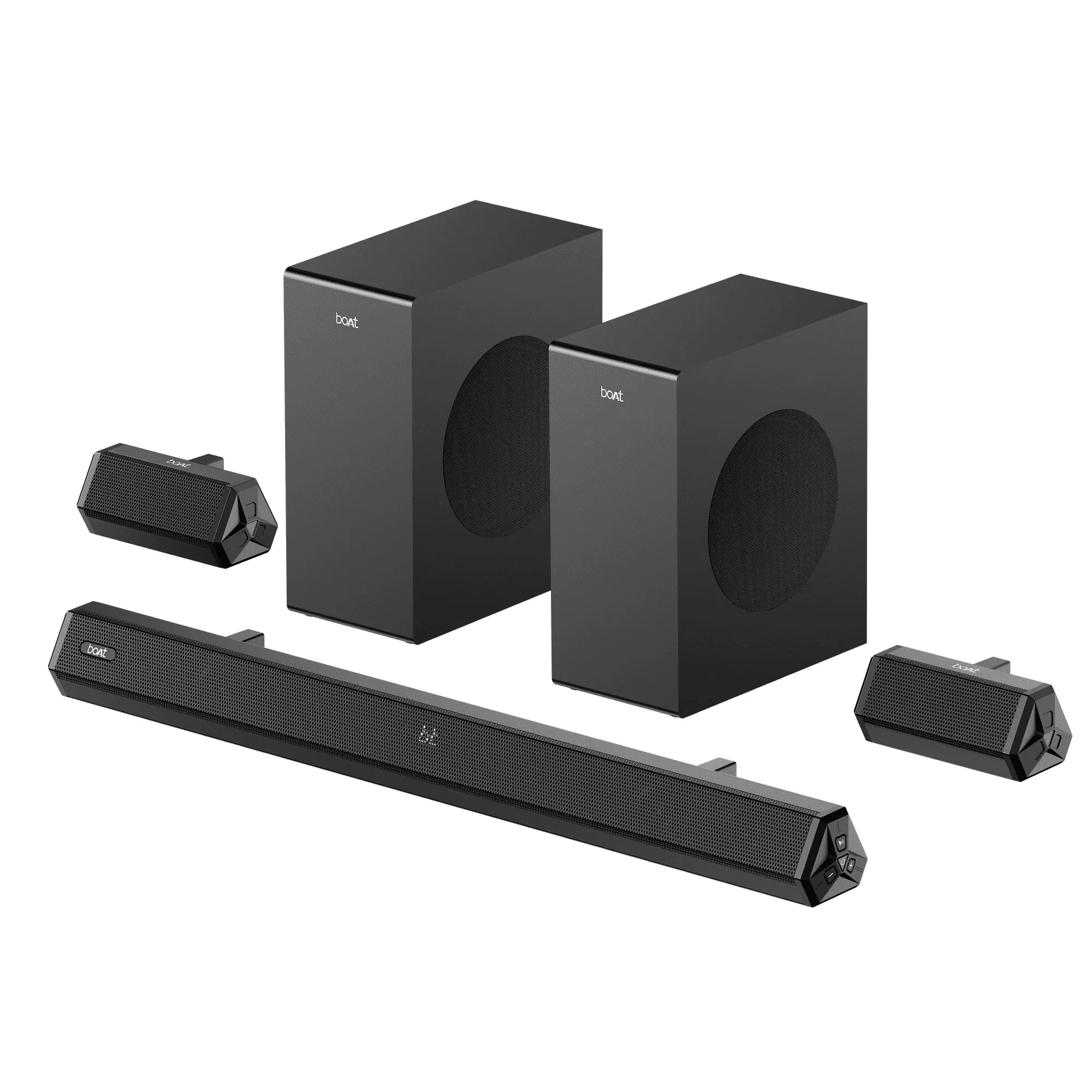
boAt Aavante Bar Prime B450 450W 5.2 Channel Soundbar with Dual Wired Subwoofers & Rear Satellites
Rs. 9,999 for a stated 450W across 5.2 channels - Rs. 22 a watt, the best ratio here.
Why it earned its spot Twenty-two rupees a watt, against Rs. 600 on the portable.
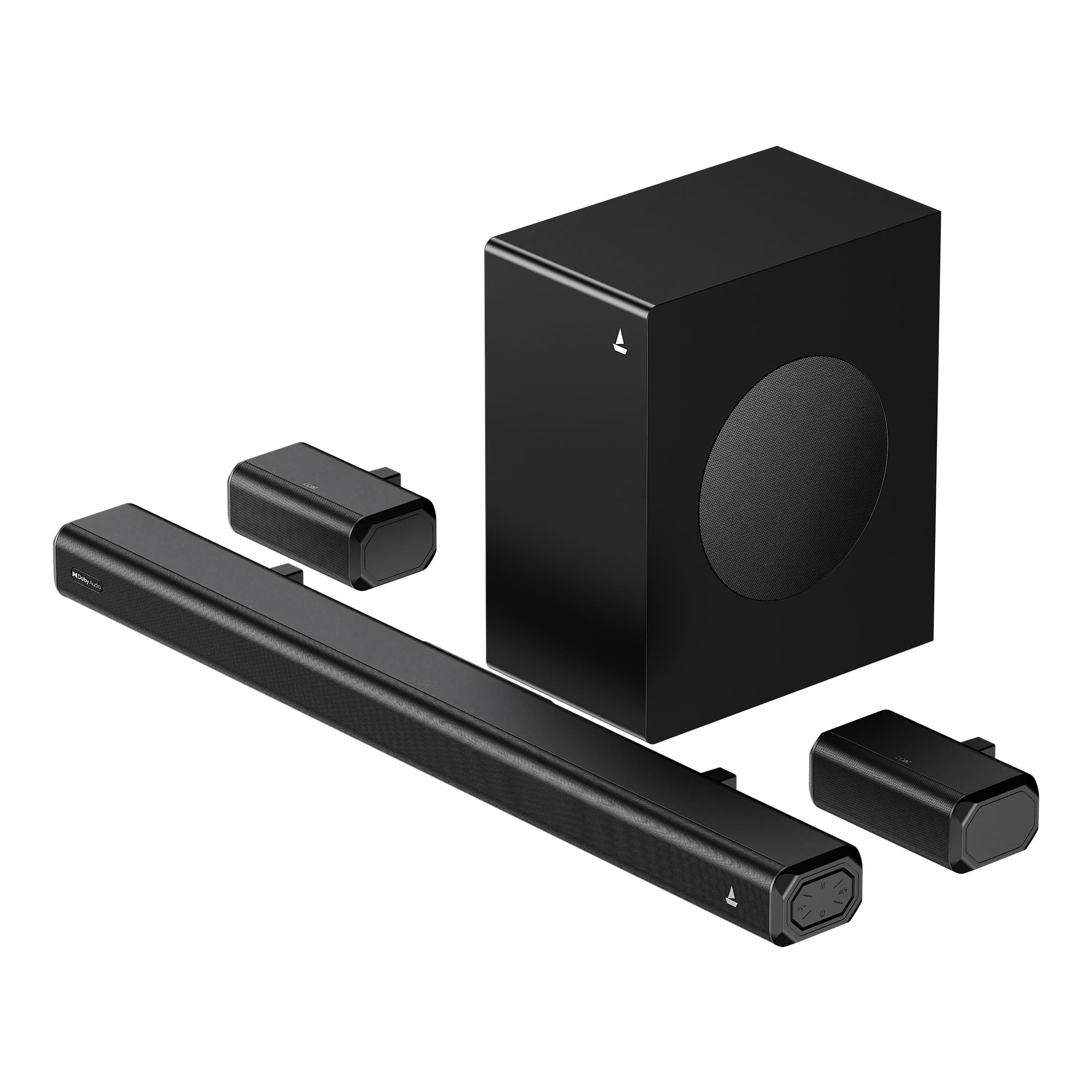
boAt Aavante Prime 5.1 5000D 500W 5.1 Channel Soundbar with Wired Subwoofer, Satellites & Multi-Conn
Rs. 10,999 for a stated 500W in 5.1 channels - Rs. 22 a watt.
Why it earned its spot Fifty more stated watts than the B450 for Rs. 1,000, at the same rate.
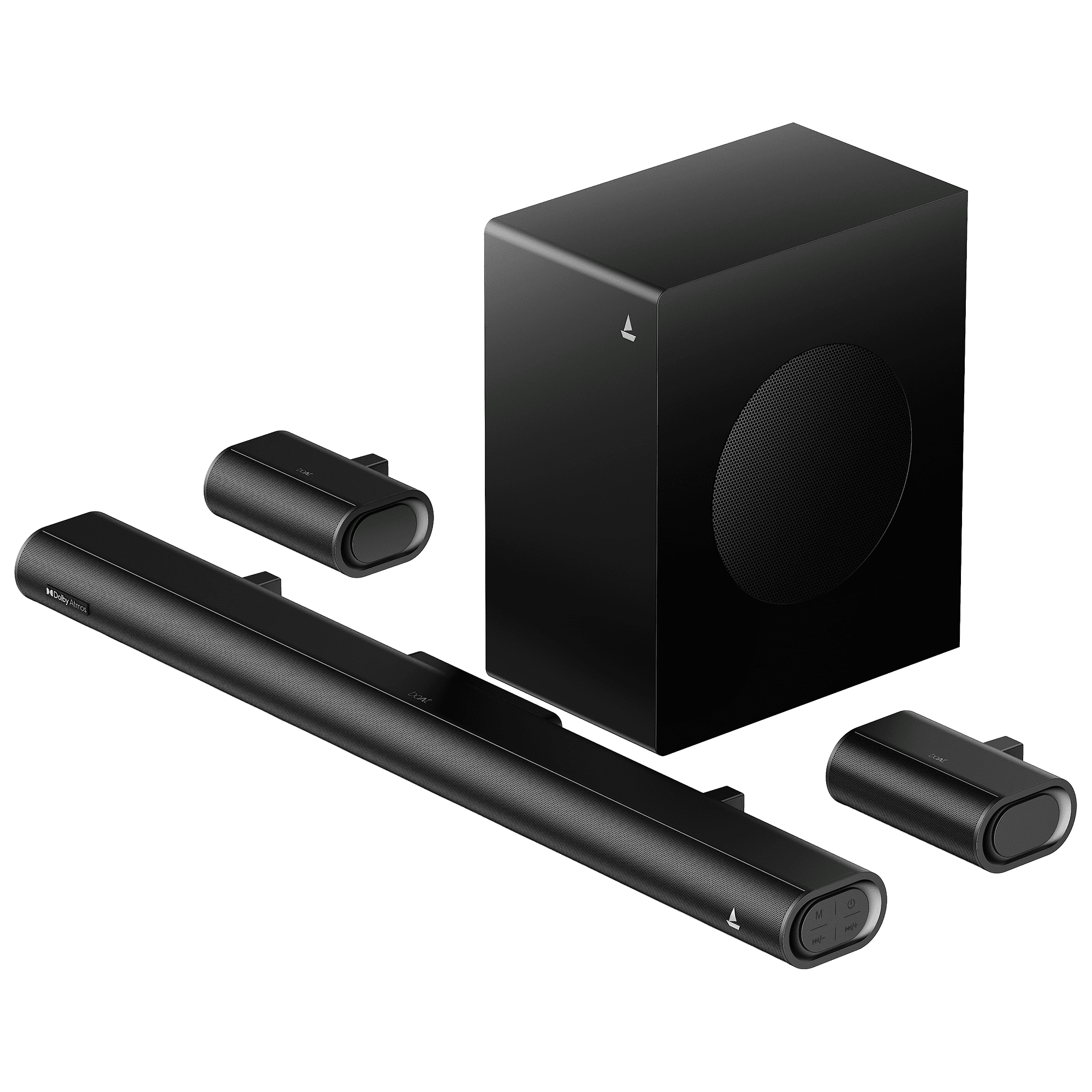
boAt Aavante Prime 5.1 5000DA 500W 5.1 Channel Soundbar with Dolby Atmos, Bluetooth v5.3 & Master Re
Rs. 13,449 for a stated 500W with Dolby Atmos decoding - Rs. 27 a watt.
Why it earned its spot Atmos decoding costs Rs. 2,450 over the identical wattage without it.
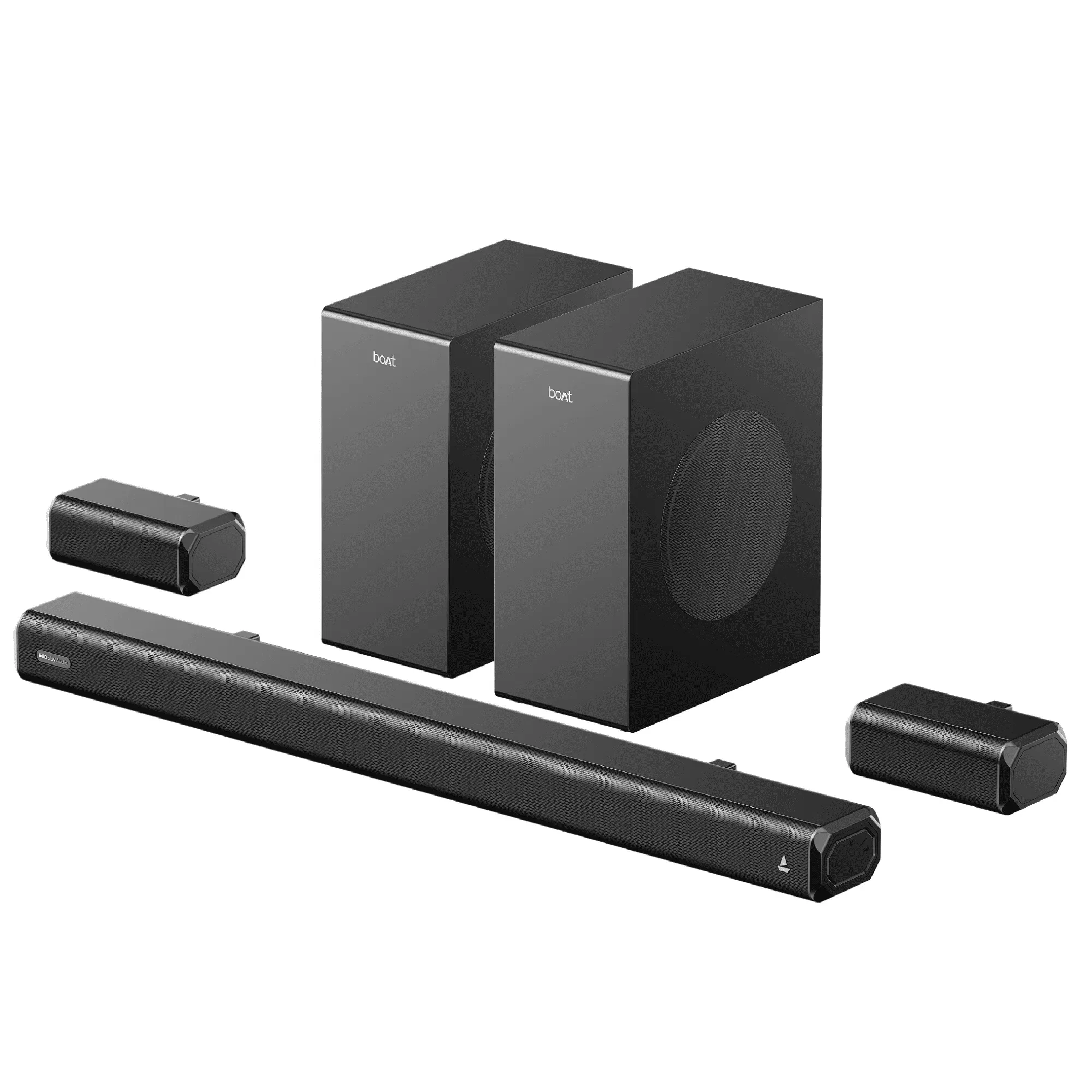
boAt Aavante Bar Prime DA600 600W 5.2 Channel Soundbar with Dual Wired Subwoofers & Rear Satellites
Rs. 15,999 for a stated 600W across 5.2 channels - Rs. 27 a watt.
Why it earned its spot Six hundred stated watts is more than most Indian living rooms can use.
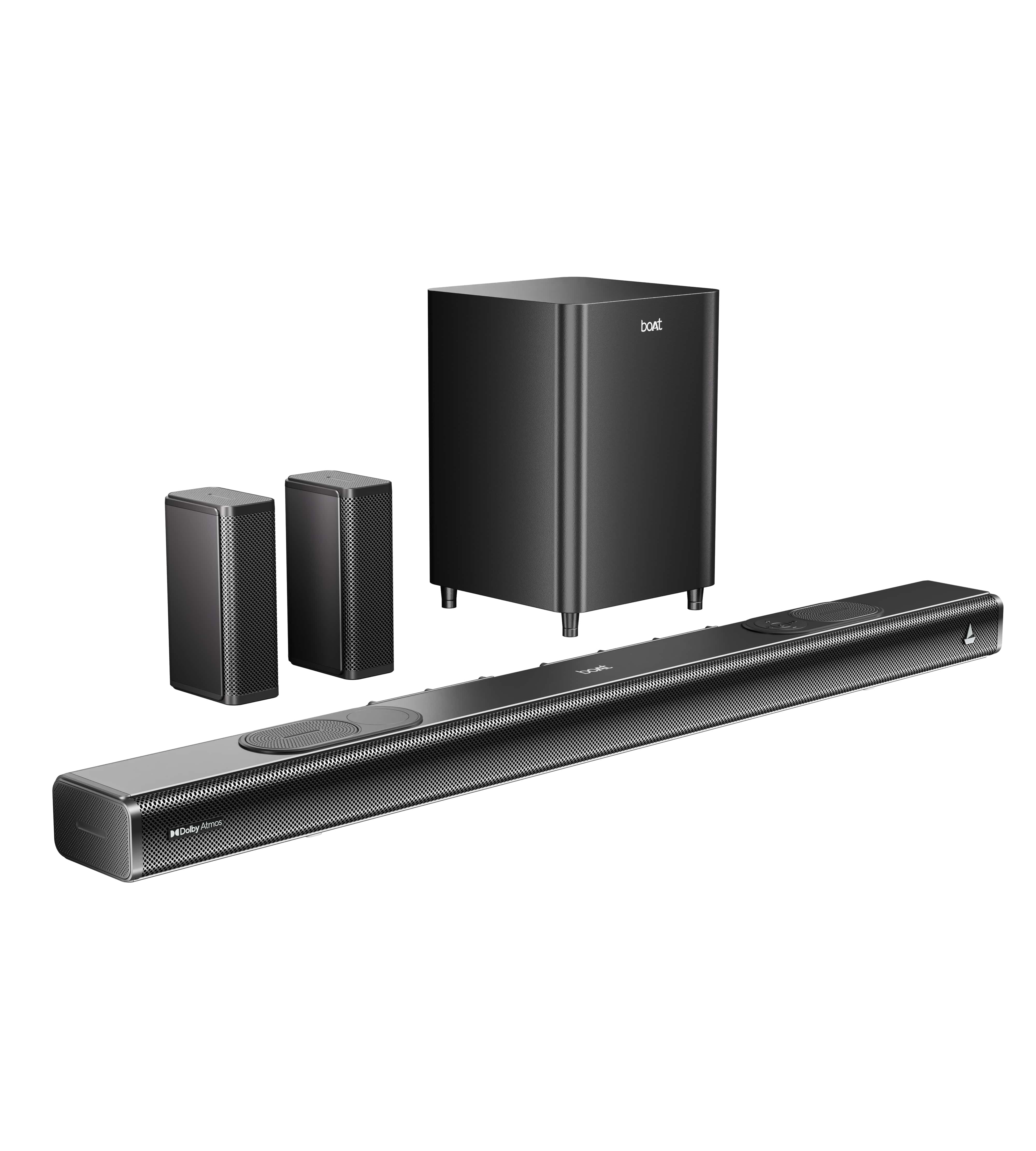
boAt Aavante Prime 7.1.4 7050DA 700W RMS Soundbar with Dolby Atmos, Wired Subwoofers & Wireless Sate
Rs. 19,999 for a stated 700W in a 7.1.4 layout - Rs. 29 a watt.
Why it earned its spot Eleven channels, and the .4 means height channels.
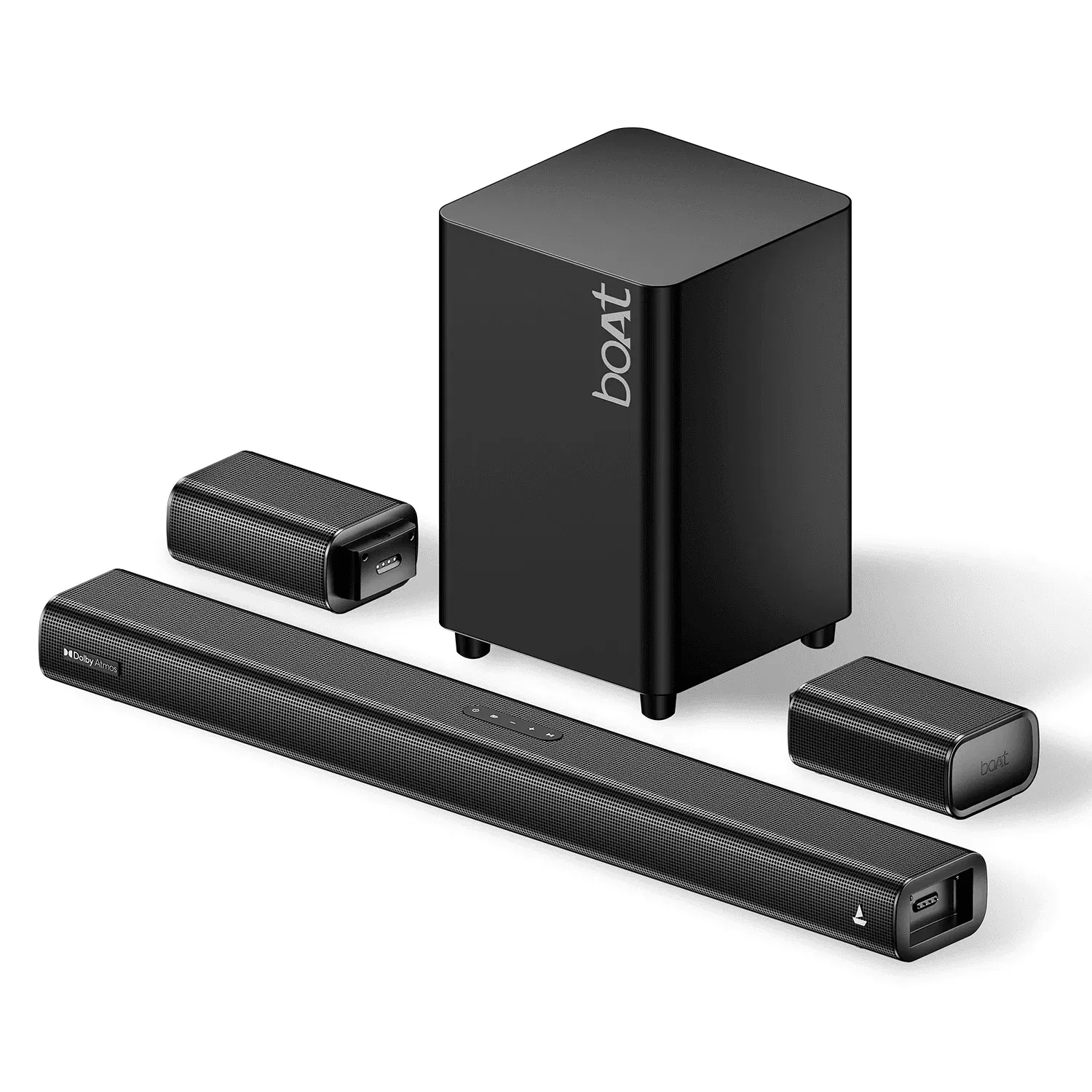
boAt Aavante Prime X 700W 7.1.4 Channel Soundbar with Wireless Subwoofer & Satellites *(Free Install
Rs. 34,999 for a stated 700W in 7.1.4 - Rs. 50 a watt, the highest price in the read.
Why it earned its spot The same stated wattage as the Rs. 19,999 system, at Rs. 15,000 more.
Five rules for buying a soundbar
First: divide the price by the stated watts and use it to compare listings inside one brand only, because RMS figures are not measured to a common standard between manufacturers - the same caution we applied on the multi-brand audio shelf. Second: read the channel notation before the wattage - 2.1 adds a real subwoofer, 2.2 usually means two drivers inside the bar, and 5.1 adds rear satellites that are wired on every system here. Third: ignore the badge on a single-brand store, where a stated MRP three or four times the selling price is routine, the same pattern we documented across boAt's wider catalogue. Fourth: prefer a wireless subwoofer, because a wired one dictates where the bass sits. Fifth: check that your source actually sends Dolby before paying for Dolby - a cable set-top box usually does not.
How our picks compare
| Product | Sale price | MRP | Discount |
|---|---|---|---|
| boAt Aavante Bar 480, 10W | Rs. 999 | Rs. 3,490 | 71% |
| boAt Aavante Bar 950, 40W | Rs. 2,299 | Rs. 7,990 | 71% |
| boAt Aavante Lyric, 40W 2.1 | Rs. 3,499 | Rs. 13,490 | 74% |
| boAt Aavante Bar A1040, 50W | Rs. 3,499 | Rs. 9,990 | 65% |
| boAt Aavante Octave Plus, 80W | Rs. 5,499 | Rs. 14,990 | 63% |
| boAt Aavante Bar Joy, 10W portable | Rs. 5,999 | Rs. 6,990 | 14% |
| boAt Aavante 2.1 1600D, 160W | Rs. 5,999 | Rs. 21,990 | 73% |
| boAt Aavante 2.1 2000, 200W | Rs. 6,449 | Rs. 24,490 | 74% |
| boAt Aavante Pulse, 120W 2.1 | Rs. 6,499 | Rs. 18,990 | 66% |
| boAt Aavante Bar Aroha, 100W | Rs. 6,599 | Rs. 15,990 | 59% |
| boAt Aavante Aura Plus, 160W | Rs. 6,999 | Rs. 21,990 | 68% |
| boAt Aavante 2.1 2450, 240W | Rs. 7,499 | Rs. 29,990 | 75% |
| boAt Aavante Raga Plus, 140W 2.2 | Rs. 7,799 | Rs. 17,990 | 57% |
| boAt Aavante Bar 2000 Pro, 200W | Rs. 7,999 | Rs. 22,990 | 65% |
| boAt Aavante Bar Quake, 200W | Rs. 8,999 | Rs. 15,990 | 44% |
| boAt Aavante Bar Chord, 160W | Rs. 9,339 | Rs. 21,990 | 58% |
| boAt Aavante Bar A2060 Dolby, 160W | Rs. 9,999 | Rs. 23,990 | 58% |
| boAt Aavante Bar Prime B450, 450W 5.2 | Rs. 9,999 | Rs. 35,990 | 72% |
| boAt Aavante Prime 5.1 5000D, 500W | Rs. 10,999 | Rs. 34,990 | 69% |
| boAt Aavante Prime 5.1 5000DA, 500W | Rs. 13,449 | Rs. 37,990 | 65% |
| boAt Aavante Bar Prime DA600, 600W | Rs. 15,999 | Rs. 44,990 | 64% |
| boAt Aavante Prime 7.1.4 7050DA, 700W | Rs. 19,999 | Rs. 89,990 | 78% |
| boAt Aavante Prime X, 700W 7.1.4 | Rs. 34,999 | Rs. 99,990 | 65% |
What we skipped — and why
What we look for
We price every listing per stated watt, and say what that number is worth
Across the 23 listings on this page a watt of stated RMS output costs between Rs. 22 and Rs. 600 - a 27x spread inside one brand's own catalogue, with the cheapest watts in the 5.1 and 5.2 systems and the dearest in a 10W portable. That ratio is the fastest way to see which listings are priced on sound and which are priced on convenience. But it is a comparison tool, not a measurement: RMS figures published by consumer audio brands are not measured to a common standard, are not comparable with another manufacturer's, and we use them here only to compare listings within this one catalogue.
We ignore the discount badge entirely, because it carries no information
Across the listings we seated, the badge runs from 14 to 78 per cent with a median of 65, and nearly every one carries a stated MRP three to four times its selling price - Rs. 89,990 stated against Rs. 19,999 charged, Rs. 34,990 against Rs. 10,999, Rs. 24,490 against Rs. 6,449. When a stated MRP is set that way as a matter of routine, the percentage computed from it describes the MRP field and nothing else. We report each figure because it is on the listing, and we rank on none of them - the two listings on this page with the smallest badges are among the better-priced products on it.
We read the channel notation, because it says more than the wattage
A 2.0 bar is two speakers in one box. A 2.1 adds a separate subwoofer, which produces low frequencies no bar-mounted driver can. A 2.2 usually means two bass drivers inside the bar - tidier and physically limited by the enclosure. A 5.1 adds two rear satellites, which are wired on every system here. And a 7.1.4 adds four height channels for object-based audio. Those distinctions change what you hear far more than a wattage figure does, and on this shelf a 40W 2.1 bar and a 40W 2.0 bar sit Rs. 1,200 apart for exactly that reason.
We attach no rating pill anywhere, because boAt's feed publishes none
boAt's own product feed carries no customer rating or rating count for any of the 972 products we read, so nothing on this page is ranked on customer feedback. On a single-brand store that is normal and it is also limiting: there is no crowd here to tell you whether one 160W bar is better tuned than another 160W bar at Rs. 3,340 less. Where two listings in this catalogue share a wattage and a channel layout and differ only in price, we have said so plainly rather than inventing a reason for the gap.
FAQs
How many watts does a soundbar actually need?
Far fewer than the top of this range offers, and the number is less useful than it looks. In a typical Indian living room of 150 to 200 square feet, a system stating around 200W RMS already runs comfortably at a third of its capacity - past that you are buying headroom and driver quality rather than volume you will ever use. For a bedroom television, 40 to 80W is plenty. The larger caution is that RMS figures published by consumer audio brands are not measured to a common standard and are not verifiable, so a 200W claim from one manufacturer and a 200W claim from another are not the same number. On this page we use the figure only to compare listings inside boAt's own catalogue, where at least the methodology is presumably consistent - and even there it produces oddities, like a 200W bar costing Rs. 50 less than a 120W one.
What do 2.1, 5.1 and 7.1.4 mean on a soundbar?
The first number is the count of ordinary speaker channels, the second is the subwoofer count, and a third number, where present, is height channels. So a 2.0 bar is two speakers in one box; a 2.1 adds a separate subwoofer, which produces the low frequencies no slim bar-mounted driver can; a 2.2 usually means two bass drivers built into the bar itself, which is tidier and physically limited by how little air a slim enclosure can move; a 5.1 adds two rear satellite speakers behind the listener; and a 7.1.4 adds four height channels for object-based audio like Dolby Atmos. Those distinctions change what you hear far more than the wattage does - on this page a 40W 2.1 bar and a 40W 2.0 bar sit Rs. 1,200 apart, and that Rs. 1,200 is entirely the subwoofer. Two practical points: rear satellites are wired on every system here, and Atmos height effects need either up-firing drivers or genuine ceiling speakers, not processing alone.
Are boAt's soundbar discounts real?
The percentages are arithmetic on a stated MRP that the brand sets, and on this catalogue that MRP is routinely three to four times the selling price. Across the 23 listings on this page the badge runs from 14 to 78 per cent with a median of 65, and the examples speak for themselves: Rs. 89,990 stated against Rs. 19,999 charged, Rs. 34,990 against Rs. 10,999, Rs. 24,490 against Rs. 6,449. A number produced that way carries no information about whether one listing is better value than another - which is why we rank nothing on this page by it. Notably, the two listings here with the smallest badges, at 14 and 44 per cent, are among the more sensibly priced products in the range, because their stated MRPs are closer to reality. Compare the selling prices and the specifications; treat the percentage as decoration.
Wireless or wired subwoofer?
Wireless, wherever the price difference is small, and the reason is placement rather than tidiness. A subwoofer's output changes substantially depending on where in a room it sits - in a corner it is boomy, against a wall it is stronger, in the open it is tighter - and a wired sub means the cable length decides where it can go, which usually means beside the television whether that sounds good or not. A wireless subwoofer still needs a mains socket where you put it, so it is not free of constraints, but it lets you move it around the room until it sounds right. On this page several listings at nearly identical prices differ on precisely this point, and the listing text is the only place it is stated. The same logic applies more forcefully to 5.1 systems, whose rear satellites are wired on every model here - if you will not run cable to the back of the room, buy a 2.1 system instead and spend the difference on a better subwoofer.
Which boAt soundbar is the best buy?
For a living room, the Aavante Bar Prime B450 at Rs. 9,999 - a stated 450W across 5.2 channels at Rs. 22 a watt, the cheapest output in the catalogue, provided you are willing to run cables to two rear satellites. If you are not, the Aavante 2.1 2450 at Rs. 7,499 is a stated 240W with a wireless subwoofer at Rs. 31 a watt and needs nothing more than two sockets. For a bedroom television, the Aavante Bar 950 at Rs. 2,299 is the point at which a soundbar starts being audibly better than the television's own speakers, and two of them can pair as a stereo pair later. We would avoid the 10W portable at Rs. 5,999 unless you specifically need a battery, because the identically priced 160W 2.1 system beside it is sixteen times the stated output - and we would ignore every discount badge on the page.
More boAt coverage on Zoutons

Trending
 Flipkart Big Billion Days 2026 Is Live: General Access Open October 9
  Amazon Upcoming Sale Calendar 2026: Next Sale Dates India, GIF & More
  Nykaa Sale Calendar 2026: Diwali Dhamaka & Pink Friday Dates, Next Sale
  Myntra Sale Calendar 2026: Big Fashion Festival Live Now, Winter EORS Dates
  Udemy Upcoming Sale 2026: Next Sale Dates, Black Friday & Coupons
  Amazon Great Indian Festival 2026: Dates Official, Live From Oct 8, SBI 10% Off
 More From Boat






 Booking com
  Hostinger
  Dell
Dell  Udemy
Udemy  Agoda
Agoda  Nykaa
Nykaa  Myntra
  Ajio
Ajio