Cloth Diaper vs Disposable: Is SuperBottoms Worth It in India 2026?
_1776943697.jpg?tr=w-80,h-80,c-force)
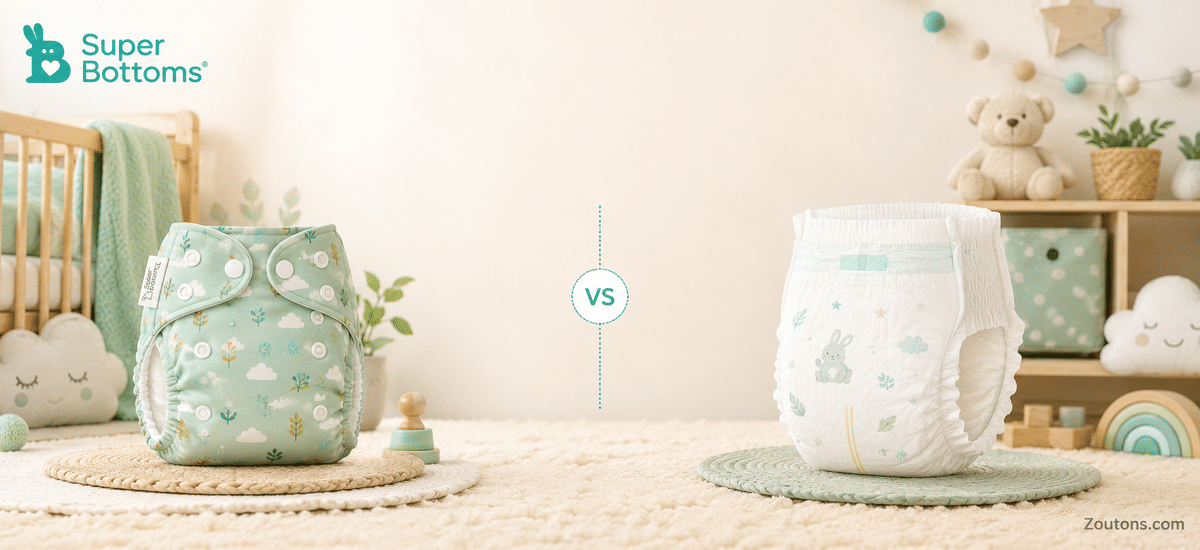
If you are a parent in India in 2026, the diaper aisle can feel like a never-ending bill. Disposables are quick and everywhere, but the monthly spend adds up fast and the landfill guilt is real. On the other side sits SuperBottoms, the homegrown brand behind the popular UNO reusable cloth diaper, which now leads a large share of India's cloth diapering space and promises lower long-term costs and fewer rashes.
This guide gives you an honest, India-focused comparison of cloth versus disposable for 2026. We look at real cost over three years, rash and skin comfort during the hot, humid monsoon months, the environmental angle, and the daily washing routine most parents actually worry about. We also flag the live SuperBottoms Monsoon Masti Sale so you know exactly how much you can save before deciding.
- SuperBottoms leads a large share, around 60 percent, of India's reusable cloth diaper segment in 2026
- The Freesize UNO fits babies roughly 3 months to 3 years, so one diaper grows with your child
- UNO uses GOTS-certified organic cotton and is India's first cloth diaper with USA CPSIA certification
- Per-use cost can drop to about Rs. 2 when a small set is reused over years versus daily disposables
- Live Monsoon Masti Sale: extra 30 percent off on orders of Rs. 1,499 with code SUPER30 (limited period)
Cloth Diaper vs Disposable: The Real Cost for Indian Parents in 2026
The biggest reason Indian parents look at SuperBottoms cloth diapers over disposables is money. A baby uses several diapers a day for roughly three years, and with disposables you are buying packs again and again. With a reusable system like the SuperBottoms UNO, you buy a small set once and wash and reuse it, so the upfront cost is higher but the long-run spend is far lower.
The exact numbers depend on how many diapers your baby goes through and which brand of disposable you buy, so treat the figures below as realistic ranges rather than fixed quotes. The key takeaway is that even after factoring in detergent, water and electricity for washing, a cloth setup usually works out cheaper across the full diapering years.
| Factor | SuperBottoms UNO (cloth) | Disposables |
|---|---|---|
| Upfront cost | Higher: a starter set of diapers bought once | Low: a single pack is cheap to start |
| Ongoing cost | Mainly washing, detergent and the odd new insert | Recurring packs bought every few weeks for years |
| Per-use cost | Can fall to around Rs. 2 when reused over years | Roughly Rs. 8 to Rs. 15 per piece, every time |
| Approx 3-year spend | Lower overall once reuse is counted | Significantly higher due to constant repurchase |
| Resale or reuse | Reusable for siblings, holds some value | Single use, nothing recovered |
If you plan to have more than one child, the savings widen further because the same UNO diapers can be reused for a sibling, something disposables can never offer.
Rashes, Skin Comfort and the Indian Monsoon Factor
Diaper rash is one of the top worries for Indian parents, especially in the sticky monsoon and peak summer months of June and July. Disposables lock in wetness with chemical gels, which keeps the surface dry but can trap heat against the skin in humid weather. SuperBottoms UNO uses a soft microfleece lining over absorbent organic cotton layers, designed to pull moisture away while staying breathable.
Why monsoon and summer change the math
- Humidity is high in the monsoon, so breathability matters more than usual for baby skin
- Cloth diapers can be changed and rinsed often, reducing prolonged contact with wetness
- GOTS-certified organic cotton avoids many of the fragrances and gels found in disposables
- Drying cloth diapers indoors during heavy rain needs planning, so keep a few extra on hand
No diaper, cloth or disposable, fully prevents rash on its own. Frequent changes, a clean dry surface and some nappy-free time matter most. That said, many parents report fewer rash flare-ups after switching to breathable cloth, particularly in humid weather.
Convenience, Washing and the Honest Daily Reality
This is where disposables clearly win on speed: you use one and bin it. SuperBottoms cloth diapers ask for a routine of rinsing, washing and drying. For many Indian families with a washing machine and some outdoor or fan-dry space, this settles into an easy rhythm within a week or two, but it is real effort and worth being honest about.
What a cloth routine actually involves
- Rinse soiled diapers, then machine or hand wash a batch every day or two
- Sun-dry when possible, or use a fan or indoor line during monsoon
- Keep 6 to 8 diapers in rotation so you always have a clean one ready
- Carry a wet bag when stepping out so you can store used cloth hygienically
A practical middle path many parents choose is cloth at home and disposables for travel, long outings or overnight. This keeps daily costs and rashes down while preserving convenience when you need it most.
SuperBottoms Monsoon Masti Sale 2026: Is It Worth Buying Now?
Timing your purchase around a sale makes the switch to cloth far easier on your wallet. As of late June 2026, SuperBottoms is running its Monsoon Masti Sale with an extra 30 percent off on orders of Rs. 1,499 using the code SUPER30, a limited-period offer. Across marketplaces, SuperBottoms cloth diapers have also been seen with discounts of up to around 70 percent during sale periods, with entry products starting from low prices.
Because the UNO is freesize and fits roughly 3 months to 3 years, buying a starter set during the sale is one of the most cost-effective ways to begin. The more you reuse each diaper, the lower your real per-use cost becomes, which is why a one-time sale purchase pays off over the long diapering years.
Before checking out, it is always worth comparing the on-site sale with any extra coupons or cashback so you lock in the lowest possible price for your set.