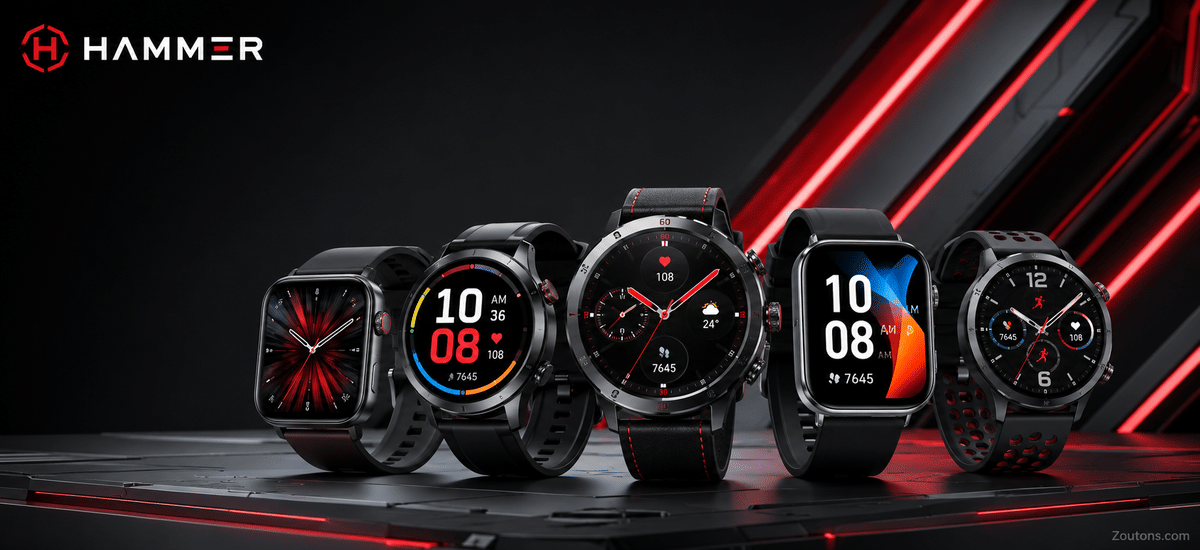
Smartwatch Buying Guide India 2026: The Hammer Edit

Buying a smartwatch in India in 2026 is no longer about whether you can afford one, but about telling apart features that genuinely help from spec-sheet noise. Bluetooth calling, AMOLED screens and a fistful of health sensors now show up even on watches under Rs. 2,000, which is great for your budget but tricky when every listing sounds identical. The smart move is to decide what you actually need on your wrist before a sale price decides for you.
This Hammer Edit walks you through the choices that matter most this season: AMOLED versus LCD, how reliable Bluetooth calling really is, which health sensors to trust, what IP rating you need through the monsoon, and how to read battery claims honestly. We then line up Hammer's popular Pulse, Arctic and Robust models against three clear budget tiers so you can pick with confidence. With Hammer's current sale running up to 80 percent off, knowing your priorities first is what turns a good price into a smart buy.
- Hammer's 2026 smartwatch range starts from around Rs. 1,299 and runs up to roughly Rs. 3,794
- Popular picks include the Hammer Pulse, Hammer Arctic (2.04 inch AMOLED) and Hammer Robust (1.96 inch AMOLED)
- Most Hammer Bluetooth calling watches carry an IP67 rating, handling sweat, rain and splashes
- Typical battery life sits around 3 to 4 days of real use, with magnetic charging
- Hammer sale is live with discounts up to 80 percent off, plus Zoutons code ZOUTONS982
How to Choose a Smartwatch in India in 2026: The Core Checklist
Before comparing models, it helps to know which specs actually change your day-to-day experience. In 2026 the gap between budget and premium watches has narrowed, so the same five decisions apply whether you spend Rs. 1,299 or Rs. 3,794. Get these right and almost any Hammer watch in your tier will feel like a good buy.
The five things that matter most
- Display: AMOLED for richer colours and outdoor visibility, LCD only to save money
- Bluetooth calling: handy for calls on the move when your phone is within range
- Health sensors: heart rate, SpO2, sleep and steps for everyday wellness tracking
- IP rating: IP67 is ideal for sweat and monsoon rain in India
- Battery and charging: aim for 3 to 4 days of real use with fast magnetic charging
If you only remember one rule, let it be this: match the watch to how you actually live. A daily commuter values Bluetooth calling and battery, while a fitness-focused buyer leans on sensors and a bright AMOLED screen during outdoor workouts.
AMOLED vs LCD, Bluetooth Calling and Health Sensors Explained
AMOLED screens light each pixel individually, giving true blacks, punchy colours and better sunlight readability, which matters a lot in bright Indian conditions. LCD panels are cheaper and perfectly usable, but they look flatter and dimmer outdoors. Hammer now puts AMOLED on accessible models like the Arctic and Robust, so you rarely need to settle for LCD unless budget is very tight.
Bluetooth calling has shifted from a premium extra to a near-standard feature. It pairs with your phone over Bluetooth and routes calls through the watch speaker and mic, which is genuinely useful while driving or working out. Health sensors round out the package: heart rate, SpO2, sleep tracking and step counting are common, with Hammer models adding menstrual cycle and blood pressure monitoring.
A quick reality check on sensors
Treat every wrist-based reading as a trend indicator rather than a clinical measurement. They are excellent for nudging you to move more, sleep better or notice changes over time, but a confirmed health concern always belongs with a doctor and proper equipment.
Smartwatch Budget Tiers in India and Where Hammer Fits
Splitting your search by budget makes the decision far simpler. Below are three practical tiers for India in 2026, with the typical features you can expect and the kind of Hammer buyer each one suits. Prices are approximate and move during sales, so always confirm the live figure at checkout.
| Hammer Model | Display | Key Strength | Approx. Price (from) |
|---|---|---|---|
| Hammer Pulse | AMOLED, round or square dials | All-rounder with Bluetooth calling | Rs. 1,299 |
| Hammer Arctic | 2.04 inch Super AMOLED | Large bright screen, AI voice assist | Rs. 1,999 |
| Hammer Robust | 1.96 inch AMOLED | Sturdy build, full health suite | Rs. 2,499 |
| Entry tier pick | AMOLED or LCD | Best value first smartwatch | Rs. 1,299 |
| Mid tier pick | AMOLED | Bigger display and AI features | Rs. 1,999 |
| Upper tier pick | AMOLED | Premium build and sensors | Rs. 2,499+ |
The Hammer Pulse is the easy entry choice for a first smartwatch or a gift, balancing Bluetooth calling and core sensors at a low price. Step up to the Arctic for its large 2.04 inch Super AMOLED panel and AI voice assistance, and choose the Robust when you want a tougher build with the fullest set of health features.
Battery, IP Rating and Monsoon-Ready Buying Tips
Battery claims on listings are usually best-case numbers, so plan for real-world figures. Most Hammer watches deliver around 3 to 4 days of typical use with notifications, calling and tracking switched on, topped up quickly through magnetic charging. If you keep the always-on display and Bluetooth calling running heavily, expect the lower end of that range.
Why IP67 matters this season
With the monsoon arriving across much of India through late June and July, an IP67 rating is the practical sweet spot. It shrugs off sweat, rain and splashes, so a sudden downpour on your commute is no problem. Just remember IP67 is not built for swimming or showering, so take the watch off before the pool.
- Check the exact IP rating on the product page, not just the marketing line
- Prefer magnetic charging so a wet USB port is never an issue
- Enable battery-saver mode during travel or long monsoon days outdoors
- Use a silicone strap that dries fast and stays comfortable in humidity