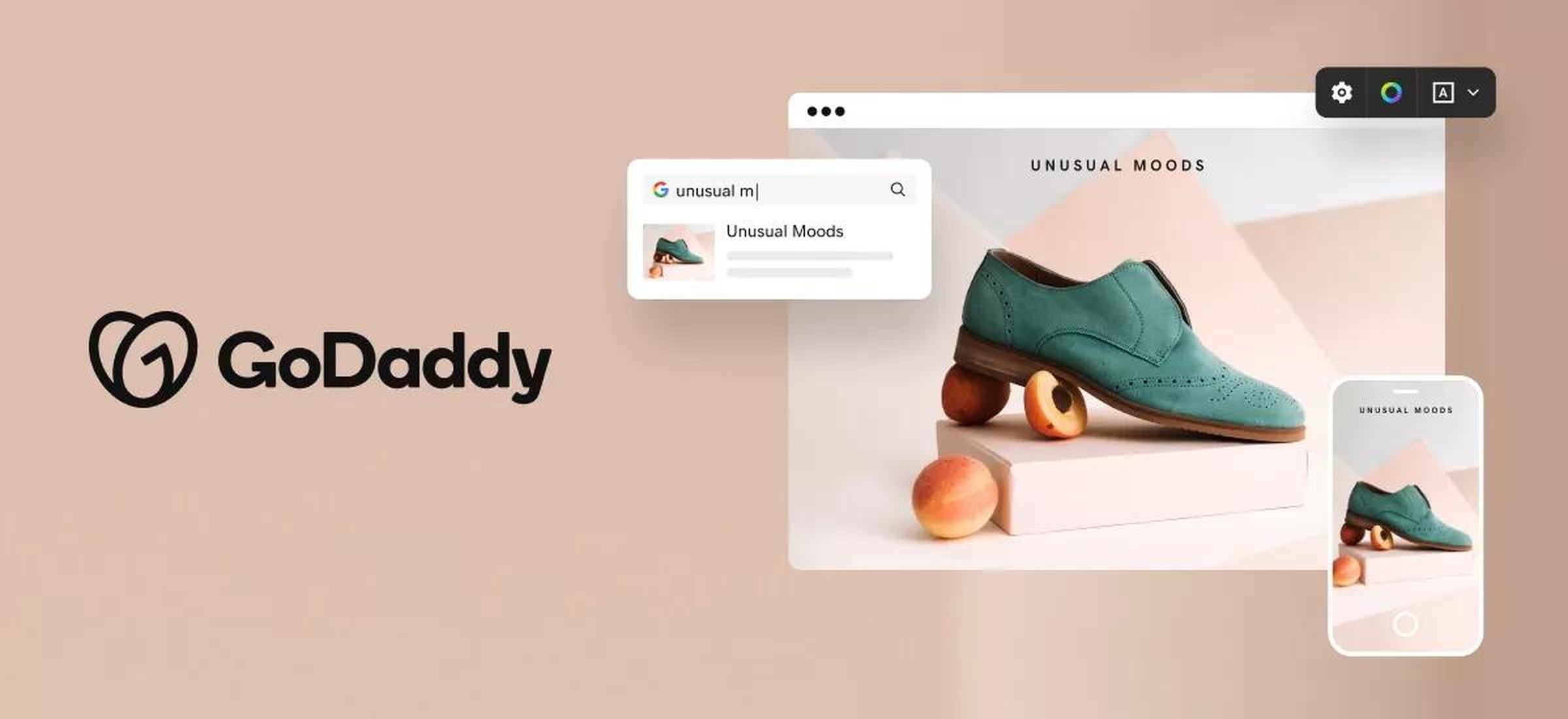
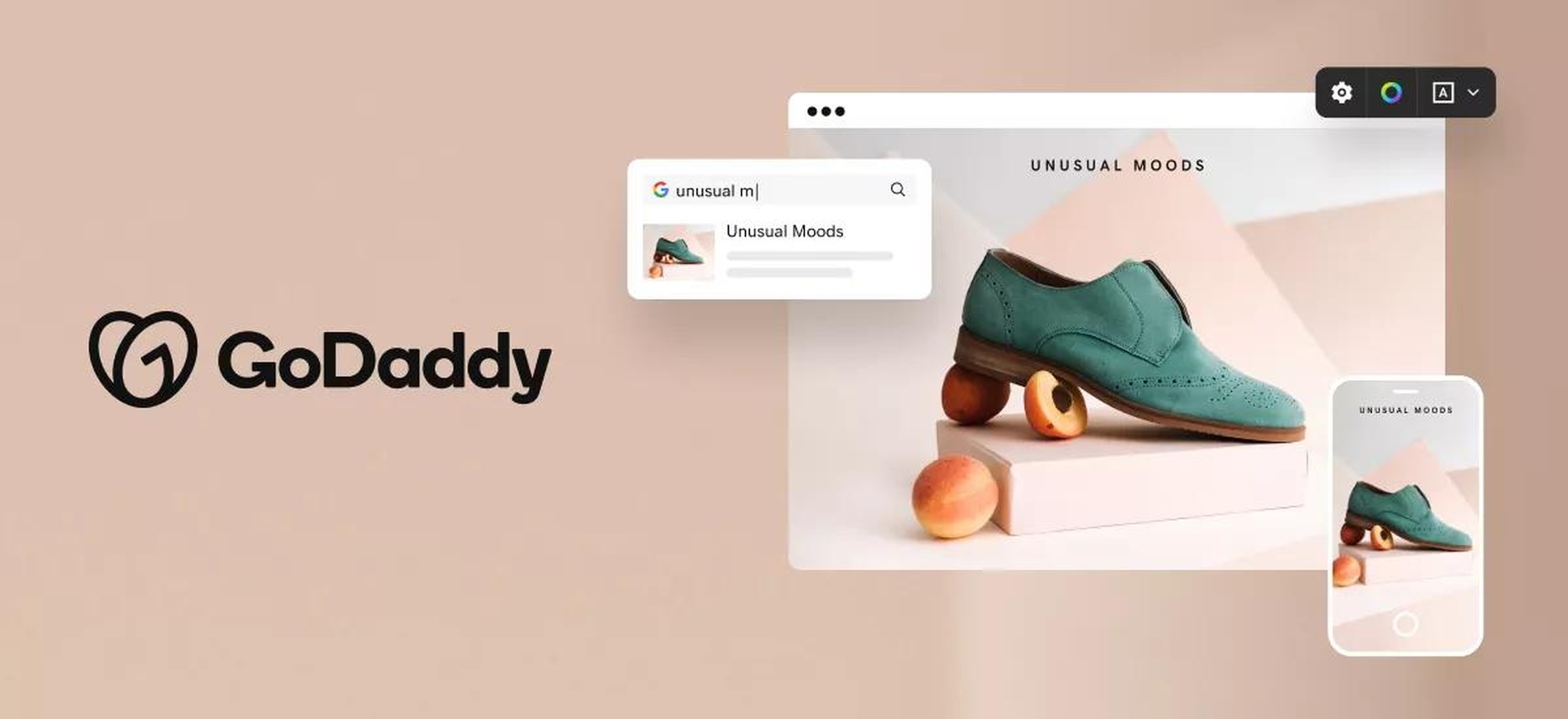
![GoDaddy's own search-visibility illustration - a Google search box showing a shop surfacing in results, beside its desktop and mobile views - on GoDaddy's brand background]()
Search Engine Visibility is GoDaddy's SEO product, and the contract behind it is the Marketing Applications Agreement — published in full, stamped "Last Revised: 23-06-2025", and read here on 2 November 2026.
Its central sentence appears twice: there is "no guarantee that you will be listed by search engines, or that you will achieve significant search engine rankings". That is honest — no vendor controls Google's index. But it sits alongside things that are easier to miss: auto-publish wants permission to change your DNS, and four hard requirements govern any page you submit.
📅 Update log:
2 Nov 2026: first published. Every clause described and quoted on this page was read from GoDaddy's own published Marketing Applications Agreement at godaddy.com/en-in/legal/agreements/marketing-applications-agreement on 2 November 2026, from India, with nothing bought and no service used. The document carries GoDaddy's own stamp, "Last Revised: 23-06-2025". No prices or plan limits are quoted on this page because the agreement states none — it incorporates them by reference from the product landing pages.
Search Engine Visibility is GoDaddy's SEO product — the thing you buy to get your site in front of search engines. The contract governing it is the Marketing Applications Agreement, published at godaddy.com/en-in/legal/agreements and stamped "Last Revised: 23-06-2025". We read it on 2 November 2026.
The sentence that matters most appears twice: GoDaddy "expressly disclaim[s] any guarantee of the level of success you will achieve", and states that "there is no guarantee that you will be listed by search engines, or that you will achieve significant search engine rankings". Not a guarantee of a position. Not a guarantee of being indexed at all.
To be clear up front: this is honest drafting, not a red flag. No SEO service of any kind can promise search rankings, because no vendor controls Google's index — a company that did promise them would be the one to worry about. Nothing on this page alleges wrongdoing by GoDaddy. It is here because the disclaimer is the single most important thing to understand before buying an SEO product, and because the rest of the agreement contains four hard requirements and one DNS permission that are easy to miss.
The agreement at a glance
| What the agreement covers | What it says |
|---|
| Document read | GoDaddy Marketing Applications Agreement, godaddy.com/en-in/legal/agreements |
| Product it governs | Search Engine Visibility (and Search Engine Visibility v1) |
| GoDaddy's own revision stamp | Last Revised: 23-06-2025 |
| Read on | 2 November 2026, plain fetch, from India |
| Guarantee of search rankings | None — expressly disclaimed, twice over |
| Guarantee of being listed at all | None — "no guarantee that you will be listed by search engines" |
| To auto-publish | You must grant GoDaddy permission to update your DNS settings |
| To publish manually | Permission to edit content on the domain |
| Standalone use requires | The domain registered with GoDaddy |
| Pages must resolve to | A live page — no 404, no DNS error |
| Pages must be | Publicly accessible, no passwords or access codes |
| Pages must not | Sit on a secure server or use spider-blocking technology |
| Pages must have | A title or description relevant to the page content |
| Grounds for termination named | Link farming, keyword stuffing, spamming |
| Removal from an index | GoDaddy and its partners may refuse or remove any page "for any reason" |
| Local reviews data | Licensed from CityGrid and Yellow Pages; CityGrid "may revoke the licensed content at any time" |
| Changes to the agreement | Effective immediately on posting; email notice only occasional |
| Prices in this document | None stated |
The product makes no promise about rankings, and says so twice
The disclaimer is given once under the provisions for Search Engine Visibility v1 and again, in near-identical wording, under the provisions for Search Engine Visibility. In full: "In addition to the Disclaimer of Representations and Warranties section contained in the Universal Terms of Service Agreement, we expressly disclaim any guarantee of the level of success you will achieve by using Search Engine Visibility. You acknowledge and agree that there is no guarantee that you will be listed by search engines, or that you will achieve significant search engine rankings."
Note what the second half covers. It is not merely that you are not promised page one — you are not promised inclusion. The agreement reinforces this elsewhere: "We and our search engine and directory partners reserve the right to refuse or remove any web page from a search engine's index for any reason."
There is a separate no-endorsement clause covering the marketing side of the suite. GoDaddy "do[es] not endorse any of the email marketing campaigns initiated using any of the Online Landing Pages, descriptions of services contained on the Online Landing Pages, testimonials contained on the Online Landing Pages, or other user content", and "expressly disclaim[s] any and all liability or responsibility regarding the same".
Auto-publish means giving GoDaddy your DNS
This is the practical clause most people will care about, and it is stated in one line. To use Search Engine Visibility as a standalone product with automatic publishing, "you should have the domain for your website registered with GoDaddy and permission to edit content on the website for that domain. To auto-publish, you should grant us permission to update DNS settings on your behalf for the domain."
The manual route asks for less. "To manually publish, you should have the permission to edit content on the domain" — no DNS access needed. And if you are using the product through Managed Hosting for WordPress, Website Builder or Online Store, the agreement asks only that you "have permission to edit content on the website".
If you run your DNS elsewhere, or someone else runs it for you, that is the decision to make before you buy — auto-publish is the convenience the product is sold on, and it is the option that needs the permission.
Four things your page must be before it will be accepted
The requirements are listed plainly and they rule out several common setups. They are worth checking against your own site before paying for anything.
| Requirement | GoDaddy's wording | What it rules out |
|---|
| Resolves to an operational web page | "may not resolve to a DNS error, a 404 error, or any other error message" | A page that is down when submitted will not be accepted |
| Publicly accessible | "without the use of passwords or other access codes" | Member-only or gated pages are out |
| Not behind spider blocking | "must not reside on a secure server or use any spider blocking technology" | A robots.txt or similar block defeats the product |
| Relevant title or description | "must have a page title or description relevant to the page content" | Stated as a v1 requirement |
| No infringing content | You warrant your pages "do not infringe on the intellectual property rights of any third party" | And that GoDaddy's partners may copy, modify or manipulate your listings to meet search engine standards |
The spider-blocking clause is the one that catches people. If your site sits behind a login, a staging password, or a robots.txt that blocks crawlers, an SEO tool cannot do anything with it — and GoDaddy's agreement says so rather than taking your money quietly. Check that your pages are publicly crawlable first.
What will get you terminated, in SEO's own vocabulary
Most terms of service describe prohibited conduct in generic language. This one names the practices directly: GoDaddy "explicitly reserve[s] the right to terminate your use of Search Engine Visibility if it comes to our attention that you are using the Service for activities designed to undermine the accuracy, relevance, credibility, or validity of search engine results, such as by ‘link farming’, ‘keyword stuffing’, or ‘spamming’ (as such terms are customarily understood in the search engine optimization industry)".
That is a useful sentence to have in writing. It tells you the product is not built to support those tactics, and that using it for them is grounds for losing the service — separate from anything the search engines themselves might do to your site.
The local reviews tool, and the data it borrows
Search Engine Visibility v1 includes an option to monitor online reviews of your business. The review content is not GoDaddy's own — it is licensed in, and the agreement incorporates two third-party sets of terms by reference:
- CityGrid. Your use of the licensed content is subject to the CityGrid Terms and Conditions, and — the part worth noting — "You acknowledge and agree that CityGrid may revoke the licensed content at any time."
- YellowPages. Your use is subject to the Yellow Pages Group Co. API Terms of Use.
In practice that means the review data inside the tool can disappear without GoDaddy having done anything, because it belongs to someone else. This is ordinary for a licensed-data feature and is disclosed rather than hidden, but it is a reason not to treat the tool as your only record of your reviews.
How the agreement itself can change
GoDaddy may, "in our sole and absolute discretion, change or modify this Agreement, any policies or agreements which are incorporated herein, and any limits or restrictions on the Services, at any time", with changes "effective immediately upon posting". Continuing to use the service after that counts as acceptance.
Notification is not promised. GoDaddy "may occasionally notify you of changes or modifications to this Agreement by email", and adds that it "assume[s] no liability or responsibility for your failure to receive an email notification if such failure results from an inaccurate email address".
Two things follow. Keep the email address on your GoDaddy account current, because it is the only notice channel mentioned. And note that the plan limits are not in this document at all — the agreement incorporates "any plan limits presented on the product landing pages" by reference, so the numbers that actually govern your account live on a marketing page that can change independently.
What to settle before you buy
- Accept that no ranking is promised. The agreement disclaims any guarantee of rankings and of being listed at all — twice. Budget on that basis, and treat any vendor who promises otherwise with suspicion.
- Decide about DNS before you start. Auto-publish requires giving GoDaddy permission to update your DNS settings; manual publishing does not.
- Check your pages are publicly crawlable. No 404s, no DNS errors, no password gates, no spider-blocking, and a title or description that matches the content.
- Find the plan limits on the product page, not in the contract. The agreement incorporates them by reference and states none itself, and it states no prices either.
- Keep your account email accurate. It is the only notification route for changes, and GoDaddy disclaims liability if a stale address means you miss one.
- Do not treat the review tool as your archive. The data is licensed from CityGrid and Yellow Pages, and CityGrid can revoke it at any time.
Frequently Asked Questions
Does GoDaddy guarantee search engine rankings with Search Engine Visibility?
No, and it says so twice in the same document. "We expressly disclaim any guarantee of the level of success you will achieve by using Search Engine Visibility. You acknowledge and agree that there is no guarantee that you will be listed by search engines, or that you will achieve significant search engine rankings." Note that it covers inclusion, not just position — you are not promised that you will be indexed at all. The agreement adds that GoDaddy and its partners "reserve the right to refuse or remove any web page from a search engine's index for any reason". This is honest drafting rather than a warning sign: no SEO vendor controls Google's index, and any that promises rankings is over-promising.
Does GoDaddy Search Engine Visibility need access to my DNS?
Only if you want automatic publishing. The agreement: "To auto-publish, you should grant us permission to update DNS settings on your behalf for the domain." Using the product standalone also requires that the domain is registered with GoDaddy. The manual route asks only for "permission to edit content on the domain" — no DNS access. And if you use it through Managed Hosting for WordPress, Website Builder or Online Store, the agreement asks only that you can edit the website's content.
What kind of web page will GoDaddy's SEO tool not accept?
Four things are ruled out in the agreement's own words. A page "may not resolve to a DNS error, a 404 error, or any other error message"; it "must be publicly accessible without the use of passwords or other access codes"; it "must not reside on a secure server or use any spider blocking technology"; and it "must have a page title or description relevant to the page content". The spider-blocking rule is the one most often missed — a staging password or a crawler-blocking robots.txt will defeat the product, and it is worth checking before you pay.
Can GoDaddy cancel my SEO service?
Yes, and the agreement names the grounds in SEO's own vocabulary. GoDaddy "explicitly reserve[s] the right to terminate your use of Search Engine Visibility if it comes to our attention that you are using the Service for activities designed to undermine the accuracy, relevance, credibility, or validity of search engine results, such as by ‘link farming’, ‘keyword stuffing’, or ‘spamming’". Separately, GoDaddy may change the agreement, its policies and "any limits or restrictions on the Services, at any time", with changes "effective immediately upon posting".
How much does GoDaddy Search Engine Visibility cost?
The agreement states no price at all, so this page quotes none. It also states no plan limits: it incorporates "any plan limits presented on the product landing pages" by reference instead. That means the numbers that actually govern your account — pricing and limits alike — live on marketing pages that can change independently of the contract, and GoDaddy reserves the right to change both "at any time". Check the live product page for current pricing before buying, and note that email is the only notification channel the agreement mentions for changes.
Prices & codes last verified: November 2, 2026
Every clause described, paraphrased or quoted on this page was read from GoDaddy's own published Marketing Applications Agreement at godaddy.com/en-in/legal/agreements/marketing-applications-agreement on 2 November 2026, from India, with nothing bought and no service used. The document carries GoDaddy's own stamp, "Last Revised: 23-06-2025", which is reproduced here rather than replaced with our reading date. This page is a plain-English reading of a commercial contract. It is not legal advice, it is not a complete summary of the agreement, and it must not be relied on in place of the live document. The agreement expressly incorporates GoDaddy's Universal Terms of Service and the plan limits presented on the product landing pages by reference, so the document discussed here is not the whole of what binds a user; provisions on indemnity, governing law, limitation of liability and the incorporated CityGrid and Yellow Pages terms are not covered on this page. Contracts are revised without notice — this one states that changes are "effective immediately upon posting" — and a clause quoted here may already have changed; read the live agreement before acting on anything above. No price, fee or plan limit is quoted anywhere on this page, because the agreement states none. Nothing on this page alleges wrongdoing by GoDaddy or by anyone else. Disclaiming a guarantee of search rankings is accurate and responsible drafting rather than a shortcoming: no search-optimisation vendor controls the index of any search engine, outcomes depend on factors outside any provider's control, and a service that did promise rankings would be making a claim it could not keep. This page reports the disclaimer because it is the most important thing a prospective buyer should understand, not as a criticism of the product. Reserving discretion over service limits, requiring DNS permission for automatic publishing, and naming link farming, keyword stuffing and spamming as grounds for termination are likewise ordinary, lawful and widely used commercial terms. Nothing on this page is a recommendation to buy or not to buy any search-optimisation service, and no claim is made about this or any product's effectiveness, which we have not tested. Zoutons may earn a commission on purchases made through links on this page; this does not affect what is written above, and it did not influence which clauses were covered.











 Booking com
 Hostinger
 Dell
 Udemy
 Agoda
 Nykaa
 Myntra
 Ajio