Cloth Diapering 101 for Indian Parents: SuperBottoms UNO Guide 2026
_1776943697.jpg?tr=w-80,h-80,c-force)
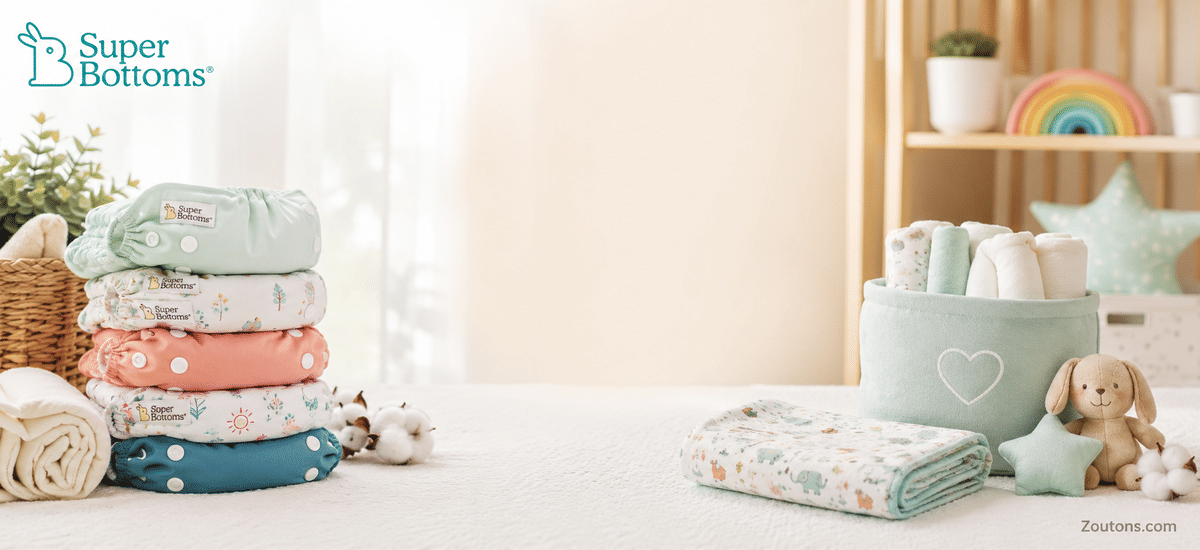
Switching to cloth diapers can feel intimidating when you are a new parent, but it is far simpler than the internet makes it look. In India, SuperBottoms has made reusable diapering mainstream with its UNO freesize design, and the brand now leads the category with an estimated share of around 60 percent. With the late-June monsoon settling in and the brand's Monsoon Masti Sale running around this period, mid-2026 is a practical time to make the change.
This guide is written for absolute beginners. We walk through how the UNO diaper actually works, how to size it from newborn to toddler, how to build a wash and dry routine that survives humid monsoon weeks, and what cloth really costs compared with disposables over three years. By the end you will know how many diapers to buy to start and how to keep the whole system low-effort.
- One UNO freesize diaper fits babies roughly 7 kg to 17 kg, about 3 months to 3 years
- Reusable for 300-plus washes, working out to roughly Rs. 2 per use
- Around 16 diapers cover a baby's full diapering journey of about 3 years
- SuperBottoms holds an estimated 60 percent of India's reusable cloth diaper market
- Monsoon Masti Sale runs around June-July 2026, a good window to start a starter kit
How the SuperBottoms UNO Cloth Diaper Works
The UNO is a pocket-style reusable diaper made of two parts: a waterproof outer shell with a soft dry-feel lining, and absorbent organic cotton soaker pads that snap inside. The shell wraps around your baby and fastens with hook-and-loop or snaps, while the inserts do the actual absorbing. When the baby wets, you simply swap the soaker, and the shell can usually be reused a few times before it needs a wash.
UNO uses a GOTS-certified organic cotton soaker plus a smaller booster pad. Together the two inserts can hold up for 10-plus hours, which is why many parents use both for overnight and a single soaker for daytime. The materials are breathable, lead-free and phthalate-free, which matters for sensitive newborn skin in India's heat.
What you get in a single UNO
- One waterproof outer shell with a dry-feel inner lining
- One long organic cotton soaker pad for day use
- One booster pad to add absorbency for naps and nights
- A snap-and-go system so inserts lock in without shifting
Cloth Diaper Sizing for Newborn to Toddler
The biggest worry for beginners is sizing, but UNO keeps it simple with just two sizes. The Newborn UNO suits babies roughly 2.5 kg to 7 kg, and the Freesize UNO grows with your child from about 7 kg to 17 kg using an adjustable snap system. The row of front snaps lets you shorten the rise as the baby grows, so one diaper genuinely lasts from around 3 months to 3 years.
The golden rule is fit, not size number. Adjust the snaps so the diaper sits snug around the thighs with no gaps, because gaps are the most common cause of leaks. If you see red marks, loosen by one snap; if you see gaping, tighten. Most parents find the right setting within the first few days.
Wash Routine and Monsoon Drying for Indian Homes
A good wash routine is what makes or breaks cloth diapering. Always wash a brand-new diaper at least once before first use, as the cotton needs a wash to reach full absorbency and skipping it can cause leaks. For daily care, rinse soiled inserts, then hand-wash or machine-wash with a plain detergent.
Wash dos and don'ts
- Use a mild, fragrance-free detergent so residue does not clog the fabric
- Avoid Dettol, fabric softeners, conditioners and harsh wringing
- Rinse poop off before washing, ideally with a health-faucet spray
- Sun-dry whenever possible, as sunlight naturally disinfects and removes stains
Monsoon is the season parents fear most for drying, and late June into July is peak rain across much of India. The UNO soakers have a foldable layered design that dries faster than a thick all-in-one diaper, so they handle humid weeks better. On rainy days, dry inserts indoors under a ceiling fan, near a window, or with a quick low-heat tumble or iron-press between cloths. Owning a few extra inserts gives you breathing room when nothing dries quickly.
Cloth vs Disposable Diapers: Cost Comparison 2026
The clearest reason Indian parents switch is money. A UNO diaper is built to last 300-plus washes, which spreads the upfront price down to roughly Rs. 2 per use. Disposables, by contrast, are a recurring monthly expense that never stops until potty training. The table below shows why a one-time set of about 16 diapers can cover your child's entire diapering years.
| Factor | SuperBottoms UNO (cloth) | Disposable diapers |
|---|---|---|
| Upfront cost | Higher one-time outlay for a set | Low per pack |
| Cost per use | Around Rs. 2 over 300 washes | Typically higher per change |
| Diapers needed for 3 years | About 16 reusable diapers | Thousands of single-use pieces |
| Monsoon drying | Fast-drying foldable soakers | Not applicable, thrown away |
| Waste created | Minimal, reusable for years | Large ongoing landfill waste |
| Best time to buy | During the Monsoon Masti Sale | Ongoing recurring purchases |
Even with the higher starting cost, most families recover the investment within months and then save steadily. Buying your starter kit during a sale window such as the Monsoon Masti Sale makes the math even friendlier.
How to Start Cloth Diapering: A Beginner Plan
You do not need 16 diapers on day one. A sensible beginner approach is to start small, build confidence, then scale up to a full-time stash. This lets you test the fit and wash routine without a big commitment.
- Start with 4 to 6 UNO diapers and a couple of spare soakers
- Use cloth during the day first, then add nights once you are comfortable
- Keep a wet bag for outings to store used inserts hygienically
- Add extra soaker pads before monsoon so drying delays never leave you short
- Scale up to around 16 diapers once the routine clicks
With SuperBottoms leading the Indian market and a sale running around this June-July period in 2026, a starter set is an easy first step. Begin small, get the fit right, and grow your stash as your baby does.