Best TrueBasics Omega-3 and Fish Oil Supplements in 2026

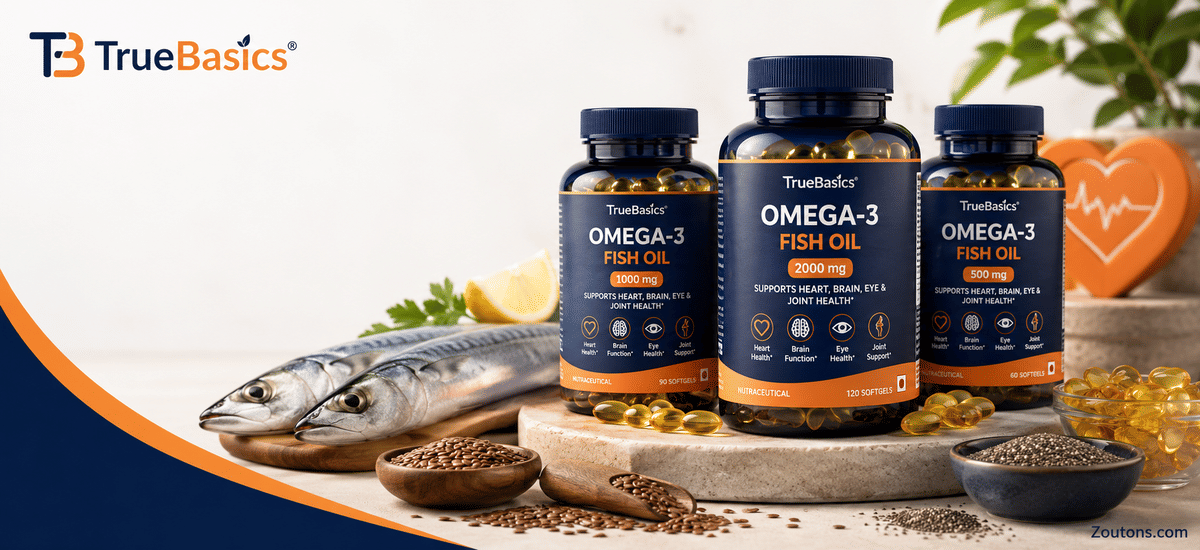
Omega-3 fatty acids are among the most researched nutrients for everyday wellness, with strong links to heart, brain, eye and joint health. The catch is that most Indian diets fall short on EPA and DHA, the two marine Omega-3s that do the heavy lifting, which is why a quality supplement can make a real difference. TrueBasics, the premium wellness brand from HealthKart, has built a focused Omega-3 range designed around exactly this gap.
This guide is a buying guide, not a generic product dump. Instead of telling you to simply buy more fish oil, it walks through what actually separates a good Omega-3 supplement from a mediocre one, then maps each TrueBasics option, from triple-strength fish oil to Antarctic krill oil to a vegetarian blend, to the kind of person it suits best. By the end you should know which bottle fits your goal and your diet.
- HealthKart's premium wellness brand, focused on clinically backed formulas
- Ultra Omega 3 delivers 1150 mg Omega-3 with 525 mg EPA and 375 mg DHA per serving
- Fish oil is offered in the better-absorbed triglyceride form
- Heart Omega 3 uses clinically researched Superba Antarctic krill oil
- Vegetarian Omega 3-6-9 option for those who avoid fish and seafood
Why Omega-3 Matters and What to Look For
Omega-3 fatty acids, especially EPA and DHA, support several systems at once. They help maintain healthy triglyceride and cholesterol levels, aid brain and cognitive function, support retinal and eye health, and help calm the kind of low-grade inflammation linked to joint discomfort. Because the body cannot make these efficiently, they have to come from diet or supplements.
Before you compare brands or bottles, it helps to know the handful of factors that genuinely change how well a supplement works. These are the same factors used to evaluate the TrueBasics range later in this guide.
Key buying factors for any Omega-3 supplement
- EPA and DHA per serving: the total Omega-3 number on the front can be misleading. What counts is the combined EPA and DHA you get per capsule or serving.
- Triglyceride vs ethyl ester form: the natural triglyceride form is generally absorbed better than the cheaper ethyl ester form used in many basic fish oils.
- Purity and testing: look for IFOS-style third-party testing, mercury-free and heavy-metal-checked oils, since marine oils can concentrate contaminants.
- Freshness: fish oil oxidises over time and good products use antioxidants and proper sourcing to keep it fresh and reduce fishy aftertaste.
- Veg vs fish source: krill and fish oils are marine and not vegetarian, so plant-based users need an algae or plant-derived Omega blend.
The TrueBasics Omega-3 Range at a Glance
TrueBasics keeps its Omega-3 line-up small and purpose-built, with three main directions: a high-strength everyday fish oil, a premium heart-focused krill oil, and a vegetarian blend for those who avoid marine sources. The comparison below summarises how they differ so you can shortlist quickly before reading the detailed sections.
| Product | Source | EPA-DHA focus | Best for |
|---|---|---|---|
| Ultra Omega 3 Fish Oil | Fish oil, triglyceride form | 1150 mg Omega-3, 525 EPA / 375 DHA | Everyday high-strength support |
| Heart Omega 3 Krill Oil | Antarctic Superba krill oil | Krill Omega-3 with phospholipids | Cholesterol and heart health |
| Omega 3-6-9 (Vegetarian) | Plant and seed-based oils | Balanced Omega 3, 6 and 9 | Vegetarians avoiding fish |
| Choosing by goal | Mixed | Match EPA-DHA to your priority | Heart, brain or diet type |
As a rule of thumb, if you want the most EPA and DHA per rupee, the Ultra fish oil leads. If heart and cholesterol support is your single biggest concern, the krill oil is built for that. If you do not eat fish, the vegetarian Omega 3-6-9 is the natural pick.
A Detailed Look at Each TrueBasics Option
TrueBasics Ultra Omega 3 Fish Oil (Triple Strength)
This is the flagship everyday Omega-3. Each serving delivers 1150 mg of total Omega-3 with a strong 525 mg EPA and 375 mg DHA split, which is higher than many standard 1000 mg fish oils where the actual EPA-DHA content is much lower. It uses the triglyceride form for better absorption and is positioned as purified and mercury-free, suiting anyone wanting broad heart, brain, eye and joint support without taking several capsules a day.
TrueBasics Heart Omega 3 Antarctic Krill Oil
This premium option uses clinically researched Superba krill oil from Antarctic waters. Beyond Omega-3, krill oil naturally carries phospholipids, the antioxidant astaxanthin and choline, a combination linked in research to supporting healthy cholesterol and triglyceride levels. It is the choice for readers whose main goal is heart and lipid support, and it tends to be gentler on the stomach. Note that krill is seafood and not suitable for vegetarians.
TrueBasics Omega 3-6-9 (Vegetarian)
For vegetarians and anyone who avoids fish and seafood, the Omega 3-6-9 blend offers plant-derived essential fatty acids in one capsule. While plant sources differ from marine EPA and DHA, this is the practical way for non-fish-eaters to keep their Omega intake balanced and support overall wellness.
How to Choose the Right One for You
The best TrueBasics Omega-3 is the one that matches your goal and your diet, not simply the one with the biggest number on the label. Use the quick logic below to decide.
- Want maximum EPA and DHA for general health: choose Ultra Omega 3 Fish Oil triple strength.
- Main concern is cholesterol and heart health: choose Heart Omega 3 Antarctic Krill Oil.
- You are vegetarian or avoid fish: choose Omega 3-6-9 vegetarian.
- Sensitive stomach or dislike fishy aftertaste: krill oil is usually the gentlest.
- On a budget per serving: a larger fish oil pack gives the best EPA-DHA value.
Whichever you pick, check the serving size on the label, take Omega-3 with a meal containing some fat for better absorption, and be consistent, since benefits build up over weeks rather than days. If you are pregnant, on blood thinners or managing a medical condition, confirm dosage with your doctor first.