10 Best Budget Hotels in Thailand on Agoda From Rs. 1,500/Night (2026)

Thailand between June and October is a different country from the one you see on Instagram reels shot in December. The crowds thin out by 60-70%, hotel rates on Agoda drop 30-50% from peak season pricing, and you get the same beaches, temples, and street food without queueing for everything. The monsoon tag scares most first-time travellers, but here is what nobody tells you: Thailand's monsoon is not a wall of continuous rain. It is typically 1-2 hours of heavy afternoon showers followed by clear skies, cooler temperatures, and dramatically better photography light. Bangkok gets roughly the same annual rainfall as Mumbai, spread over slightly more days. If you have survived a Mumbai monsoon, Thailand's version will feel manageable.
For Indian travellers in 2026, the math is especially compelling. Thailand offers visa-on-arrival for Indian passport holders valid for 60 days, with a fee of approximately 2,000 Thai Baht (Rs. 4,800). The Thai Baht to Indian Rupee exchange rate currently hovers around Rs. 2.40 per Baht, making everyday expenses -- street food at 40-60 Baht (Rs. 96-144), local transport at 20-40 Baht (Rs. 48-96), and temple entry at 50-200 Baht (Rs. 120-480) -- genuinely affordable. Add monsoon-discounted hotel rates starting at Rs. 1,500 per night on Agoda, and a 7-night Thailand trip becomes viable for under Rs. 35,000 per person including flights from Delhi or Mumbai on budget carriers like AirAsia, Thai Lion Air, or IndiGo.
This guide covers 8 destinations across Thailand with specific budget hotel recommendations available on Agoda during monsoon 2026. Each destination includes the off-season price range, what to expect weather-wise during July-September, and practical tips for getting around. Stack your Agoda booking with a Zoutons Agoda coupon for additional percentage-off or cashback savings on top of the already-reduced monsoon rates.
Why Monsoon Is the Smartest Time to Visit Thailand on a Budget
Price drops of 30-50%: Hotels that charge Rs. 4,000-6,000 per night in December-February drop to Rs. 1,500-3,000 during June-October on Agoda. The same room, same amenities, same breakfast -- just fewer people competing for it. Five-star properties that are completely out of reach during peak season become accessible at four-star pricing.
Fewer crowds at every attraction: The Grand Palace in Bangkok sees 8 million visitors annually, with December-March accounting for nearly 60% of that traffic. Visit in August, and you will walk through the same complex with one-third of the crowd. Chiang Mai's temples, Ayutthaya's ruins, and Koh Phi Phi's beaches all follow the same pattern.
Lush green landscapes: Thailand's countryside transforms during monsoon. Rice paddies in Chiang Mai turn a brilliant emerald green, waterfalls around Kanchanaburi run at full force, and the jungle canopy around Khao Sok and Koh Samui becomes dense and photogenic. Landscape photographers specifically target monsoon for this reason.
Indian visa-on-arrival: Indian citizens get visa-on-arrival for 60 days at any international airport in Thailand. Carry a passport valid for at least 6 months, one passport-size photo, proof of accommodation (your Agoda booking confirmation works), and a return flight ticket. Processing takes 15-30 minutes at the airport immigration counter.
Daily Budget Breakdown: Thailand Monsoon Trip Per Person
- Bangkok -- Khao San/Silom Area Best Overall
- Chiang Mai -- Old City Budget Pick
- Pattaya -- Walking Street/Beach Road Nightlife
- Koh Samui -- Chaweng/Lamai Beach Beach
- Hua Hin -- Beach Town Families
- Koh Phi Phi -- Island Resort Editor's Pick
- Kanchanaburi -- River Kwai Nature
- Ayutthaya -- Historical Zone Heritage
 01
Best Overall
01
Best Overall
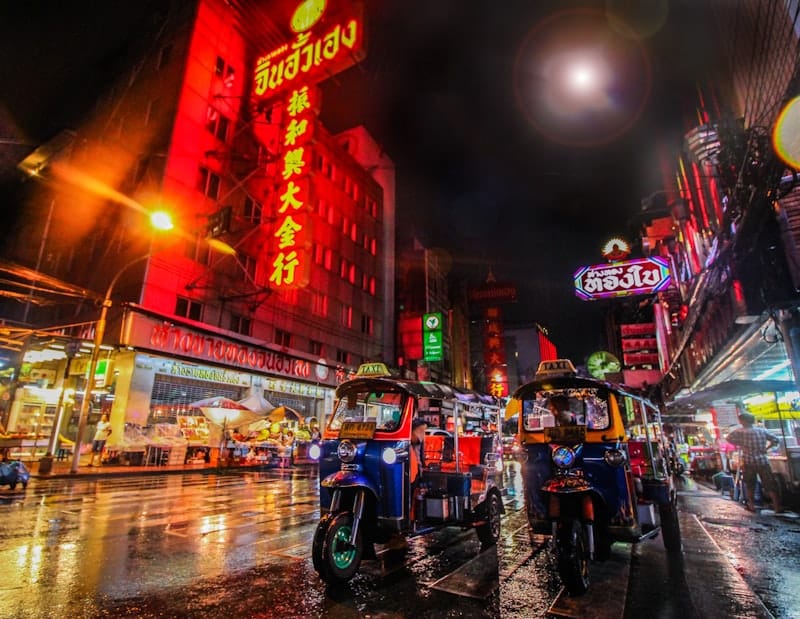
Bangkok -- Khao San Road and Silom Area Budget Hotels
Thailand's capital delivers the highest value per rupee during monsoon -- world-class street food, the BTS Skytrain to dodge rain, and Rs. 1,500 hotel rooms that cost Rs. 3,500 in December
Bangkok in monsoon is still Bangkok -- the temples, the floating markets, the rooftop bars, and Chatuchak Weekend Market all operate as usual. The difference is that hotel prices on Agoda for properties near Khao San Road and Silom drop to Rs. 1,500-2,500 per night for air-conditioned rooms with breakfast. The BTS Skytrain and MRT Metro mean you rarely need to stand in rain; covered walkways connect most major malls and transit stations. Afternoon showers typically last 60-90 minutes and are followed by cooler evenings perfect for walking the city. Budget travellers should target hotels within 500 metres of a BTS or MRT station -- the convenience premium is worth it. Bangkok also serves as the cheapest entry point for India-Thailand flights, with return fares from Delhi and Mumbai starting at Rs. 8,000-12,000 on AirAsia and Thai Lion Air during monsoon months.
 02
Budget Pick
02
Budget Pick
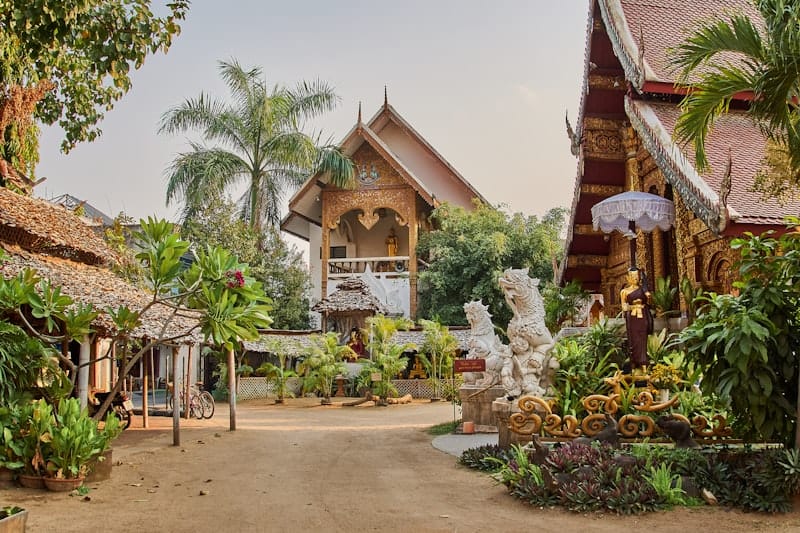
Chiang Mai -- Old City and Nimmanhaemin Budget Hotels
Northern Thailand's cultural capital is the cheapest major destination in the country -- Rs. 1,200 gets you a boutique guesthouse with mountain views during monsoon
Chiang Mai consistently ranks as one of Asia's most affordable cities for travellers, and monsoon pricing makes it almost absurdly cheap. Budget hotels inside the Old City moat area start at Rs. 1,200-1,800 per night on Agoda, with many including breakfast and free bicycle rental. The city has over 300 Buddhist temples, the famous Sunday Walking Street market (which runs rain or shine under covered sections), and some of Thailand's best Northern Thai cuisine -- Khao Soi (coconut curry noodle soup) costs Rs. 96-144 at local restaurants. During monsoon, the surrounding Doi Suthep mountain and Mae Sa Valley turn impossibly green, and the rice terraces at Mae Chaem (90 minutes from the city) reach their most photogenic state. Chiang Mai also has a thriving cafe culture, co-working spaces, and a Night Bazaar that operates daily -- rainy evenings are best spent exploring covered market lanes over a Chang beer. Fly from Bangkok on Nok Air or AirAsia for Rs. 2,000-3,500 one way.
 03
Top Rated
03
Top Rated
Pattaya -- Walking Street and Jomtien Beach Budget Hotels
Just 2 hours from Bangkok by bus, Pattaya offers beach-and-city combo stays with monsoon rates that drop to Rs. 1,500 for oceanview rooms
Pattaya has evolved significantly beyond its reputation -- the city now has family-friendly attractions like the Sanctuary of Truth, Nong Nooch Tropical Garden, Art in Paradise 3D museum, and a buzzing Jomtien Beach boardwalk. During monsoon, hotel rates on Agoda for properties along Beach Road and Jomtien drop to Rs. 1,500-2,500 per night, with many offering pool access and breakfast. The rain pattern here is similar to Bangkok -- short afternoon bursts followed by clear evenings. Pattaya's nightlife on Walking Street operates year-round regardless of weather. For budget travellers, the biggest advantage is accessibility: direct buses from Bangkok Suvarnabhumi Airport run every 2 hours and cost Rs. 300 (120 Baht), eliminating the need for a domestic flight. A day trip to the coral island Koh Larn (Rs. 72 ferry) provides clear-water snorkelling even during monsoon months, as the island sits in the Gulf of Thailand which receives less monsoon impact than the Andaman side.
 04
Premium Pick
04
Premium Pick
Koh Samui -- Chaweng and Lamai Beach Budget Resorts
Gulf of Thailand island that gets LESS monsoon rain than the Andaman coast -- perfect for Indian travellers who want beach time in July-August without heavy downpours
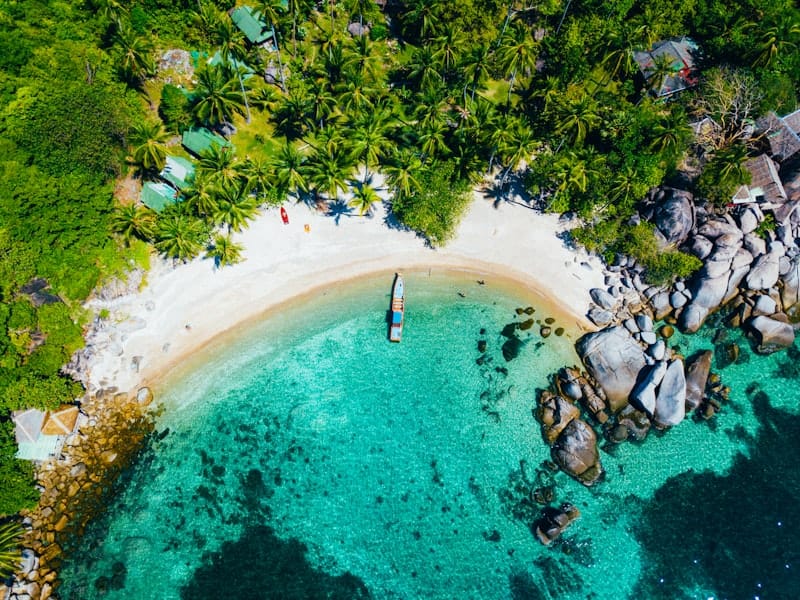
Here is a geography fact that most travel guides bury: Thailand's monsoon splits into two coasts. The Andaman coast (Phuket, Krabi, Koh Phi Phi) gets heavy southwest monsoon from May to October, while the Gulf coast (Koh Samui, Koh Phangan, Koh Tao) gets its wet season later, from October to December. This means July-September is actually a sweet spot for Koh Samui -- you get discounted monsoon pricing because the general "Thailand monsoon" narrative scares tourists away, but the actual rainfall on the island is relatively moderate (120-180mm/month vs 300mm+ on the Andaman side). Budget resorts on Chaweng and Lamai Beach start at Rs. 2,200-3,500 per night on Agoda during this period, compared to Rs. 5,000-8,000 in peak January. Many of these properties are beachfront with pools -- the kind of accommodation that would cost Rs. 10,000+ per night in Goa during December. Bangkok Airways and Thai Smile fly direct from Bangkok to Koh Samui (1 hour), or you can take a cheaper Surat Thani flight plus ferry combination.
 05
Families
05
Families
Hua Hin -- Beachfront Town Budget Hotels for Families
Thailand's royal beach town, just 3 hours from Bangkok by road -- the safest, cleanest, and most family-friendly coastal destination in the country
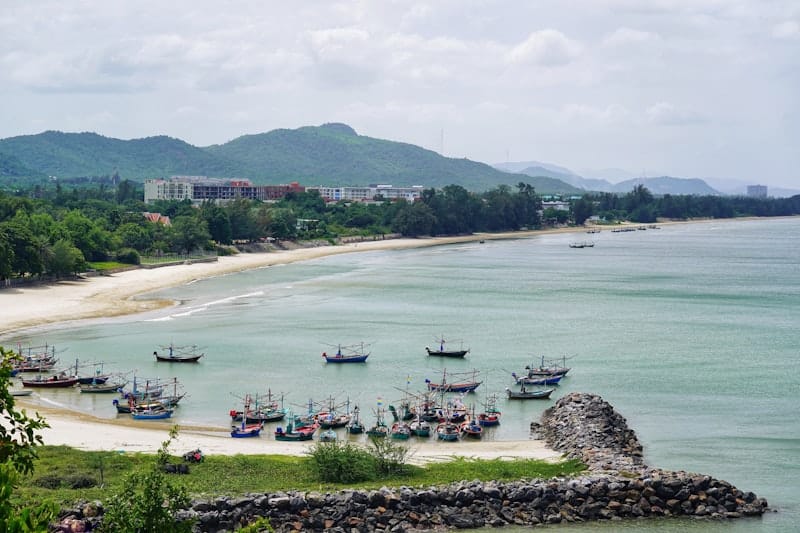
Hua Hin is where Thai royalty has vacationed since the 1920s, and that heritage translates into exceptionally well-maintained beaches, clean streets, and a quieter atmosphere compared to Pattaya or Phuket. For Indian families travelling with children or elderly parents, Hua Hin is the ideal choice -- it has none of the nightlife-district chaos, excellent medical facilities (Bangkok Hospital Hua Hin), and a 5-kilometre beach that remains swimmable even during monsoon months. Budget hotels on the beachfront start at Rs. 1,800-2,800 per night on Agoda during July-September, many with pools and kid-friendly amenities. The Hua Hin Night Market is one of Thailand's best for affordable seafood -- a full grilled fish dinner with sides costs Rs. 300-500. Getting here from Bangkok is easy: minivans from Victory Monument run every 30 minutes for Rs. 420 (175 Baht), or you can take the scenic State Railway train for Rs. 240 (100 Baht, 4 hours). Hua Hin also has the Cicada Night Market for artisan goods, Khao Takiab monkey temple, and Vana Nava water park for kids.
 06
Editor's Pick
06
Editor's Pick
Koh Phi Phi -- Island Guesthouses and Budget Resorts
The most Instagrammed island in Thailand at its cheapest -- monsoon brings dramatic skies, empty Maya Bay visits, and resort rates that drop below Rs. 2,000
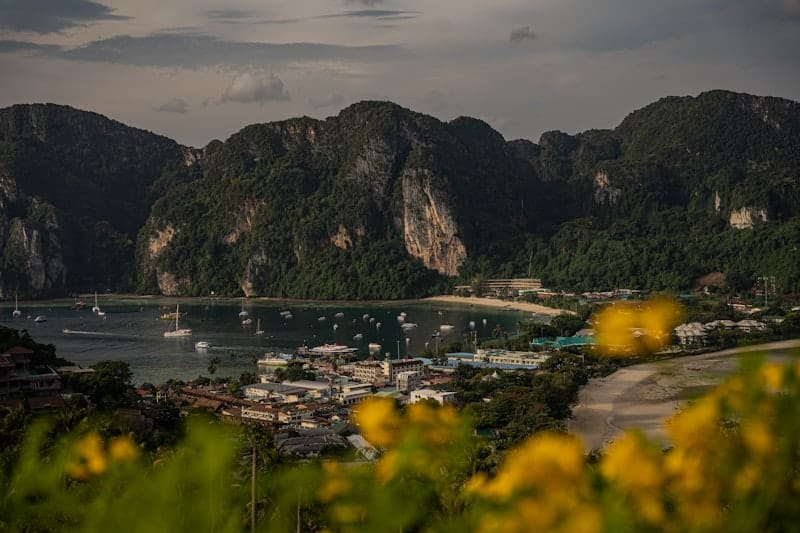
Koh Phi Phi during monsoon is a calculated risk that pays off for flexible travellers. Yes, it rains more here than the Gulf islands (it sits on the Andaman coast), and ferry services can occasionally be cancelled during heavy storms. But the upside is extraordinary: Maya Bay -- which charges Rs. 960 (400 Baht) entry and has a daily visitor cap of 4,000 during peak season -- is practically empty in August. Budget guesthouses on Phi Phi Don (the main island) drop to Rs. 1,500-2,500 per night on Agoda, and even mid-range resorts with pool access come under Rs. 3,500. The island is car-free, so you walk everywhere. Snorkelling at Bamboo Island and Shark Point remains excellent during monsoon; visibility is slightly lower than peak season but still 5-10 metres on most days. The key precaution is flexibility: book properties with free cancellation on Agoda, monitor weather 2-3 days in advance, and be prepared to extend your stay if a storm day means ferries are paused. Krabi and Phuket both have daily ferries to Phi Phi (2 hours, Rs. 720-960).
 07
Nature
07
Nature
Kanchanaburi -- River Kwai Floating Hotels and Riverside Guesthouses
Monsoon transforms this province into a waterfall paradise -- Erawan Falls runs at full force, and floating hotels on the River Kwai start at Rs. 1,500
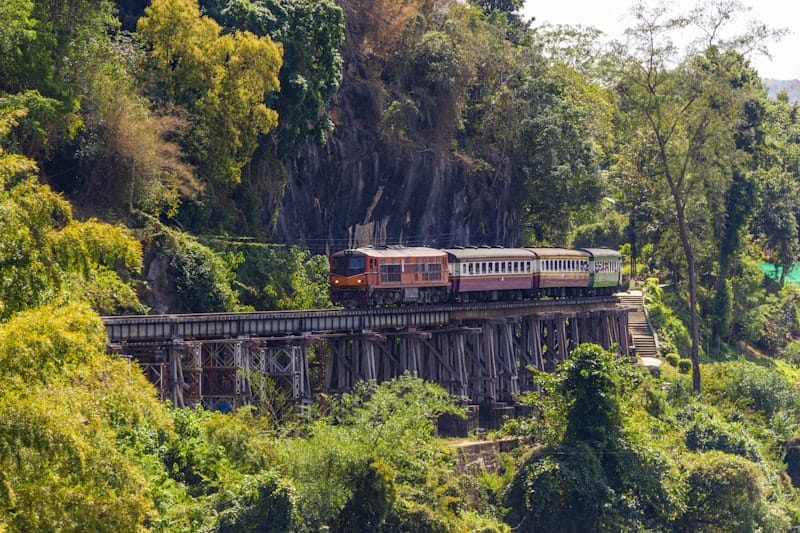
Kanchanaburi is the destination that benefits most from monsoon travel in all of Thailand. The province's star attraction, Erawan National Park with its seven-tiered turquoise waterfall, goes from a trickle in March to a thundering cascade in August. The experience of swimming in the emerald pools at the base of Erawan Falls during monsoon -- with the jungle canopy dripping, the sound of rushing water everywhere, and virtually no other tourists around -- is worth the trip alone. Budget floating hotels and riverside guesthouses along the River Kwai cost Rs. 1,500-2,500 per night on Agoda. These are genuinely unique stays: wooden raft houses tethered to the riverbank, where you fall asleep to the sound of flowing water. The Bridge Over the River Kwai, Hellfire Pass Memorial Museum, and the Thailand-Burma Railway Centre provide a sobering historical dimension. Kanchanaburi is just 3 hours from Bangkok by bus (Rs. 240-360). For adventure travellers, monsoon opens up river rafting and jungle trekking options that are unavailable during the dry season.
 08
Heritage
08
Heritage
Ayutthaya -- UNESCO Heritage Zone Budget Guesthouses
Thailand's ancient capital with over 400 temple ruins -- a UNESCO World Heritage Site where budget guesthouses cost less than Rs. 1,500 and you can cycle between centuries-old stupas
Ayutthaya was the capital of the Kingdom of Siam from 1351 to 1767, and its ruins -- spread across an island formed by the confluence of three rivers -- are one of Southeast Asia's most impressive archaeological sites. The Ayutthaya Historical Park is a UNESCO World Heritage Site covering over 289 hectares with dozens of accessible temple ruins, prangs (Khmer-style towers), and Buddha statues. During monsoon, the ancient city is dramatically photogenic: moss-covered ruins against stormy skies, reflective puddles creating mirror images of stupas, and the iconic Buddha head entwined in tree roots at Wat Mahathat looking even more atmospheric in diffused monsoon light. Budget guesthouses near the historical park cost Rs. 1,200-1,800 per night on Agoda. The entire historical park can be explored by rented bicycle (Rs. 120/day) in a single full day. Ayutthaya is just 80 km from Bangkok -- reachable by train (Rs. 48-120, 1.5 hours from Hua Lamphong) or minivan (Rs. 150, 1 hour from Victory Monument). It works perfectly as a day trip from Bangkok or a 1-2 night standalone destination.
Quick Comparison: All 8 Destinations at a Glance
| # | Destination | Monsoon Rate | Peak Rate | Best For | From Bangkok |
|---|---|---|---|---|---|
| 1 | Bangkok | Rs. 1,500/night | Rs. 3,500 | First-timers, street food, culture | -- |
| 2 | Chiang Mai | Rs. 1,200/night | Rs. 2,800 | Budget travellers, temples, cafes | 1 hr flight |
| 3 | Pattaya | Rs. 1,500/night | Rs. 3,200 | Beach + city, nightlife, day trips | 2 hr bus |
| 4 | Koh Samui | Rs. 2,200/night | Rs. 5,500 | Beach resort, Gulf coast (drier) | 1 hr flight + ferry |
| 5 | Hua Hin | Rs. 1,800/night | Rs. 4,000 | Families, clean beach, safe | 3 hr bus/van |
| 6 | Koh Phi Phi | Rs. 1,800/night | Rs. 4,500 | Instagram spots, diving, Maya Bay | Flight + 2 hr ferry |
| 7 | Kanchanaburi | Rs. 1,500/night | Rs. 3,000 | Nature, waterfalls, history | 3 hr bus |
| 8 | Ayutthaya | Rs. 1,200/night | Rs. 2,500 | Heritage, cycling, photography | 1.5 hr train |
Getting Around Thailand on a Budget: Monsoon Transport Tips
Domestic flights: AirAsia, Nok Air, Thai Lion Air, and Thai Smile offer budget domestic flights starting at Rs. 2,000-3,500 one way. Book 3-4 weeks in advance for monsoon dates -- competition is lower and fares stay cheap. Baggage is extra on all budget carriers (7 kg cabin bag is typically free).
Intercity buses and minivans: Thailand's bus network is excellent and air-conditioned. First-class VIP buses between Bangkok and major cities cost Rs. 400-800. Minivans are faster but slightly more expensive. Book at bus stations or use the 12Go Asia app for online reservations.
Trains: The State Railway of Thailand is the most scenic and cheapest option. Third-class seats are almost free (Rs. 24-72), second-class air-conditioned seats run Rs. 200-500 depending on distance. The Bangkok-Chiang Mai overnight sleeper train (Rs. 1,800 for a lower berth) is an experience worth having at least once.
Within cities: BTS/MRT in Bangkok (Rs. 36-120 per trip), songthaews (shared pickup trucks) in most cities for Rs. 24-72, and Grab (Southeast Asia's Uber equivalent) for convenience at Rs. 100-400 within city limits. Scooter rental is Rs. 480-720/day but requires an international driving permit and experience riding in Southeast Asian traffic.
Monsoon-specific tip: Always carry a lightweight waterproof poncho (available at any 7-Eleven for Rs. 72). Thai 7-Elevens are everywhere -- every 500 metres in cities -- and stock ponchos, umbrellas, and dry bags. Waterproof your phone with a zip-lock bag or buy a Rs. 240 waterproof pouch at any night market.
Essential Packing List for Monsoon Thailand Trip
Waterproof essentials: Lightweight rain jacket or poncho (available cheaply in Thailand too), waterproof phone pouch, dry bag for electronics, quick-dry towel. Avoid heavy umbrellas -- they are impractical when you also need hands free for navigation and photography.
Footwear: Waterproof sandals with grip (Decathlon sport sandals work well) for daily use, and one pair of quick-dry shoes for temple visits where bare feet are required on wet stone. Leave leather shoes at home -- they will not survive.
Clothing: Light, quick-dry fabrics. Cotton takes hours to dry in tropical humidity. Pack 4-5 days of clothes and use Thai laundry services (Rs. 120-180 per kg, available on every tourist street). Women should carry a light scarf for temple visits. Men need long trousers for certain temples.
Health: Mosquito repellent with DEET (available at Thai pharmacies), basic first-aid kit, any prescription medicines you take, and ORS sachets for stomach issues. Thailand pharmacies are excellent and stock most common medicines over the counter at very low prices.