Amazon Ashwagandha Under Rs. 800: Cost Per Capsule, October 2026
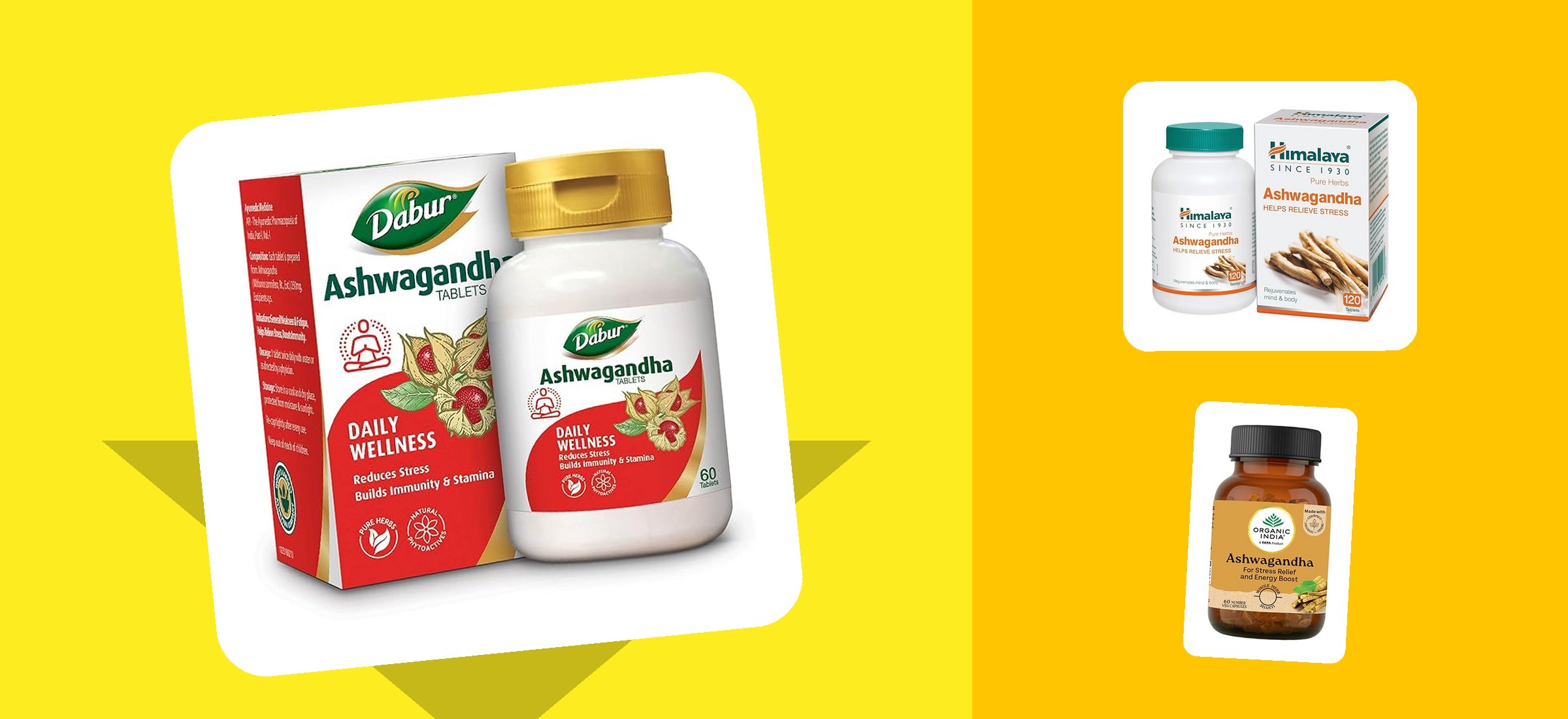
Ninety ashwagandha results read on 7 October. Open each product page, read the unit count off it, divide, and the shelf reorders itself completely.
Amazon's ashwagandha results mix 60-tablet boxes with 1,000-tablet bottles on one scrolling page, and no tile tells you what a tablet costs. Open each product page, read the unit count off it and divide, and the shelf runs from Rs. 1.72 to Rs. 13.32 a tablet — 7.74-fold. The Rs. 2,310 listing, by far the dearest tag seated, turns out to be the third-cheapest tablet. The discount badge is no help either: it runs opposite to the price per tablet, and the three deepest badges in the read all buy capsules costing more than Rs. 11. What separates the cheap half from the expensive half is what the label says: plain root below Rs. 4, trademarked extracts above Rs. 9.98.
Every price below was pulled from Amazon on October 7, 2026 and checked against the MRP on the listing. Stack them with the live codes on our Amazon coupons page, which the deals desk re-verifies daily.
Jump to a pick
- Rs. 1.72 a tablet — the cheapest tablet here, and it is not pure ashwagandha — Rs. 1.72, 6% badge
- 39% off — the cheapest tag on the page, and the second-cheapest tablet — Rs. 2.25, 39% badge
- Rs. 2,310 — the dearest tag on the page, badged 2%, and the third-cheapest tablet — Rs. 2.31, 2% badge
- Rs. 2.80 a tablet — 240 tablets, and the first of three Jiva listings sharing one rating pool — Rs. 2.80, pool 1,373
- 30% off — Rs. 2.92 a capsule, and the same brand sells one at Rs. 5.95 — Rs. 2.92, 30% badge
- Rs. 2.95 a tablet — the second Jiva listing, same 1,373 ratings — Rs. 2.95, same pool
- Rs. 3.00 a tablet — a two-pack whose tile says '60 Count', and one of two listings here with no MRP — Rs. 3.00, no MRP
- Rs. 3.22 a tablet — the third Jiva listing, and the dearest of the three — Rs. 3.22, same pool
- 41,237 ratings — the largest pool on the page, at Rs. 3.28 a tablet — Rs. 3.28, 41,237 ratings
- Rs. 3.75 a tablet — where '1000mg' starts appearing on labels — Rs. 3.75, 18% badge
- Rs. 3.90 a tablet — Himalaya's second listing, on 18 ratings — Rs. 3.90, Himalaya again
- Rs. 3.97 a capsule — the last card under Rs. 4 — Rs. 3.97, last under Rs. 4
- 28% off — Rs. 5.95 a tablet, at 2.04 times Zandu's own cheaper listing — Rs. 5.95, same brand 2x
- Rs. 6.15 a tablet — an 8% badge on 2,713 ratings — Rs. 6.15, 8% badge
- Rs. 6.48 a tablet — and it is ashwagandha plus tulsi — Rs. 6.48, a blend
- Rs. 9.98 a capsule — the first card in double figures — Rs. 9.98, 16% badge
- 47% off — the deepest badge on the page, and the third-dearest capsule on it — Rs. 11.32, 47% badge
- Rs. 11.47 a capsule — '3X' on the label, and no MRP published — Rs. 11.47, no MRP
- 42% off — Rs. 11.66 a capsule, and the 120-pack that undercuts its own 60-pack — Rs. 11.66, 42% badge
- 7% off — Rs. 11.68 a capsule, Himalaya's dearest listing at 3.56x its cheapest — Rs. 11.68, 7% badge
- Rs. 12.00 a capsule — exactly seven times the cheapest tablet here — Rs. 12.00, 23% badge
- 43% off — Rs. 12.15 a capsule, the second-dearest unit on the page — Rs. 12.15, 43% badge
- Rs. 13.32 a capsule — the dearest unit on the page, 7.74x the cheapest — Rs. 13.32, dearest tablet
23 Ashwagandha Listings, Rs. 1.72 To Rs. 13.32 A Tablet
Under Rs. 3.30 A Tablet: Where The Dearest Tag On The Page Turns Up
Nine listings from Rs. 1.72 to Rs. 3.28 a tablet, including the Rs. 135 tag that is genuinely cheap, the Rs. 2,310 tag that is also cheap once divided, and three Jiva pack sizes sharing a single 1,373-rating pool.
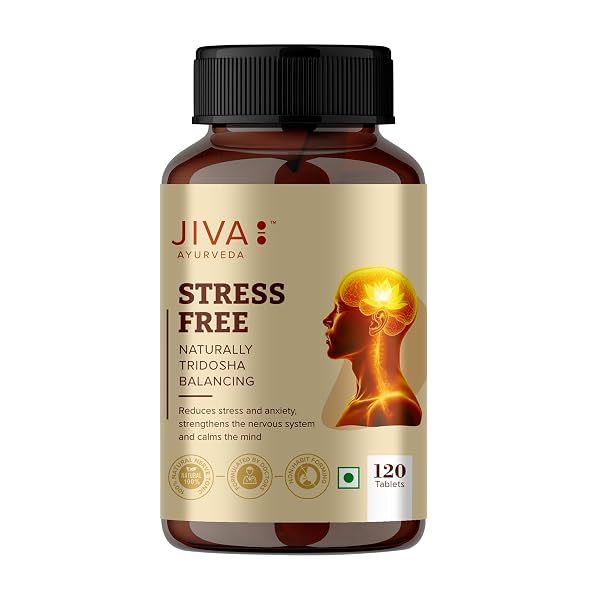
Jiva Ayurvedic Stress Free Tablets (120 Tablets) | Ashwagandha, Brahmi & Shankhpushpi | Anxi
A Jiva 'Ayurvedic Stress Free' 120-tablet pack at Rs. 206.
Why it earned its spot The lowest cost per tablet in the read, with the one caveat that decides whether it belongs on this list at all.
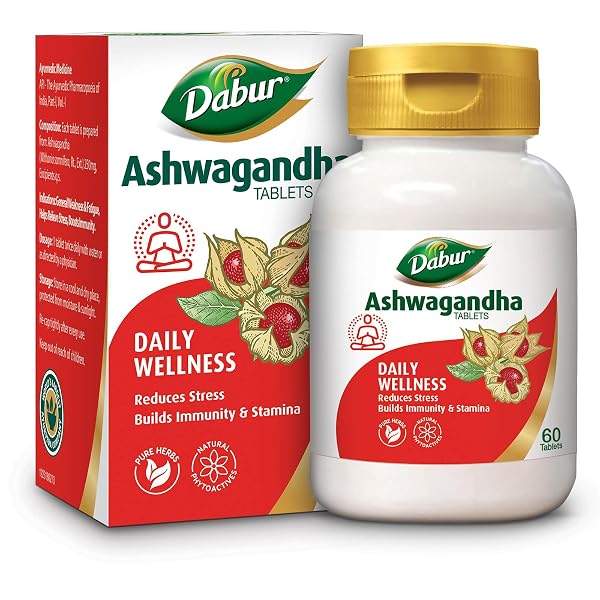
Dabur Ashwagandha Tablets - 60 tabs | General Wellness Tablets | Stress Relief | Rich in Ant
A Dabur 60-tablet ashwagandha pack at Rs. 135, from a stated Rs. 223.
Why it earned its spot The one deep badge on this page that genuinely buys a cheap tablet, which is why it is seated early.
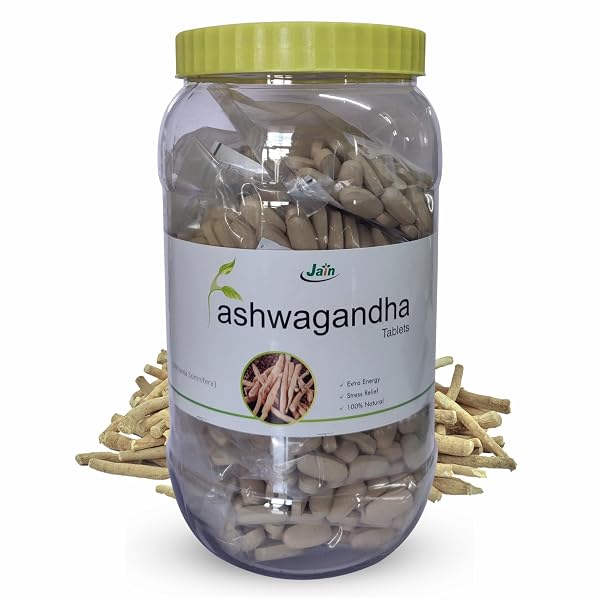
Jain Ashwagandha 850mg Tablet | Extra Energy, Stress Relief, 100% Natural, Improves Sleep, R
A Jain 850 mg ashwagandha bottle of 1,000 tablets at Rs. 2,310.
Why it earned its spot The single clearest demonstration that the price tag on this shelf tells you nothing.
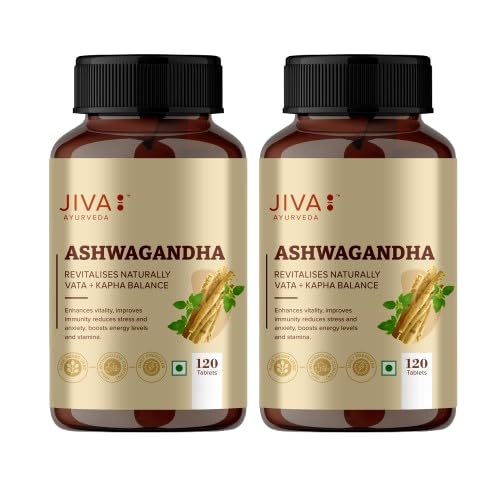
Jiva Ashwagandha Tablets 500mg | Pure Herbs Used | 100% Pure & Natural - 120 Tablet In Each
A Jiva 500 mg ashwagandha 240-tablet bottle at Rs. 673, from a stated Rs. 760.
Why it earned its spot The cheapest of three Jiva pack sizes that all display the identical rating count.
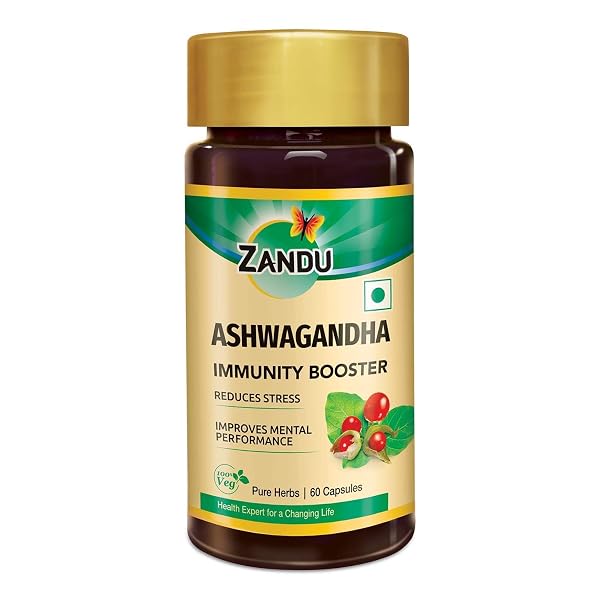
Zandu Ashwagandha 60 Veg Caps | 100% Pure Ashwagandha Root Extract | Scientifically Proven f
A Zandu 60-capsule ashwagandha root-extract pack at Rs. 175, from a stated Rs. 250.
Why it earned its spot The cheapest capsule here, and half the per-capsule price of its own brand's other listing.
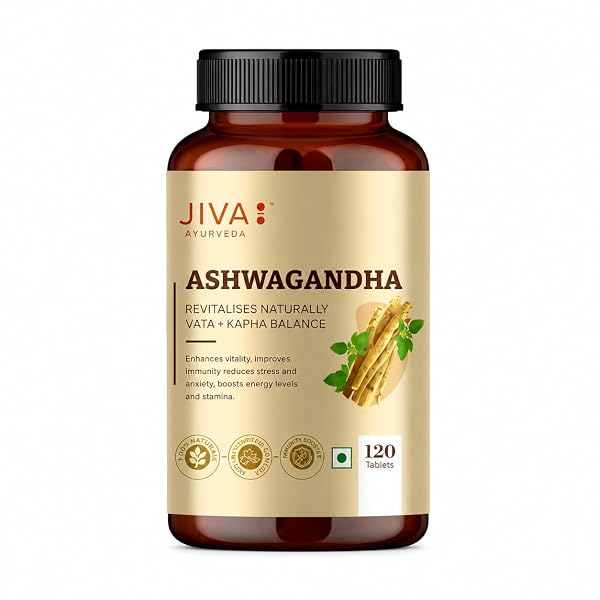
Jiva Ashwagandha Tablet - 120 Tablets | Ayurvedic Ashwagandha Supplement for Body, Boost Ene
A Jiva 120-tablet ashwagandha pack at Rs. 354, from a stated Rs. 380.
Why it earned its spot Half the pack of the card above, 5% dearer per tablet, identical published evidence.
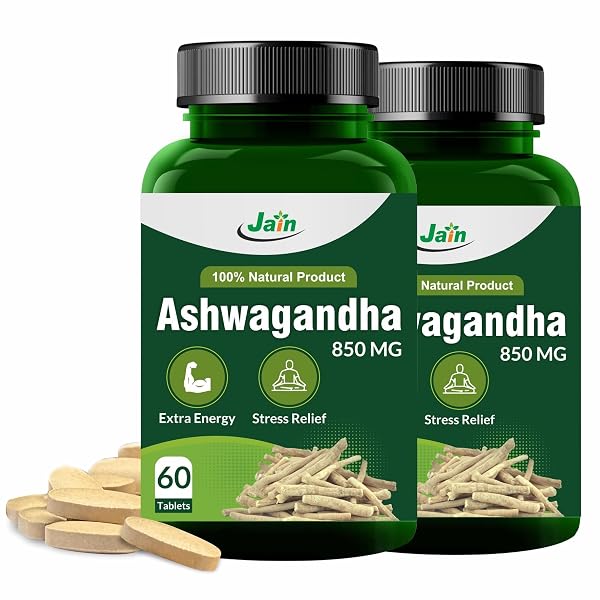
Jain Ashwagandha Tablets 850mg, 60 Count (Pack of 2), Ayurvedic Supplement
A Jain two-pack of 60 850 mg tablets, 120 in total, at Rs. 360.
Why it earned its spot The listing most likely to be divided wrongly, and the reason every count here came off a product page.
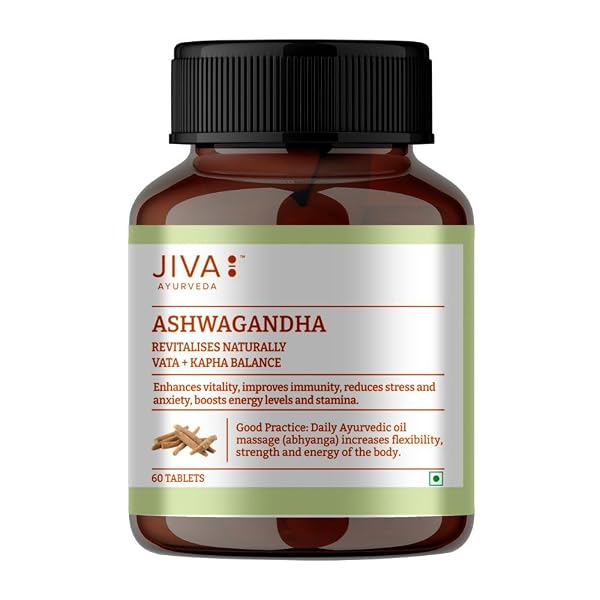
Jiva Ashwagandha Tablet | 100% Ayurvedic Formulation | Boosts Immunity and Energy Level | St
A Jiva 60-tablet ashwagandha pack at Rs. 193, from a stated Rs. 210.
Why it earned its spot The smallest Jiva pack, 15% dearer per tablet than the largest, on the same 1,373 ratings.
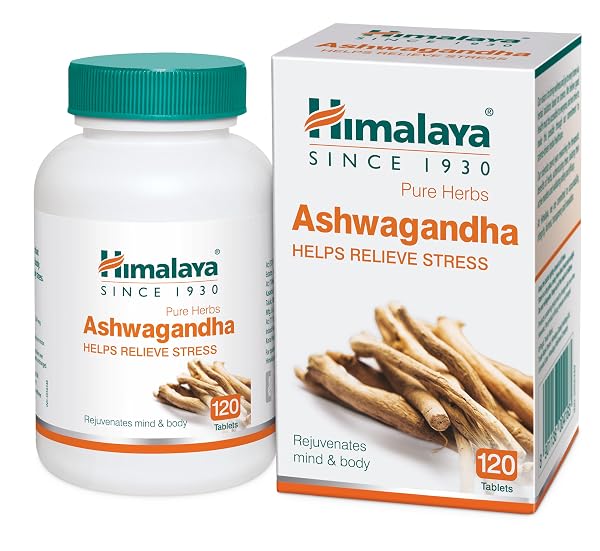
Himalaya Ashvagandha - 120 Tablets | Stress Relief | Rejuvenates Mind & Body | Improves Stre
A Himalaya 'Ashvagandha' 120-tablet pack at Rs. 394, from a stated Rs. 480.
Why it earned its spot The best-evidenced listing in the read, and the cheapest of Himalaya's three tiles.
Rs. 3.75 To Rs. 6.48: The Gap In The Middle Of The Shelf
Six listings spanning the break between plain-root products and named extracts — including two brands that sell against themselves at double and 1.6 times their own cheaper tile, and the thinnest rating pool on the page.
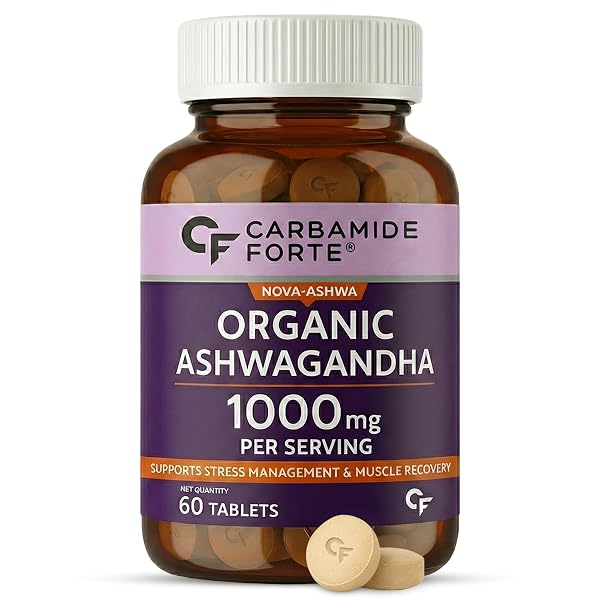
Carbamide Forte Ashwagandha Tablets 1000mg | Organic Ashwagandha Tablet for Men & Women | 60
A Carbamide Forte 1000 mg 60-tablet pack at Rs. 225, from a stated Rs. 275.
Why it earned its spot The first card where the label leads on a milligram figure, at a modest premium.
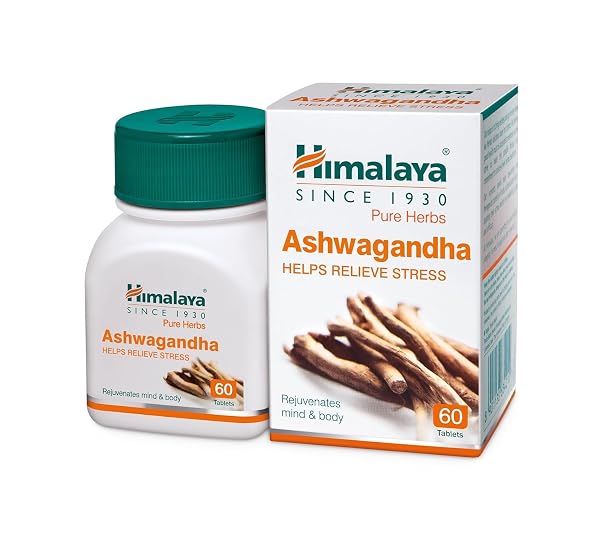
Himalaya Ashwagandha - General Wellness Tablets, 60 Tablets | Stress Relief | Rejuvenates Mi
A Himalaya 60-tablet ashwagandha pack at Rs. 234, from a stated Rs. 260.
Why it earned its spot The middle of Himalaya's own three-way split, and the thinnest rating pool on the page.
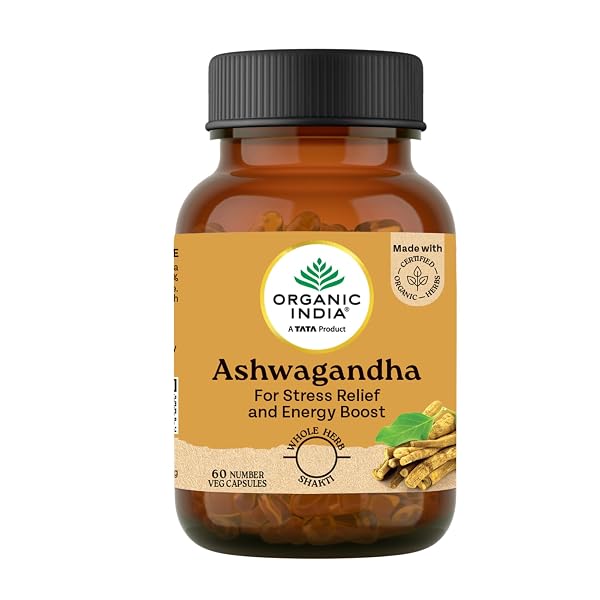
A TATA Product - Organic India Pure Ashwagandha Root Capsules - 60 Veg Caps (400mg), For Vit
An Organic India pure ashwagandha root 60-capsule pack at Rs. 238, from a stated Rs. 265.
Why it earned its spot The top of the cheap band, on the third-largest rating pool seated.
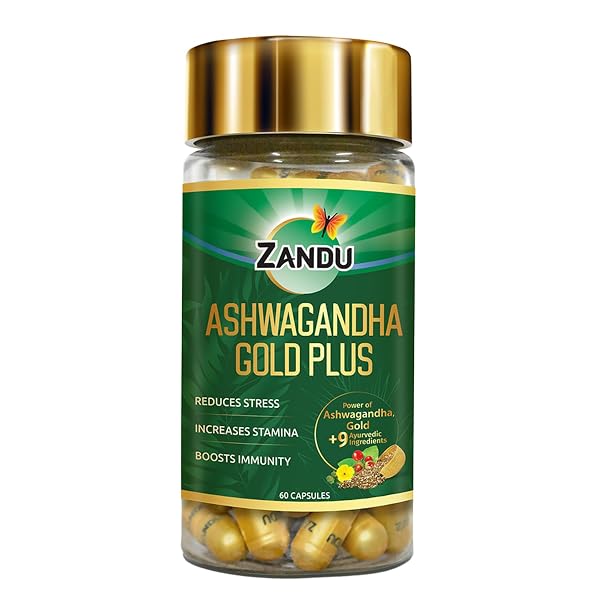
Zandu Ashwagandha Gold Plus I Reduces Stress & Cortisol, Improves Sleep and Muscle Recovery
A Zandu 'Ashwagandha Gold Plus' 60-tablet pack at Rs. 357, from a stated Rs. 499.
Why it earned its spot One brand, two 60-count ashwagandha products, double the price per tablet.
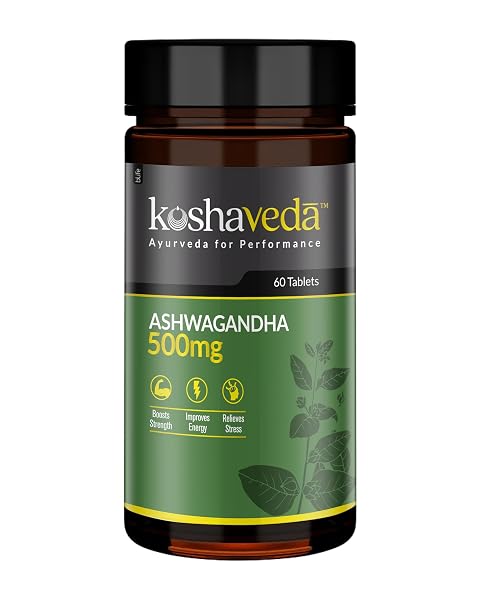
Koshaveda Ashwagandha 500mg, 60 Tablets
A Koshaveda 500 mg 60-tablet pack at Rs. 369, from a stated Rs. 399.
Why it earned its spot A mid-band listing with a substantial pool, and the cheaper of two Koshaveda tiles.
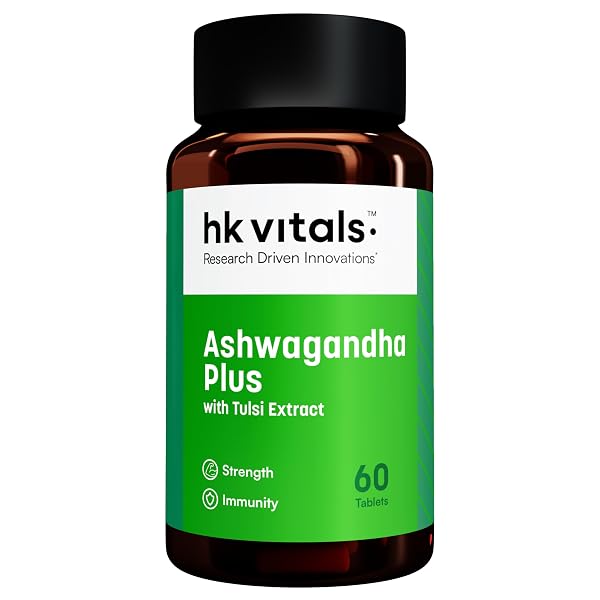
hk vitals Ashwagandha Plus with Tulsi Extract 500mg, 60 Tablets
An hk vitals ashwagandha-with-tulsi 60-tablet pack at Rs. 389, from a stated Rs. 449.
Why it earned its spot The second blended product seated, flagged as such, at the top of the mid band.
Rs. 9.98 To Rs. 13.32: Where The Deepest Badges Live
Eight listings inside a band 33% wide, seven printing a trademarked or proprietary extract name on the label — and carrying the three deepest discount badges in the whole read.
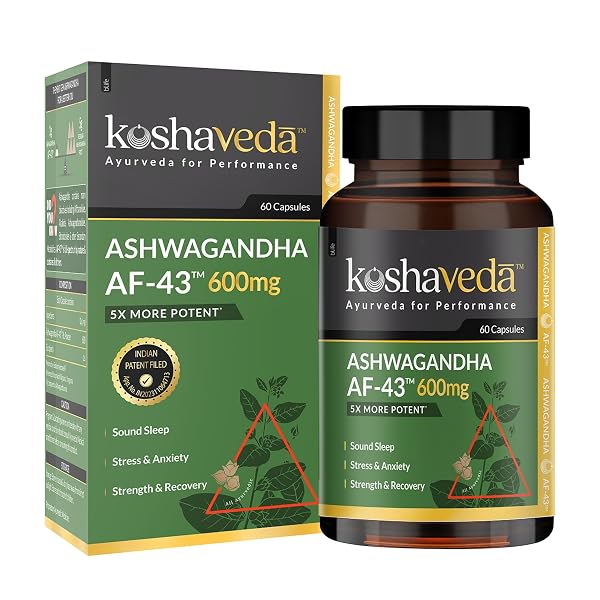
Koshaveda Ashwagandha AF-43 600mg,60 Capsules
A Koshaveda 'AF-43' 600 mg 60-capsule pack at Rs. 599, from a stated Rs. 709.
Why it earned its spot Where the expensive half of the shelf begins, at 5.8 times the cheapest tablet.
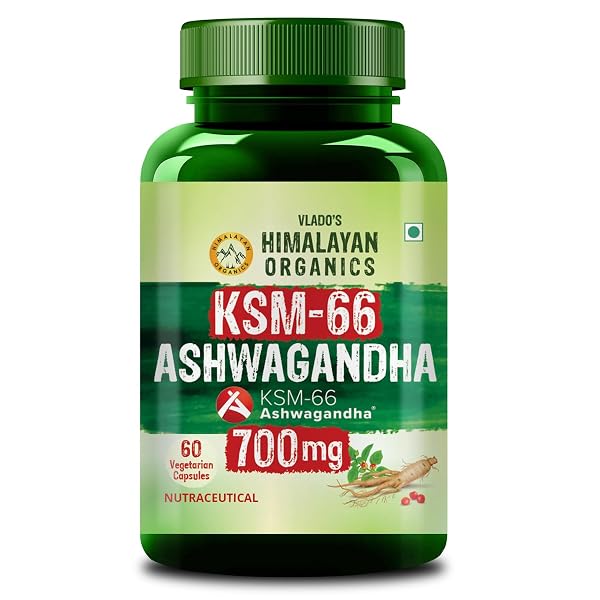
Vlado's Himalayan Organics Ashwagandha KSM66 700mg - 60 Capsules I KSM 66 Ashwagandha Capsul
A Vlado's Himalayan Organics KSM66 700 mg 60-capsule pack at Rs. 679, from a stated Rs. 1,289.
Why it earned its spot The single clearest case of the page's second finding: the biggest percentage, near the top of the price-per-capsule table.
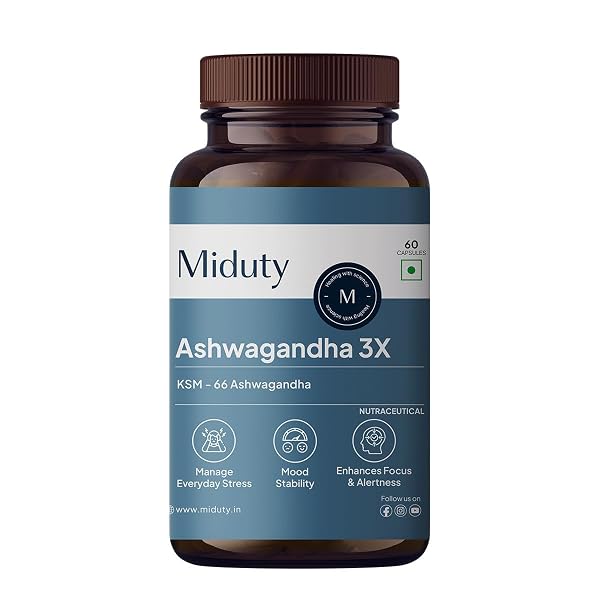
Miduty Ashwagandha 3X Supplement 500 mg Serving - KSM 66 Ashwagandha - Triple Strength Formu
A Miduty 'Ashwagandha 3X' KSM-66 60-capsule pack at Rs. 688.
Why it earned its spot A premium-labelled capsule at 6.7 times the cheapest tablet, sold without a list price at all.
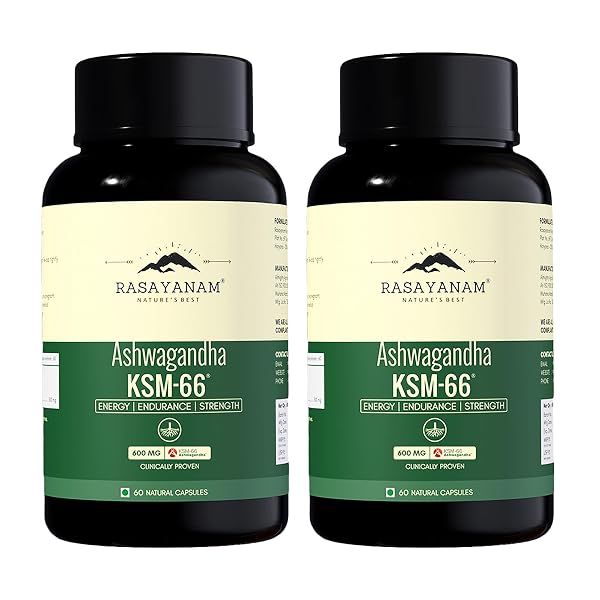
Rasayanam Ashwagandha KSM-66® | Clinically Proven 600mg Dosage | 5.1% Withanolides for Max R
A Rasayanam KSM-66 600 mg 120-capsule pack at Rs. 1,399, from a stated Rs. 2,398.
Why it earned its spot The one place on this page where doubling the pack genuinely pays.
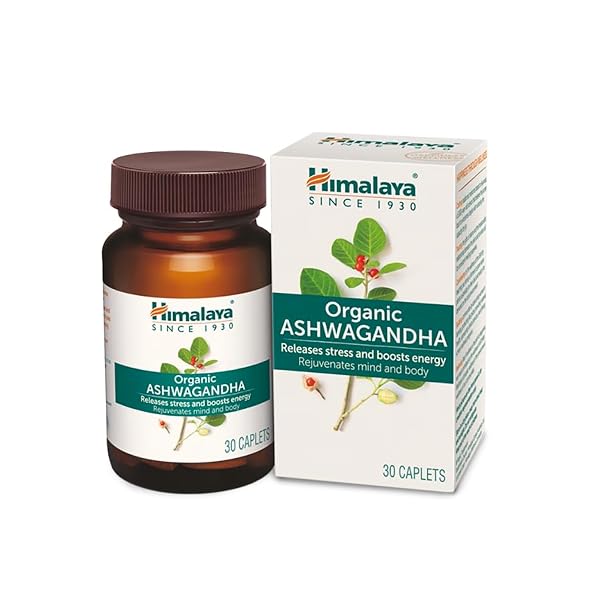
Himalaya Organic Ashwagandha 670mg |Helps Release Stress | Rejuvenates Mind and Body | Gener
A Himalaya 'Organic Ashwagandha' 670 mg 60-capsule pack at Rs. 701, from a stated Rs. 750.
Why it earned its spot The widest same-brand gap on the page, and the counter-example that keeps the badge finding honest.
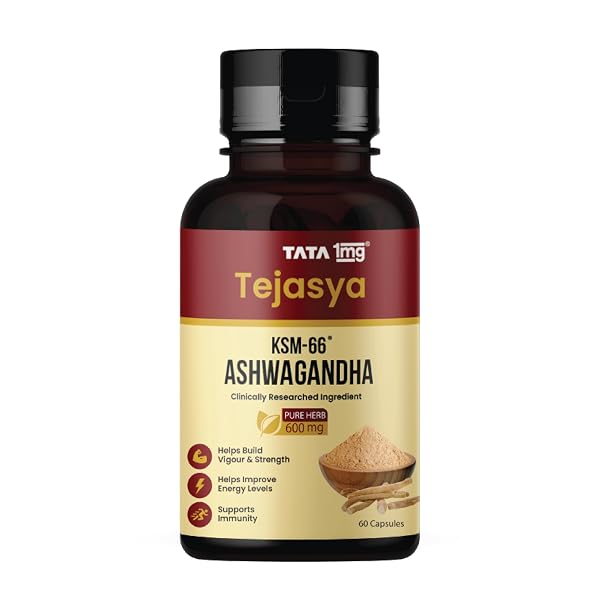
Tata 1mg Tejasya Ashwagandha KSM-66 Capsules | 600 mg Root Extract per Capsule | Supports En
A Tata 1mg 'Tejasya' KSM-66 60-capsule pack at Rs. 720, from a stated Rs. 932.
Why it earned its spot A round number that happens to frame the whole page.
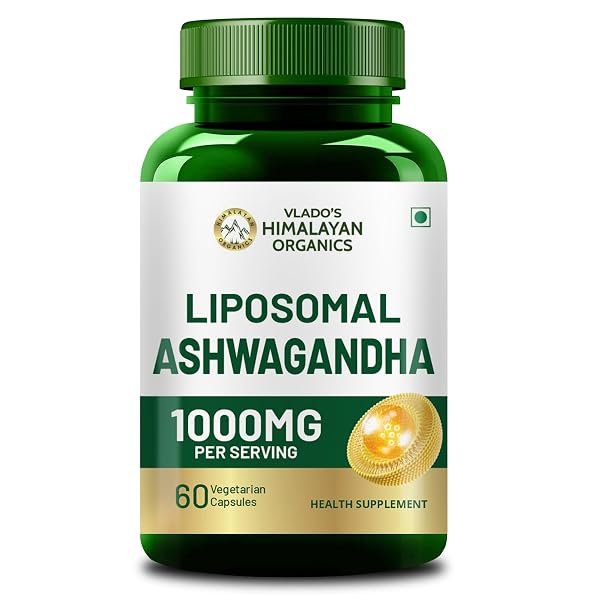
Vlado's Himalayan Organics Liposomal Ashwagandha 1000mg/ Serving I Clinically Proven 100% Pu
A Vlado's Himalayan Organics liposomal ashwagandha 60-capsule pack at Rs. 729, from a stated Rs. 1,278.
Why it earned its spot The second-deepest badge on the page, attached to the second-dearest capsule on it.
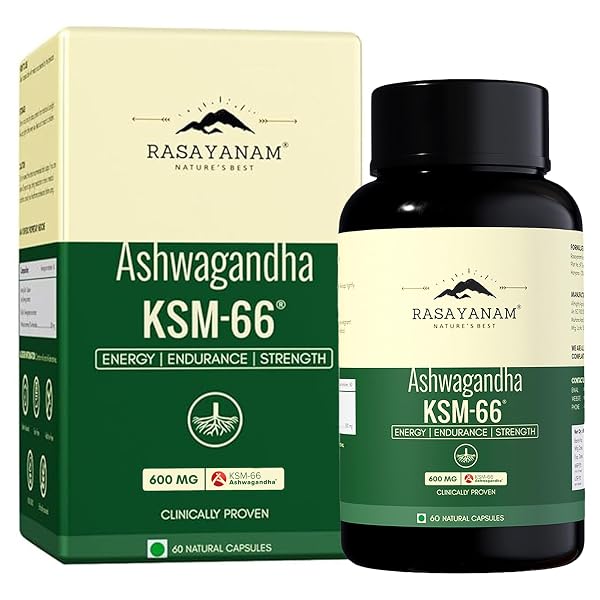
Rasayanam Ashwagandha KSM-66® | Clinically Proven 600mg Dosage | 5.1% Withanolides for Max R
A Rasayanam KSM-66 600 mg 60-capsule pack at Rs. 799, from a stated Rs. 999.
Why it earned its spot The top of the range, and the end of a 7.74-fold spread inside one search word.
How to read a supplement shelf
Four checks, and one that is not about money. First: get the unit count off the product page, never the title. On this shelf '60 Count (Pack of 2)' is 120, 'Tejasya Ashwagandha KSM-66 Capsules' is 60 and not 66, and '11 Strip 20 Capsules' is 220 — title parsing fails in both directions, and the product page also prints Amazon's own per-count rate, which is the fastest honest shortcut on this whole shelf. Second: divide before you compare anything. The Rs. 135 tag and the Rs. 2,310 tag on this page are six paise apart per tablet. Third: treat the badge as information about the MRP, not about the price. The eight listings here badged 20% or deeper carry a median Rs. 11.49 a tablet; the thirteen badged under 20% carry a median Rs. 3.75 — and the stated MRPs behind those deep badges run to Rs. 1,289 and Rs. 2,398, figures we have not verified anything ever sold at. Fourth: read the rating count, not just the star. 4.4 from 18 ratings and 4.2 from 41,237 sit on the same page here, and three Jiva tiles share one 1,373-rating pool between them. And the one that is not about money: a cheaper tablet is only a cheaper tablet. Supplements are not medicines, this page has not tested, assayed or taken anything, and whether ashwagandha is appropriate for you at all — particularly alongside prescribed medication, in pregnancy, or with a thyroid or autoimmune condition — is a question for a qualified doctor and not for a price comparison.
How our picks compare
| Product | Sale price | MRP | Discount |
|---|---|---|---|
| Rs. 1.72, 6% badge | Rs. 206 | Rs. 220 | 6% |
| Rs. 2.25, 39% badge | Rs. 135 | Rs. 223 | 39% |
| Rs. 2.31, 2% badge | Rs. 2,310 | Rs. 2,349 | 2% |
| Rs. 2.80, pool 1,373 | Rs. 673 | Rs. 760 | 11% |
| Rs. 2.92, 30% badge | Rs. 175 | Rs. 250 | 30% |
| Rs. 2.95, same pool | Rs. 354 | Rs. 380 | 7% |
| Rs. 3.00, no MRP | Rs. 360 | — | — |
| Rs. 3.22, same pool | Rs. 193 | Rs. 210 | 8% |
| Rs. 3.28, 41,237 ratings | Rs. 394 | Rs. 480 | 18% |
| Rs. 3.75, 18% badge | Rs. 225 | Rs. 275 | 18% |
| Rs. 3.90, Himalaya again | Rs. 234 | Rs. 260 | 10% |
| Rs. 3.97, last under Rs. 4 | Rs. 238 | Rs. 265 | 10% |
| Rs. 5.95, same brand 2x | Rs. 357 | Rs. 499 | 28% |
| Rs. 6.15, 8% badge | Rs. 369 | Rs. 399 | 8% |
| Rs. 6.48, a blend | Rs. 389 | Rs. 449 | 13% |
| Rs. 9.98, 16% badge | Rs. 599 | Rs. 709 | 16% |
| Rs. 11.32, 47% badge | Rs. 679 | Rs. 1,289 | 47% |
| Rs. 11.47, no MRP | Rs. 688 | — | — |
| Rs. 11.66, 42% badge | Rs. 1,399 | Rs. 2,398 | 42% |
| Rs. 11.68, 7% badge | Rs. 701 | Rs. 750 | 7% |
| Rs. 12.00, 23% badge | Rs. 720 | Rs. 932 | 23% |
| Rs. 12.15, 43% badge | Rs. 729 | Rs. 1,278 | 43% |
| Rs. 13.32, dearest tablet | Rs. 799 | Rs. 999 | 20% |
What we skipped — and why
What we look for
Every figure read from Amazon's own pages on one date
Each selling price, M.R.P., savings badge, star average and rating count here was read on 7 October 2026 from amazon.in - first from its search results for 'ashwagandha tablets', 'ashwagandha capsules' and 'ashwagandha powder', then from each seated listing's own product page - logged out, in India, with nothing purchased. 90 results came back, 59 are unique non-sponsored listings, 23 are seated.
Every pack count came off the product page, not the title
Amazon titles on this shelf cannot be parsed for pack size: 'KSM-66 Capsules' looks like 66 capsules, '60 Count (Pack of 2)' is 120, and '11 Strip 20 Capsules' is 220. Every count on this page is the Unit Count field from the listing's own product page. Where that field was ambiguous the listing was dropped rather than estimated.
Every per-tablet figure is confirmed twice
Amazon prints its own 'per count' rate beside the price on each of these product pages. Our selling-price-divided-by-verified-count agreed with Amazon's own printed figure on all 23 seated listings, to the paisa. Where our first read of a search tile disagreed with the product page - one listing, Himalaya's 60-tablet pack - the product page was taken as correct and the card says so.
Blends are labelled, never silently ranked against plain ashwagandha
Two of the 23 seated listings are multi-herb products by their own product names - a Jiva blend with brahmi, and an hk vitals tablet with tulsi. Both say so in their first line and in the spec strip, because a blend will always flatter a cost-per-tablet ranking and a reader deserves to be told before the number.
Counter-examples are seated, not filtered out
The badge on this shelf tends to run opposite to the price per tablet. Two listings contradict that - a 39% badge on the second-cheapest tablet, and a 7% badge on the fourth-dearest capsule - and both are seated and named as exceptions, because a tendency reported without its exceptions is not a finding.
Nothing here is a health claim, and none is assessed
This is a price page about a food supplement. 'Clinically proven', '5% withanolides', 'KSM-66', 'liposomal', '3X', 'reduces stress' and every other label phrase is the listing's own printed wording, quoted as printed and neither verified nor endorsed. Nothing was bought, opened or taken, no product is said to work or to be safe for anyone, and a lower price per tablet is a statement about money only.
FAQs
How much does ashwagandha cost on Amazon India?
It depends almost entirely on the pack size, which the tile does not divide for you. In this read of 59 unique listings on 7 October 2026, a single tablet or capsule cost between Rs. 1.72 and Rs. 13.32 once each listing was divided by the unit count verified on its own product page. Price tags ran from Rs. 135 to Rs. 2,310, and the two are close to unrelated: the Rs. 2,310 listing is a bottle of 1,000 and works out at Rs. 2.31 a tablet. The cheapest plain-ashwagandha tablet seated was Rs. 2.25. Prices change continuously, so check the live page.
Does a bigger discount on Amazon mean cheaper ashwagandha?
On this shelf it usually means the opposite. The eight seated listings badged 20% or deeper carry a median Rs. 11.49 a tablet; the thirteen badged under 20% carry a median Rs. 3.75 - a 3.1-fold gap running the wrong way. The three deepest badges in the read, 47%, 43% and 42%, all sit on capsules costing more than Rs. 11. Two listings run the other way and both are seated: a 39% badge on the second-cheapest tablet, and a 7% badge on the fourth-dearest capsule. A badge is arithmetic over a selling price and a stated M.R.P. the seller chose, and we have not verified that anything here ever sold at its M.R.P. Setting prices and choosing whether to discount are ordinary commercial decisions.
Why is KSM-66 ashwagandha more expensive?
We can only report the prices and the labels. Every listing seated above Rs. 9.98 a capsule prints a trademarked or proprietary extract name - KSM-66 on five of them, 'liposomal' on one, '3X' on another - and every listing under Rs. 4.00 is sold as plain root powder or plain extract. The price structure of this shelf tracks that labelling closely. Whether a standardised extract corresponds to any difference a person would notice is a clinical question this page cannot and does not answer; 'clinically proven' and '5% withanolides' are the listings' own printed words, reproduced as printed and not verified or endorsed by us.
Why do three Jiva ashwagandha listings show the same number of ratings?
We report what the pages published. Three Jiva listings - 240 tablets, 120 tablets and 60 tablets - each displayed 4.1 stars from an identical 1,373 ratings, while working out at Rs. 2.80, Rs. 2.95 and Rs. 3.22 a tablet. Rating pools on a marketplace attach to a product record rather than to an individual pack size, so one body of reviews can appear across several listings. This is how review pooling ordinarily works, no wrongdoing is alleged by anyone, and we make no claim about how the three listings relate beyond what each page printed.
Is a bigger pack of ashwagandha always cheaper per tablet?
No, and the spread is wide enough to be worth checking every time. On this page Rasayanam's 120-capsule bottle is 12.5% cheaper per capsule than its own 60-capsule one, Jiva's 240-tablet bottle is only 5% cheaper per tablet than its 120, and Jain's 1,000-tablet bottle lands within 23 paise of a 120-tablet pack from another brand. The saving from buying bigger ran from substantial to nil across the listings read. A large bottle is also a long commitment to one product, which is a consideration about suitability and shelf life rather than price, and one for the label and a doctor rather than for us.
More Amazon coverage on Zoutons

Trending
 Flipkart Big Billion Days 2026 Dates: Announced Oct 9, Plus Access Oct 8
  Myntra Sale Calendar 2026: Big Fashion Festival & Winter EORS Dates
  Nykaa Sale Calendar 2026: Diwali Dhamaka & Pink Friday Dates, Next Sale
  Amazon Upcoming Sale Calendar 2026: Next Sale Dates India, GIF & More
  Ajio Upcoming Sale Calendar 2026: All Stars Sale & Festive Dates
  Udemy Upcoming Sale 2026: Next Sale Dates, Black Friday & Coupons
 More From Amazon


 Booking com
  Hostinger
  Dell
Dell  Udemy
Udemy  Agoda
Agoda  Nykaa
Nykaa  Myntra
  Ajio
Ajio