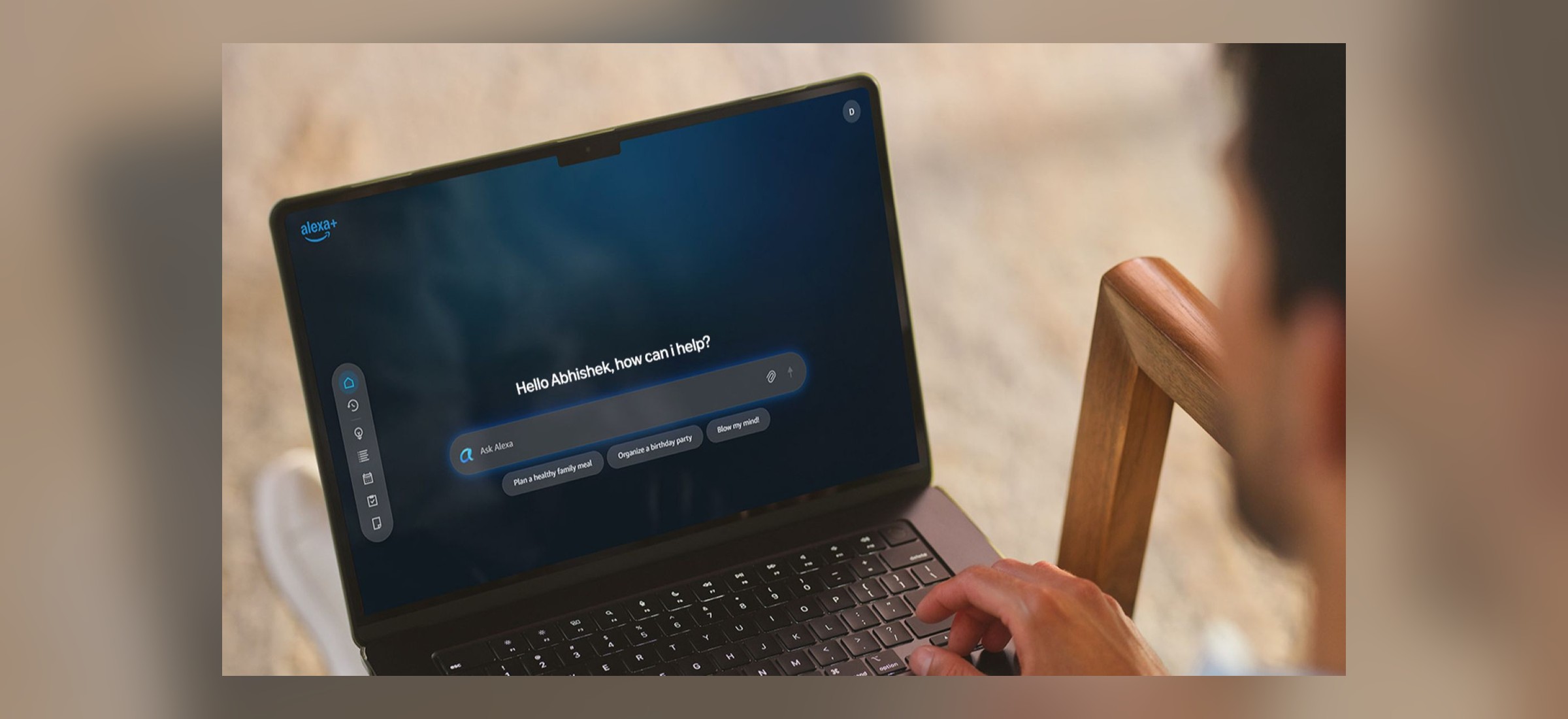
![A wide banner showing a person at a laptop using the Alexa+ assistant interface, from Amazon India's own newsroom photography for its Alexa for Shopping announcement]()
Amazon India has put a year of price history on its own product pages. In its 12 November 2026 announcement of Alexa for Shopping, Amazon writes: "Tap Price History on any product detail page, or just ask, to see how a price has changed within a 30-day, 60-day, or 365-day period." That is the part of this launch that changes something for Indian shoppers. Until now the only price-context number on a tile was the discount badge, and a badge is arithmetic against a stated MRP the seller chose. A 365-day line is a record of what the product actually cost — and on a November read, it reaches back across the entire October festive peak. No Prime membership required.
📅 Update log:
15 November 2026: first published. Source is Amazon India's own newsroom post, "Meet Alexa for Shopping, your personalised AI assistant on Amazon", at aboutamazon.in, published 12 November 2026 and read on 15 November from India, logged out, with nothing bought. Every feature description, figure and disclaimer quoted here is verbatim from that post. The feature itself was not tested — Amazon describes a roll-out on "select storefronts", and nothing here verifies that Price History appears on any particular product page or that the figures shown are accurate or complete. Amazon says it will add capabilities "in the coming weeks and months".
Amazon India has started showing a year of price history on its own product pages. In its announcement of Alexa for Shopping, published on 12 November 2026, Amazon says: "Tap Price History on any product detail page, or just ask, to see how a price has changed within a 30-day, 60-day, or 365-day period."
That is a bigger change for Indian shoppers than the AI assistant wrapped around it. Until now the only price-context number on an Amazon.in tile was the discount badge — and a badge is calculated against a stated MRP, not against what the product actually cost last month. A 365-day line answers the question the badge never could: was this ever cheaper than it is today?
It needs no Prime membership. Amazon's post says signed-in customers can use it "on select storefronts of the Amazon Shopping app and website, no Prime membership required" — and separately, no Echo device either. It is a roll-out on select storefronts, so not everyone will see it yet.
This is a read of Amazon's own announcement, not a review. The feature was not tested. Nothing here verifies that the price history shown is accurate or complete, that it appears on any particular product page, or that any AI-generated summary is correct. Every quotation below is reproduced verbatim from Amazon India's newsroom post of 12 November 2026.
The price history feature, in Amazon's own words
| What | Amazon's statement |
|---|
| Where it lives | "Tap Price History on any product detail page, or just ask" |
| How far back | "a 30-day, 60-day, or 365-day period" |
| What Amazon says it is for | "helping you decide if it is the right time to buy" |
| What it replaces, in practice | Nothing — it sits beside the discount badge, which is still computed against a stated MRP rather than against last month's price |
| What it does not do | Nothing in the post says it compares prices at other retailers |
Why this matters more than it sounds. Every price page we publish makes the same point about discount badges: a badge of 84% and a badge of 50% describe two different reference prices, not two different bargains. A reference price is chosen by the seller; a price history is a record of what the thing actually sold for.
A 365-day window covers the festive peak. Read on 15 November 2026, a year of history on any product includes Big Billion Days, the Great Indian Festival and Diwali — which is precisely the comparison worth having before a November purchase, and precisely the one no badge gives you.
Two things Amazon's post does not claim. It does not say the price history compares prices at other retailers, and it does not say the history covers every product. The wording is "any product detail page", inside a feature described as rolling out on select storefronts — so this page records the claim and not an inference from it.
Everything else Amazon says it does
| Feature | Amazon's wording | What that means for a shopper |
|---|
| AI overviews | "surfaces AI-generated overviews at the top of search results and on product detail pages" | A summary written by a model, above the listings |
| Product comparison | "a side-by-side summary of features, prices, and review highlights from Amazon websites / apps and public sources" | Note the sources include the open web, not only Amazon |
| Price history | "see how a price has changed within a 30-day, 60-day, or 365-day period" | The first time Amazon.in has put a price line on its own product page |
| Deal alerts | "lets you know when a price drops or a relevant deal appears" | Amazon says over 4 million deal alerts were set for its Great Indian Festival 2026 |
| Scheduled actions | "restock household essentials each month if the price drops below a level you choose" | A standing order with a price condition attached |
| Shopping guides | "create a personalised shopping guide that compares options based on" your needs | Amazon's examples: a 55-inch smart TV, a gaming laptop |
| Basket building | "can search past orders and add them to your basket or build new baskets from conversational directions" | Reorder by description rather than by hunting your order history |
| Personalisation controls | "View, update and remove what you have shared" — preferences of family members, pets, interests and dietary needs | The data it holds is editable, by Amazon's account |
The comparison feature draws on sources outside Amazon. Amazon's wording is "from Amazon websites / apps and public sources", which means a side-by-side summary may include information Amazon did not publish and cannot stand behind in the way it stands behind a listing specification.
Deal alerts are the feature with a number attached. Amazon says "more than 4 million deal alerts were set by customers for the Amazon Great Indian Festival 2026", and that the new version "can be more responsive". A scheduled action can combine a restock with a price condition — Amazon's own example is restocking household essentials monthly if the price falls below a level you set.
The assistant is built on two existing things. The post describes it as bringing together "the product expertise of Rufus with the personalised knowledge and context of Alexa+", drawing on "your personal preferences, shopping history and conversations from across both Amazon.in and Alexa". That is the part to read twice if you share an Alexa device with a household.
Who can use it, and what it costs
| Requirement | Answer | Source |
|---|
| Account | Signed-in Amazon customers | Quoted from the post |
| Prime | Not required | "no Prime membership required"; elsewhere the post says no Prime membership or Echo device required |
| Echo device | Not required | Same sentence |
| Where | Amazon Shopping app and website | "on select storefronts" — not everywhere |
| Status | Rolling out | "now being rolled out to customers in India", so availability will vary by account and by day |
| How to start | "update your Amazon Shopping app" | Amazon's own instruction at the foot of the post |
No Prime membership, no Echo device, no fee named. Amazon's post states the no-Prime condition twice and adds that no Echo device is required. It names no charge for the feature anywhere.
"Select storefronts" is the qualifier that matters. The post uses that phrase twice and calls the launch a roll-out, so the honest expectation is that availability varies by account and changes over the coming weeks. Amazon's own closing line is "this is just the beginning", with more capabilities promised "in the coming weeks and months".
Amazon also published a separate launch the same week: Alexa.com, which lets Alexa+ Early Access customers in India use Alexa+ in a web browser. That is a different product from Alexa for Shopping and is gated to Early Access, which this page mentions only so the two are not confused.
What this read cannot tell you, and Amazon's own disclaimer
The feature was not tested. This page reads Amazon's announcement. It does not verify that a price history appears on any given product, that the figures shown are accurate or complete, that the history reflects every seller on a listing, or that an AI overview or comparison is correct. No screenshot of the live feature is reproduced here because none was taken.
Availability is explicitly partial. Amazon describes a roll-out on "select storefronts", so a reader who does not see Price History on a product page has not necessarily done anything wrong.
Amazon's own disclaimer, quoted: "Alexa for Shopping is intended solely to assist you with shopping-related queries on Amazon.in, such as discovering, searching and comparing products, obtaining product information, and receiving shopping recommendations. Alexa for Shopping is not intended to be, and should not be used as, a source of general information including, but not limited to, news, current affairs, political, financial, legal, me..." In plain terms: Amazon says do not use it as a source of medical, legal or financial information.
It is personalised from your own data. The post says it draws on your preferences, shopping history and conversations across both Amazon.in and Alexa, and that you can view, update and remove what you have shared. Anyone sharing an Alexa device in a household should know that before asking it to build a gift list.
No claim is made about Amazon's conduct. Launching an assistant, personalising it from first-party data with user controls, and rolling it out in stages are all ordinary product practices.
How to use the price history before you buy
- Update the Amazon Shopping app first. That is Amazon's own instruction for getting the feature.
- Check the 365-day view, not the 30-day one. A year of history on a November read spans the October festive peak, which is where Indian prices actually bottom out.
- Read the history against the badge, not instead of it. The badge tells you what the seller states as MRP; the history tells you what the thing has cost. They answer different questions and only one of them is a record.
- Set a deal alert rather than waiting on an unannounced sale. With no dated Black Friday event published by Amazon India at the time of writing, an alert is the more reliable instrument.
- Do not treat an AI overview as a specification. Amazon's comparison draws on "public sources" as well as its own listings, and Amazon's own disclaimer says the assistant is not a source of general information.
- Check the personalisation settings if you share a device. The post says you can view, update and remove what has been shared, including household members' preferences.
Frequently Asked Questions
Does Amazon India show price history now?
Yes — Amazon says so in its own announcement of 12 November 2026. The wording is: "Check price history for up to a full year: Tap Price History on any product detail page, or just ask, to see how a price has changed within a 30-day, 60-day, or 365-day period, helping you decide if it is the right time to buy." It arrives as part of Alexa for Shopping, which Amazon describes as rolling out on select storefronts of the Amazon Shopping app and website. This page has not tested the feature and cannot confirm it appears on any particular product or that the figures shown are complete.
Do I need Prime to use Alexa for Shopping?
No. Amazon's post states that "signed-in Amazon customers can use Alexa for Shopping on select storefronts of the Amazon Shopping app and website, no Prime membership required", and adds elsewhere that no Prime membership or Echo device is required. No charge for the feature is named anywhere in the announcement. What you do need is to be signed in, on a storefront where it has rolled out, with an updated Amazon Shopping app — Amazon's own instruction is to update the app to get started.
What can Alexa for Shopping actually do?
Amazon lists seven things. AI overviews at the top of search results and on product pages; side-by-side product comparisons drawing on "Amazon websites / apps and public sources"; price history over 30, 60 or 365 days; deal alerts when a price drops; scheduled actions, such as restocking household essentials monthly if the price falls below a level you set; personalised shopping guides for bigger purchases like a 55-inch TV or a gaming laptop; and basket building from past orders or spoken descriptions. You can also view, update and remove the preferences it has stored. None of this was tested here.
Is Amazon's price history better than the discount badge?
They answer different questions, and only one of them is a record. A discount badge is calculated against a stated MRP that the seller chooses, which is why two listings at the same rupee price can badge 50% and 84%. A price history is a record of what the product has actually sold for. On a November read, the 365-day view covers the October festive peak — Big Billion Days, the Great Indian Festival and Diwali — which is the comparison worth having before you buy. The caution is that this page has not verified the accuracy or completeness of the history Amazon shows, and Amazon's post does not say it compares prices at other retailers.
What is Alexa.com and is it the same thing?
No — it is a separate launch. Amazon India published a second post introducing Alexa.com, which lets Alexa+ Early Access customers in India use Alexa+ in any web browser, combining answers, actions and smart home controls in one place. That is gated to Early Access customers, where Alexa for Shopping is described as rolling out to signed-in shoppers on select storefronts with no Prime membership or Echo device required. They are related products from the same family and are mentioned together here only so the two are not confused.
Prices & codes last verified: November 15, 2026
Feature descriptions quoted from Amazon India's newsroom post of 12 November 2026 and read on 15 November 2026. Alexa for Shopping was not tested. Nothing here verifies that Price History appears on any particular product page, that the figures it shows are accurate or complete, that it covers every seller on a listing, or that any AI-generated overview or comparison is correct. Amazon describes the launch as rolling out on "select storefronts", so a reader who cannot see the feature has not necessarily done anything wrong. Amazon's own disclaimer states that Alexa for Shopping "is not intended to be, and should not be used as, a source of general information including, but not limited to, news, current affairs, political, financial, legal" or medical information — treat it as a shopping tool and nothing more. The scale figures quoted are Amazon's own. No claim is made that Amazon has acted improperly; staged roll-outs and first-party personalisation with user controls are ordinary product practice.







 Booking com
 Hostinger
 Dell
 Udemy
 Agoda
 Nykaa
 Myntra
 Ajio