




First time on AbhiBus? You unlock a flat 15% off your debut bus ticket — capped at the kind of saving that pays for a samosa run at the next pit stop. We break down exactly how the first-booking discount works in 2026, which routes qualify, the T&Cs people miss, and 8 travel essentials that make the journey worth booking in the first place.
- 15% OFFExclusive Code
First User: Flat 15% OFF Up to Rs. 150 + Rs. 150 Cb
ADMABHI10Exclusive CodeShow DetailsDetail Information Discount Flat 15% Off Promo Code ADMABHI10 Eligibility All Users Min Order No Minimum Order Value Valid On Select Products ABOUT THIS OFFER
- Save Flat 15% Off on your order.
- Valid for a limited time — grab it before it expires.
- Final price is shown after the discount is applied at checkout.
- CASHBACK10% OFFCode
Apsrtc Bookings: Get 10% OFF + Extra 100% Cashback
APSRTCView CodeShow DetailsDetail Information Discount Get 10% Off Promo Code APSRTC Eligibility All Users Min Order No Minimum Order Value Valid On Select Products ABOUT THIS OFFER
- Save Get 10% Off on your order.
- Reveal the code on the deal page and apply it at checkout.
- Valid for a limited time — grab it before it expires.
- Final price is shown after the discount is applied at checkout.
Success Rate: 100% (9 votes)
- FIRST USERFlat Rs. 500 OffCode
Flat Rs. 500 OFF on First Booking | New Users
ABHIFIRSTView CodeShow DetailsDetail Information Discount Flat Rs. 500 Off Promo Code ABHIFIRST Eligibility New Users Only Min Order No Minimum Order Value Valid On Select Products ABOUT THIS OFFER
- Save Flat Rs. 500 Off on your order.
- Reveal the code on the deal page and apply it at checkout.
- Offer eligibility: New.
- Valid for a limited time — grab it before it expires.
- Final price is shown after the discount is applied at checkout.
- 50% OFFCode
Up to 50% OFF on Rsrtc Bus Bookings
RJ100View CodeShow DetailsDetail Information Discount Up To 50% Off Promo Code RJ100 Eligibility All Users Min Order No Minimum Order Value Valid On Select Products ABOUT THIS OFFER
- Save Up To 50% Off on your order.
- Reveal the code on the deal page and apply it at checkout.
- Valid for a limited time — grab it before it expires.
- Final price is shown after the discount is applied at checkout.
- Up To Rs. 500 OffCode
Up to Rs. 500 OFF on Bus Booking
WEDDINGSView CodeShow DetailsDetail Information Discount Up To Rs. 500 Off Promo Code WEDDINGS Eligibility All Users Min Order No Minimum Order Value Valid On Select Products ABOUT THIS OFFER
- Save Up To Rs. 500 Off on your order.
- Reveal the code on the deal page and apply it at checkout.
- Valid for a limited time — grab it before it expires.
- Final price is shown after the discount is applied at checkout.
Abhibus Coupons Today — First Booking Offer + Sale live for July 2026 with up to 50% off Rajasthan RTC bus tickets, Rs. 500 off first bookings, and stackable bank card discounts on private and government buses.

- Up To Rs. 500 OffCode
Up to Rs. 500 OFF on Upsrtc Bookings
UPSRTCView CodeShow DetailsDetail Information Discount Up To Rs. 500 Off Promo Code UPSRTC Eligibility All Users Min Order No Minimum Order Value Valid On Select Products ABOUT THIS OFFER
- Save Up To Rs. 500 Off on your order.
- Reveal the code on the deal page and apply it at checkout.
- Valid for a limited time — grab it before it expires.
- Final price is shown after the discount is applied at checkout.
- Flat Rs. 400 OffCode
Flat Rs. 400 OFF on AC Bus Bookings
ABHIBUSACView CodeShow DetailsDetail Information Discount Flat Rs. 400 Off Promo Code ABHIBUSAC Eligibility All Users Min Order No Minimum Order Value Valid On Select Products ABOUT THIS OFFER
- Save Flat Rs. 400 Off on your order.
- Reveal the code on the deal page and apply it at checkout.
- Valid for a limited time — grab it before it expires.
- Final price is shown after the discount is applied at checkout.
- Flat Rs. 300 OffCode
Flat Rs. 300 OFF with RBL Credit Cards
RBL300View CodeShow DetailsDetail Information Discount Flat Rs. 300 Off Promo Code RBL300 Eligibility All Users Min Order No Minimum Order Value Valid On Select Products ABOUT THIS OFFER
- Save Flat Rs. 300 Off on your order.
- Reveal the code on the deal page and apply it at checkout.
- Valid for a limited time — grab it before it expires.
- Final price is shown after the discount is applied at checkout.
- CASHBACKRs. 500 CashbackCode
Get Rs. 500 Cashback on Bus Tickets
GET500View CodeShow DetailsDetail Information Discount Rs. 500 Cashback Promo Code GET500 Eligibility All Users Min Order No Minimum Order Value Valid On Select Products ABOUT THIS OFFER
- Save Rs. 500 Cashback on your order.
- Reveal the code on the deal page and apply it at checkout.
- Valid for a limited time — grab it before it expires.
- Final price is shown after the discount is applied at checkout.
Success Rate: 70% (10 votes)
Popular Offers
-

3 views
Up To Rs. 500
Code
Up to Rs. 500 with AXIS Bank Credit Cards
-
8 views
Special Offer
Deal
Get Confirmed Train Ticket or 2X Refund
-
Up To Rs. 5,000 Off
Code
Cleartrip Flight Sale: Up to Rs. 5,000 OFF on Domestic
-
10% OFF
Code
Up to Rs. 500 on All Categories + Extra 10% OFF
-
5 views
18% OFF
Deal
Up to Rs. 10,000 + Extra 18% OFF
-
Special Offer
Deal
Book Your Tickets with Free Cancellation

- Up To Rs. 300 OffCode
Up to Rs. 300 OFF on Tgsrtc Tickets
TGSRTCView CodeShow DetailsDetail Information Discount Up To Rs. 300 Off Promo Code TGSRTC Eligibility All Users Min Order No Minimum Order Value Valid On Select Products ABOUT THIS OFFER
- Save Up To Rs. 300 Off on your order.
- Reveal the code on the deal page and apply it at checkout.
- Valid for a limited time — grab it before it expires.
- Final price is shown after the discount is applied at checkout.
- Up To Rs. 500 OffCode
Get Up to Rs. 500 OFF on Hrtc Bookings
HRTCView CodeShow DetailsDetail Information Discount Up To Rs. 500 Off Promo Code HRTC Eligibility All Users Min Order No Minimum Order Value Valid On Select Products ABOUT THIS OFFER
- Save Up To Rs. 500 Off on your order.
- Reveal the code on the deal page and apply it at checkout.
- Valid for a limited time — grab it before it expires.
- Final price is shown after the discount is applied at checkout.
Success Rate: 90% (10 votes)
- FIRST USERFlat Rs. 500 OffCode
Flat Rs. 500 OFF First Bus Booking for New Users
ABHIFIRSTView CodeShow DetailsDetail Information Discount Flat Rs. 500 Off Promo Code ABHIFIRST Eligibility New Users Only Min Order No Minimum Order Value Valid On Select Products ABOUT THIS OFFER
- Save Flat Rs. 500 Off on your order.
- Reveal the code on the deal page and apply it at checkout.
- Offer eligibility: New.
- Valid for a limited time — grab it before it expires.
- Final price is shown after the discount is applied at checkout.
- SBI CARDSFlat Rs. 200 OffCode
Flat Rs. 200 OFF SBI Credit Card Bus Bookings
SBICABView CodeShow DetailsDetail Information Discount Flat Rs. 200 Off Promo Code SBICAB Eligibility All Users Min Order No Minimum Order Value Valid On Select Products ABOUT THIS OFFER
- Save Flat Rs. 200 Off on your order.
- Reveal the code on the deal page and apply it at checkout.
- Valid for a limited time — grab it before it expires.
- Final price is shown after the discount is applied at checkout.
- 15% OFFCode
Get 15% OFF on First Bus Ticket + Up to Rs. 225
ABHIFIRSTView CodeShow DetailsDetail Information Discount Get 15% Off Promo Code ABHIFIRST Eligibility All Users Min Order No Minimum Order Value Valid On Select Products ABOUT THIS OFFER
- Save Get 15% Off on your order.
- Reveal the code on the deal page and apply it at checkout.
- Valid for a limited time — grab it before it expires.
- Final price is shown after the discount is applied at checkout.
- Flat Rs. 400 OffCode
Yes Bank Credit Cards: Flat Rs. 400 OFF
ABHIYESView CodeShow DetailsDetail Information Discount Flat Rs. 400 Off Promo Code ABHIYES Eligibility All Users Min Order No Minimum Order Value Valid On Select Products ABOUT THIS OFFER
- Save Flat Rs. 400 Off on your order.
- Reveal the code on the deal page and apply it at checkout.
- Valid for a limited time — grab it before it expires.
- Final price is shown after the discount is applied at checkout.
- Flat Rs. 300 OffCode
Flat Rs. 300 OFF on Abhibus Bookings
ABVISAView CodeShow DetailsDetail Information Discount Flat Rs. 300 Off Promo Code ABVISA Eligibility All Users Min Order No Minimum Order Value Valid On Select Products ABOUT THIS OFFER
- Save Flat Rs. 300 Off on your order.
- Reveal the code on the deal page and apply it at checkout.
- Valid for a limited time — grab it before it expires.
- Final price is shown after the discount is applied at checkout.
Success Rate: 92% (13 votes)
- Flat Rs. 250 OffCode
Flat Rs. 250 OFF on Group Bookings
ABHIPARTYView CodeShow DetailsDetail Information Discount Flat Rs. 250 Off Promo Code ABHIPARTY Eligibility All Users Min Order No Minimum Order Value Valid On Select Products ABOUT THIS OFFER
- Save Flat Rs. 250 Off on your order.
- Reveal the code on the deal page and apply it at checkout.
- Valid for a limited time — grab it before it expires.
- Final price is shown after the discount is applied at checkout.
Success Rate: 100% (12 votes)
- Up To Rs. 300 OffCode
Get Up to Rs. 300 OFF on Tsrtc Bus Bookings
TSRTCView CodeShow DetailsDetail Information Discount Up To Rs. 300 Off Promo Code TSRTC Eligibility All Users Min Order No Minimum Order Value Valid On Select Products ABOUT THIS OFFER
- Save Up To Rs. 300 Off on your order.
- Reveal the code on the deal page and apply it at checkout.
- Valid for a limited time — grab it before it expires.
- Final price is shown after the discount is applied at checkout.
Success Rate: 100% (10 votes)
- SBI CARDSUp To Rs. 200 OffCode
Get Up to Rs. 200 OFF with SBI Credit Card
SBICABView CodeShow DetailsDetail Information Discount Up To Rs. 200 Off Promo Code SBICAB Eligibility All Users Min Order No Minimum Order Value Valid On Select Products ABOUT THIS OFFER
- Save Up To Rs. 200 Off on your order.
- Reveal the code on the deal page and apply it at checkout.
- Valid for a limited time — grab it before it expires.
- Final price is shown after the discount is applied at checkout.
- Flat Rs. 200Code
Offer 2026:SAVE Flat Rs. 200 with SBI
SBICABView CodeShow DetailsDetail Information Discount Flat Rs. 200 Promo Code SBICAB Eligibility All Users Min Order No Minimum Order Value Valid On Select Products ABOUT THIS OFFER
- Save Flat Rs. 200 on your order.
- Reveal the code on the deal page and apply it at checkout.
- Valid for a limited time — grab it before it expires.
- Final price is shown after the discount is applied at checkout.

- Flat Rs. 200 OffCode
Save with Abhibus Offer 2026:FLAT Rs. 200 OFF on Bus
BUSAU200View CodeShow DetailsDetail Information Discount Flat Rs. 200 Off Promo Code BUSAU200 Eligibility All Users Min Order No Minimum Order Value Valid On Select Products ABOUT THIS OFFER
- Save Flat Rs. 200 Off on your order.
- Reveal the code on the deal page and apply it at checkout.
- Valid for a limited time — grab it before it expires.
- Final price is shown after the discount is applied at checkout.
- SBI CARDSRs. 200 OffCode
Get Rs. 200 OFF with SBI Credit Card
SBICABView CodeShow DetailsDetail Information Discount Rs. 200 Off Promo Code SBICAB Eligibility All Users Min Order No Minimum Order Value Valid On Select Products ABOUT THIS OFFER
- Save Rs. 200 Off on your order.
- Reveal the code on the deal page and apply it at checkout.
- Valid for a limited time — grab it before it expires.
- Final price is shown after the discount is applied at checkout.
- Up To Rs. 200Code
Up to Rs. 200 on Au Credit Card
BUSAU200View CodeShow DetailsDetail Information Discount Up To Rs. 200 Promo Code BUSAU200 Eligibility All Users Min Order No Minimum Order Value Valid On Select Products ABOUT THIS OFFER
- Save Up To Rs. 200 on your order.
- Reveal the code on the deal page and apply it at checkout.
- Valid for a limited time — grab it before it expires.
- Final price is shown after the discount is applied at checkout.
- 30% OFFCode
Up to 30% OFF Abhibus Summer Sale Bus Tickets
CODE ACTIVATEDView CodeShow DetailsDetail Information Discount Up To 30% Off Promo Code CODE ACTIVATED Eligibility All Users Min Order No Minimum Order Value Valid On Select Products ABOUT THIS OFFER
- Save Up To 30% Off on your order.
- Reveal the code on the deal page and apply it at checkout.
- Valid for a limited time — grab it before it expires.
- Final price is shown after the discount is applied at checkout.
- Flat Rs. 300 OffCode
Flat Rs. 300 OFF on Bus Booking with RBL Bank
ABHIRLBView CodeShow DetailsDetail Information Discount Flat Rs. 300 Off Promo Code ABHIRLB Eligibility All Users Min Order No Minimum Order Value Valid On Select Products ABOUT THIS OFFER
- Save Flat Rs. 300 Off on your order.
- Reveal the code on the deal page and apply it at checkout.
- Valid for a limited time — grab it before it expires.
- Final price is shown after the discount is applied at checkout.
- 15% OFFCode
Get Up to 15% OFF on Abhibus Bus Tickets
SALEView CodeShow DetailsDetail Information Discount Up To 15% Off Promo Code SALE Eligibility All Users Min Order No Minimum Order Value Valid On Select Products ABOUT THIS OFFER
- Save Up To 15% Off on your order.
- Reveal the code on the deal page and apply it at checkout.
- Valid for a limited time — grab it before it expires.
- Final price is shown after the discount is applied at checkout.
- Rs. 250Code
Save Rs. 250 on 1ST Bus Ticket Booking
ABHIFIRSTView CodeShow DetailsDetail Information Discount Rs. 250 Promo Code ABHIFIRST Eligibility All Users Min Order No Minimum Order Value Valid On Select Products ABOUT THIS OFFER
- Save Rs. 250 on your order.
- Reveal the code on the deal page and apply it at checkout.
- Valid for a limited time — grab it before it expires.
- Final price is shown after the discount is applied at checkout.
- 15% OFFCode
Google Pay Offer: Flat 15% OFF
GPBUS15View CodeShow DetailsDetail Information Discount Flat 15% Off Promo Code GPBUS15 Eligibility All Users Min Order No Minimum Order Value Valid On Select Products ABOUT THIS OFFER
- Save Flat 15% Off on your order.
- Reveal the code on the deal page and apply it at checkout.
- Valid for a limited time — grab it before it expires.
- Final price is shown after the discount is applied at checkout.
Success Rate: 78% (14 votes)
- ICICI CARDSFlat Rs. 300 OffCode
Flat Rs. 300 OFF via ICICI Netbanking
ABHIICICIView CodeShow DetailsDetail Information Discount Flat Rs. 300 Off Promo Code ABHIICICI Eligibility All Users Min Order No Minimum Order Value Valid On Select Products ABOUT THIS OFFER
- Save Flat Rs. 300 Off on your order.
- Reveal the code on the deal page and apply it at checkout.
- Valid for a limited time — grab it before it expires.
- Final price is shown after the discount is applied at checkout.
Success Rate: 90% (10 votes)
- 12% OFFCode
Get 12% OFF on Bus Booking
NAMMA12View CodeShow DetailsDetail Information Discount Get 12% Off Promo Code NAMMA12 Eligibility All Users Min Order No Minimum Order Value Valid On Select Products ABOUT THIS OFFER
- Save Get 12% Off on your order.
- Reveal the code on the deal page and apply it at checkout.
- Valid for a limited time — grab it before it expires.
- Final price is shown after the discount is applied at checkout.
- Up To Rs. 250 OffCode
Up to Rs. 250 OFF on App Bookings
APPNEWView CodeShow DetailsDetail Information Discount Up To Rs. 250 Off Promo Code APPNEW Eligibility All Users Min Order No Minimum Order Value Valid On Select Products ABOUT THIS OFFER
- Save Up To Rs. 250 Off on your order.
- Reveal the code on the deal page and apply it at checkout.
- Valid for a limited time — grab it before it expires.
- Final price is shown after the discount is applied at checkout.
Success Rate: 93% (29 votes)
- FIRST USER15% OFFCode
New User Offer : Get 15% OFF
ABHIFIRSTView CodeShow DetailsDetail Information Discount Get 15% Off Promo Code ABHIFIRST Eligibility New Users Only Min Order No Minimum Order Value Valid On Select Products ABOUT THIS OFFER
- Save Get 15% Off on your order.
- Reveal the code on the deal page and apply it at checkout.
- Offer eligibility: New.
- Valid for a limited time — grab it before it expires.
- Final price is shown after the discount is applied at checkout.
- UPI OFFER10% OFFCode
Get 10% OFF with Mobikwik UPI
MBKBUSUPIView CodeShow DetailsDetail Information Discount Get 10% Off Promo Code MBKBUSUPI Eligibility All Users Min Order No Minimum Order Value Valid On Select Products ABOUT THIS OFFER
- Save Get 10% Off on your order.
- Reveal the code on the deal page and apply it at checkout.
- Valid for a limited time — grab it before it expires.
- Final price is shown after the discount is applied at checkout.
- FIRST USERCodesget 15%Code
Save as a New User with Abhibus Coupon Codes:get 15%
ABHIFIRSTView CodeShow DetailsDetail Information Discount Get 15% Promo Code ABHIFIRST Eligibility New Users Only Min Order No Minimum Order Value Valid On Select Products ABOUT THIS OFFER
- Save Get 15% on your order.
- Reveal the code on the deal page and apply it at checkout.
- Offer eligibility: New.
- Valid for a limited time — grab it before it expires.
- Final price is shown after the discount is applied at checkout.
- 5% OFFCode
Get 5% OFF on Select Routes
NUEGOABView CodeShow DetailsDetail Information Discount Get 5% Off Promo Code NUEGOAB Eligibility All Users Min Order No Minimum Order Value Valid On Select Products ABOUT THIS OFFER
- Save Get 5% Off on your order.
- Reveal the code on the deal page and apply it at checkout.
- Valid for a limited time — grab it before it expires.
- Final price is shown after the discount is applied at checkout.
- CASHBACKRs. 150 CashbackCode
Get Rs. 150 Cashback on Bus Tickets
ABHIZOUView CodeShow DetailsDetail Information Discount Rs. 150 Cashback Promo Code ABHIZOU Eligibility All Users Min Order No Minimum Order Value Valid On Select Products ABOUT THIS OFFER
- Save Rs. 150 Cashback on your order.
- Reveal the code on the deal page and apply it at checkout.
- Valid for a limited time — grab it before it expires.
- Final price is shown after the discount is applied at checkout.
Success Rate: 53% (15 votes)
- CASHBACKFlat Rs. 150 CashbackCode
Flat Rs. 150 Cashback on Bus Bookings (Jun 19-20)
ABHIZOUView CodeShow DetailsDetail Information Discount Flat Rs. 150 Cashback Promo Code ABHIZOU Eligibility All Users Min Order No Minimum Order Value Valid On Select Products ABOUT THIS OFFER
- Save Flat Rs. 150 Cashback on your order.
- Reveal the code on the deal page and apply it at checkout.
- Valid for a limited time — grab it before it expires.
- Final price is shown after the discount is applied at checkout.
Success Rate: 30% (147 votes)
- Promo CodeCode
Book Bus Ticekt & Get Zomato Gold Membership
ZOMATOGOLDView CodeShow DetailsDetail Information Discount Promo Code Promo Code ZOMATOGOLD Eligibility All Users Min Order No Minimum Order Value Valid On Select Products ABOUT THIS OFFER
- Save Promo Code on your order.
- Reveal the code on the deal page and apply it at checkout.
- Valid for a limited time — grab it before it expires.
- Final price is shown after the discount is applied at checkout.
- 10% OFFDeal
Flat 10% OFF Up to Rs. 200 Au Cards
DealDealShow DetailsDetail Information Discount Flat 10% Off Promo Code No Coupon Required Eligibility All Users Min Order No Minimum Order Value Valid On Select Products ABOUT THIS OFFER
- Save Flat 10% Off on your order.
- Click through to activate the deal — no code needed.
- Valid for a limited time — grab it before it expires.
- Final price is shown after the discount is applied at checkout.
- Up To Rs. 1,000 OffDeal
Up to Rs. 1,000 OFF Domestic Flight Bookings
DealDealShow DetailsDetail Information Discount Up To Rs. 1,000 Off Promo Code No Coupon Required Eligibility All Users Min Order No Minimum Order Value Valid On Select Products ABOUT THIS OFFER
- Save Up To Rs. 1,000 Off on your order.
- Click through to activate the deal — no code needed.
- Valid for a limited time — grab it before it expires.
- Final price is shown after the discount is applied at checkout.
- CASHBACKUp To Rs. 100 CashbackCode
Mobikwik Offer: Up to Rs. 100 Cashback
MOBI100View CodeShow DetailsDetail Information Discount Up To Rs. 100 Cashback Promo Code MOBI100 Eligibility All Users Min Order No Minimum Order Value Valid On Select Products ABOUT THIS OFFER
- Save Up To Rs. 100 Cashback on your order.
- Reveal the code on the deal page and apply it at checkout.
- Valid for a limited time — grab it before it expires.
- Final price is shown after the discount is applied at checkout.
Success Rate: 100% (17 votes)
- Flat Rs. 200 OffDeal
Flat Rs. 200 OFF Bangalore to Chennai Bus Tickets
DealDealShow DetailsDetail Information Discount Flat Rs. 200 Off Promo Code No Coupon Required Eligibility All Users Min Order No Minimum Order Value Valid On Select Products ABOUT THIS OFFER
- Save Flat Rs. 200 Off on your order.
- Click through to activate the deal — no code needed.
- Valid for a limited time — grab it before it expires.
- Final price is shown after the discount is applied at checkout.
- Up To Rs. 250 OffDeal
Up to Rs. 250 OFF Hyderabad to Bangalore Buses
DealDealShow DetailsDetail Information Discount Up To Rs. 250 Off Promo Code No Coupon Required Eligibility All Users Min Order No Minimum Order Value Valid On Select Products ABOUT THIS OFFER
- Save Up To Rs. 250 Off on your order.
- Click through to activate the deal — no code needed.
- Valid for a limited time — grab it before it expires.
- Final price is shown after the discount is applied at checkout.
- 20% OFFDeal
Up to 20% OFF Mumbai to Pune Bus Bookings
DealDealShow DetailsDetail Information Discount Up To 20% Off Promo Code No Coupon Required Eligibility All Users Min Order No Minimum Order Value Valid On Select Products ABOUT THIS OFFER
- Save Up To 20% Off on your order.
- Click through to activate the deal — no code needed.
- Valid for a limited time — grab it before it expires.
- Final price is shown after the discount is applied at checkout.
- 15% OFFDeal
Flat 15% OFF on FlixBus Bookings
DealDealShow DetailsDetail Information Discount Flat 15% Off Promo Code No Coupon Required Eligibility All Users Min Order No Minimum Order Value Valid On Select Products ABOUT THIS OFFER
- Save Flat 15% Off on your order.
- Click through to activate the deal — no code needed.
- Valid for a limited time — grab it before it expires.
- Final price is shown after the discount is applied at checkout.
- 15% OFFDeal
Flat 15% OFF Return Journey Bus Bookings
DealDealShow DetailsDetail Information Discount Flat 15% Off Promo Code No Coupon Required Eligibility All Users Min Order No Minimum Order Value Valid On Select Products ABOUT THIS OFFER
- Save Flat 15% Off on your order.
- Click through to activate the deal — no code needed.
- Valid for a limited time — grab it before it expires.
- Final price is shown after the discount is applied at checkout.
- CASHBACKRs. 250 CashbackDeal
Lazypay Offer: Get Rs. 250 Cashback
DealDealShow DetailsDetail Information Discount Rs. 250 Cashback Promo Code No Coupon Required Eligibility All Users Min Order No Minimum Order Value Valid On Select Products ABOUT THIS OFFER
- Save Rs. 250 Cashback on your order.
- Click through to activate the deal — no code needed.
- Valid for a limited time — grab it before it expires.
- Final price is shown after the discount is applied at checkout.
Success Rate: 80% (5 votes)
- UPI OFFER10% CashbackDeal
Flat 10% Cashback with MobiKwik UPI
DealDealShow DetailsDetail Information Discount Flat 10% Cashback Promo Code No Coupon Required Eligibility All Users Min Order No Minimum Order Value Valid On Select Products ABOUT THIS OFFER
- Save Flat 10% Cashback on your order.
- Click through to activate the deal — no code needed.
- Valid for a limited time — grab it before it expires.
- Final price is shown after the discount is applied at checkout.
- 10% OFFDeal
Flat 10% OFF Train Ticket Bookings on Abhibus
DealDealShow DetailsDetail Information Discount Flat 10% Off Promo Code No Coupon Required Eligibility All Users Min Order No Minimum Order Value Valid On Select Products ABOUT THIS OFFER
- Save Flat 10% Off on your order.
- Click through to activate the deal — no code needed.
- Valid for a limited time — grab it before it expires.
- Final price is shown after the discount is applied at checkout.
- 10% OFFDeal
Extra 10% OFF Bus Tickets on Abhibus App
DealDealShow DetailsDetail Information Discount Extra 10% Off Promo Code No Coupon Required Eligibility All Users Min Order No Minimum Order Value Valid On Select Products ABOUT THIS OFFER
- Save Extra 10% Off on your order.
- Click through to activate the deal — no code needed.
- Valid for a limited time — grab it before it expires.
- Final price is shown after the discount is applied at checkout.
- Save 10%Deal
Save 10% on Karnataka Rtc Bus Tickets
DealDealShow DetailsDetail Information Discount Save 10% Promo Code No Coupon Required Eligibility All Users Min Order No Minimum Order Value Valid On Select Products ABOUT THIS OFFER
- Save Save 10% on your order.
- Click through to activate the deal — no code needed.
- Valid for a limited time — grab it before it expires.
- Final price is shown after the discount is applied at checkout.
Success Rate: 100% (7 votes)
- Flat Rs. 100 OffDeal
Flat Rs. 100 OFF on Rct Smart Bus
DealDealShow DetailsDetail Information Discount Flat Rs. 100 Off Promo Code No Coupon Required Eligibility All Users Min Order No Minimum Order Value Valid On Select Products ABOUT THIS OFFER
- Save Flat Rs. 100 Off on your order.
- Click through to activate the deal — no code needed.
- Valid for a limited time — grab it before it expires.
- Final price is shown after the discount is applied at checkout.
- CASHBACKUp To Rs. 50Deal
Get Instant Cashback Up to Rs. 50 with Bhim App
DealDealShow DetailsDetail Information Discount Up To Rs. 50 Promo Code No Coupon Required Eligibility All Users Min Order No Minimum Order Value Valid On Select Products ABOUT THIS OFFER
- Save Up To Rs. 50 on your order.
- Click through to activate the deal — no code needed.
- Valid for a limited time — grab it before it expires.
- Final price is shown after the discount is applied at checkout.
- UPI OFFERRs. 50Deal
Get Rs. 50 Instant Cashback with Bhim UPI
DealDealShow DetailsDetail Information Discount Rs. 50 Promo Code No Coupon Required Eligibility All Users Min Order No Minimum Order Value Valid On Select Products ABOUT THIS OFFER
- Save Rs. 50 on your order.
- Click through to activate the deal — no code needed.
- Valid for a limited time — grab it before it expires.
- Final price is shown after the discount is applied at checkout.
-
Latest Abhibus News
View all abhibus news
-

AbhiBus First Booking Offer 2026: Get 15% Off Your First Bus Ticket -
Best Bus Routes from Chennai for June Long Weekend 2026 – AbhiBus Your complete guide to the 8 best bus routes from Chennai for the June Long Weekend 2026 on AbhiBus. Covers Pondicherry, Tirupati, Bangalore, Ooty, Madurai, Coimbatore, Trichy, and Mahabalipuram — with estimated fares, travel times, operator recommendations, and how to save with verified AbhiBus coupon codes from Zoutons.
-
AbhiBus Cancellation Policy 2026: Get Full Refund Easily AbhiBus's 2026 cancellation policy offers time-based refunds — from 85–100% for cancellations made 48+ hours in advance to zero refund within 1 hour of departure. This guide covers refund slabs by time slot, step-by-step online cancellation process, partial cancellation rules, refund timelines by payment method, and pro tips to maximise what you get back.
-
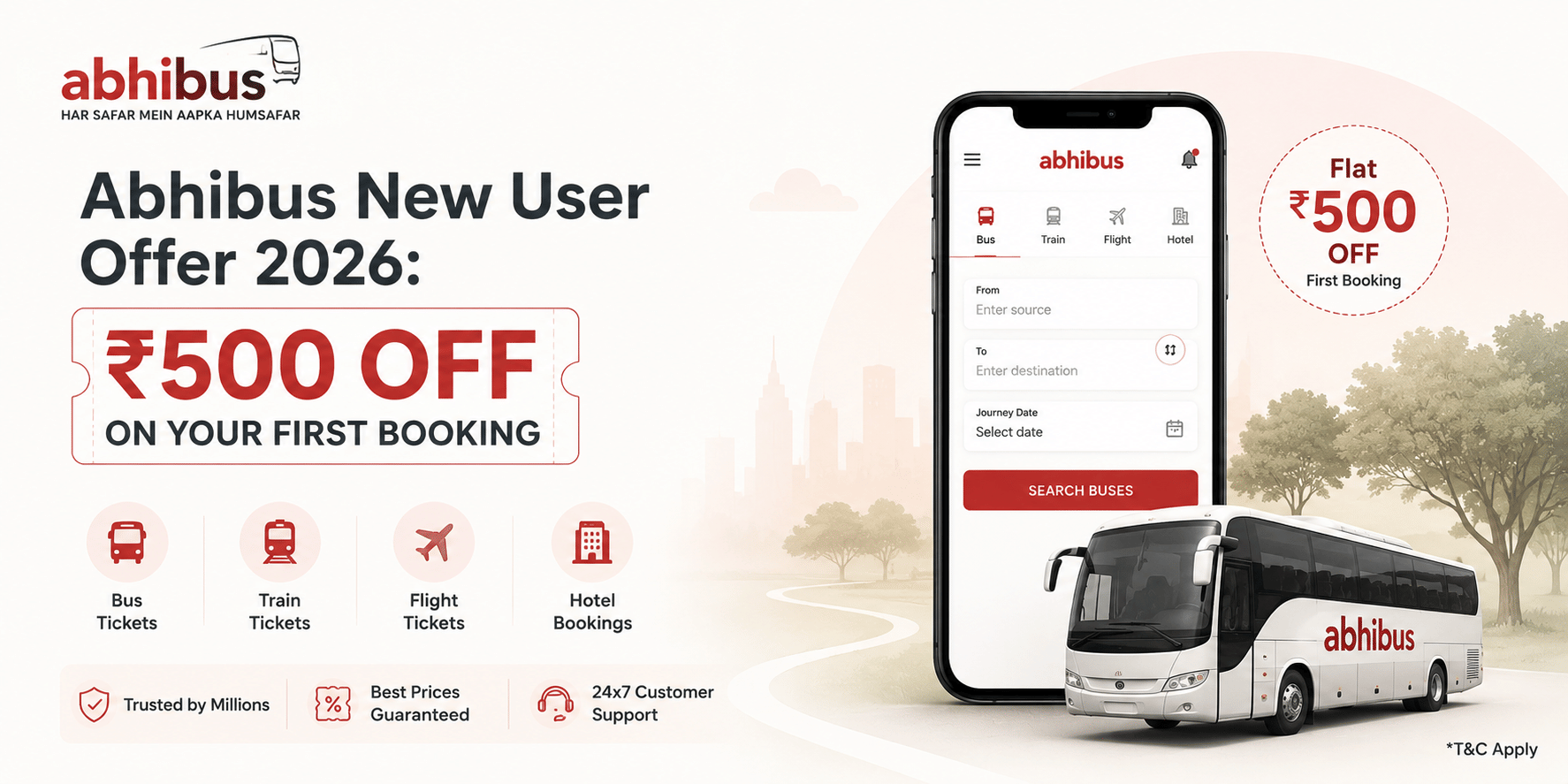
Abhibus New User Offer 2026: ₹500 Off First Booking Planning your first bus trip with AbhiBus? This 2026 guide covers the latest new user offer, including up to ₹500 off on first bookings, eligible routes, coupon code details, payment offers, and smart tips to save more on intercity bus travel. Compare deals, understand booking conditions, and make your first AbhiBus booking more affordable.
-

Expired Abhibus Coupons
- RS.250 OFF
FLAT RS.250 OFF ON BUS BOOKINGS
- RS.300 OFF
GET UP TO RS.300 OFF VIA SIMPL
- ZOOMIN
FREE PHOTOBOOK + 100% CASHBACK
- SANKRANTI GET LUCKY
WIN 1 LAKH CASH PRIZE
- APP & WEB
LENSKART GOLD MEMBERSHIP FREE
- DOUBLE DHAMAKA
RS.500 CASHBACK + RS.1000 HOTEL VOUCHER
- ALL CITIES
FLAT RS.450 OFF ON COOLWINKS
- APP & WEB
FLAT RS.500 CASHBACK: ALL USERS
- TAMIL NADU & KARNATAKA ROUTES
BUY 1 GET 1 FREE TICKET + 100% OFF ON NEXT RIDE
- FREE ABHIBUS VOUCHER
FREE BUS RIDES EVERYDAY
Details On Abhibus
How to use coupons
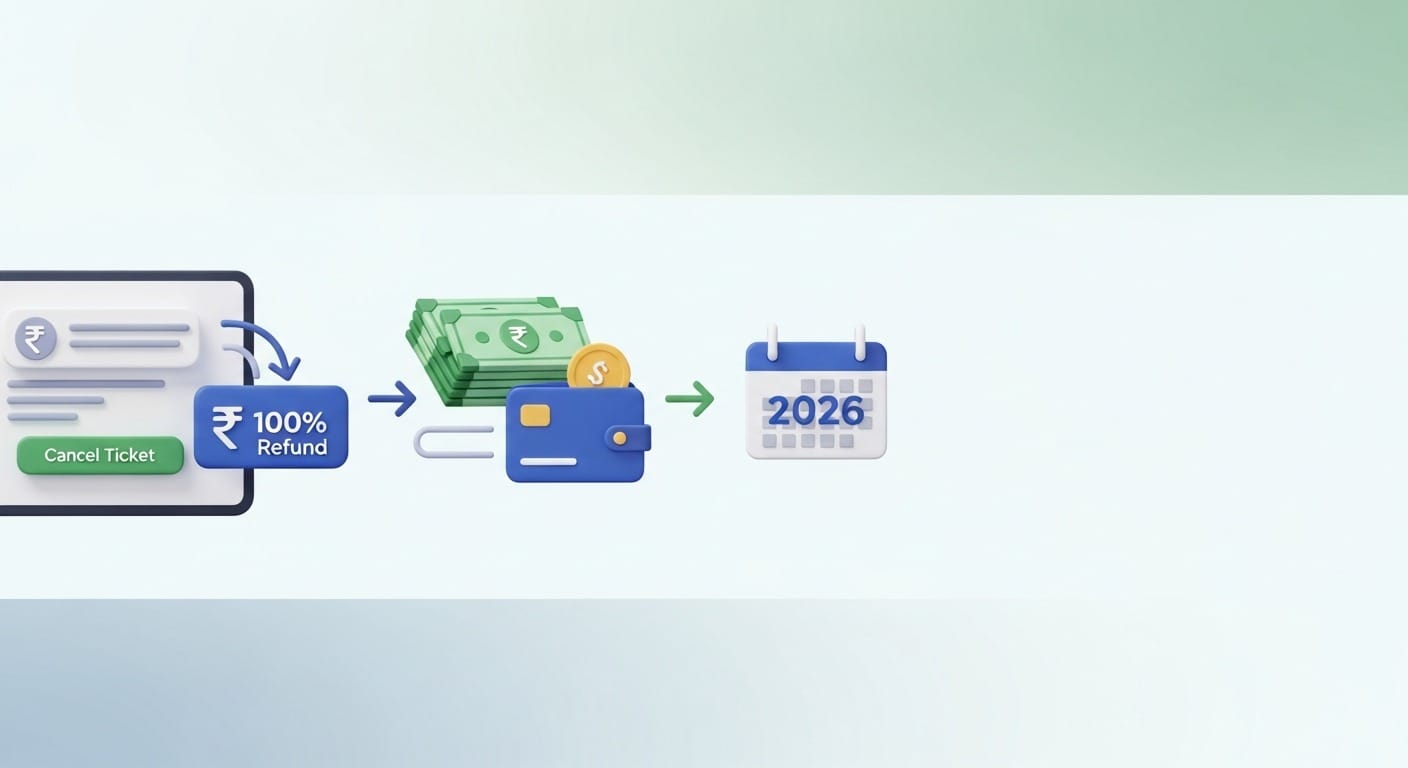
- Cancelled 48+ Hours Before Departure — Full refund (100% of ticket fare) to original payment method or instantly as AbhiCash to your in-app wallet
- Cancelled 24–48 Hours Before Departure — Partial refund (typically 50–75% depending on the bus operator); choose AbhiCash for a faster and often higher refund
- Cancelled Less Than 24 Hours Before Departure — Partial or no refund; refund percentage set by individual bus operator policy and shown at the time of booking
- AbhiCash Refunds — Credited instantly with no processing fee; valid for 6 months; usable on any future AbhiBus booking
- Bank/Card Refunds — 7–10 working days to reflect in your bank account or card statement; convenience fee (Rs. 20–50) not refunded
- Abhi Assured Seats — Up to 150% of your paid fare returned as AbhiCash regardless of how close to departure you cancel
- Non-Refundable Tickets — Some promotional fares on private operators are non-refundable; clearly labelled with a red Non-Refundable tag during seat selection
- Convenience Fee — AbhiBus platform convenience fee (Rs. 20–50 per booking) is non-refundable on all cancellations
AbhiBus Coupons & Promo Codes — July 2026
AbhiBus is India's fastest bus ticket booking platform — 6,50,000+ routes, 6,200+ bus partners, and a 4.8-star rating trusted by millions of travellers. Monsoon travel surges in July 2026: college re-openings, corporate returns, and weekend hill-station getaways are pushing bookings up across Kerala, Karnataka, Himachal, and the North-East corridors. New users can cut their first booking by up to Rs. 500 with code ABHIFIRST (app only), while RBL Bank cardholders save an additional Rs. 300 using RBL300. AbhiBus integrates directly with every major state RTC — APSRTC, TGSRTC, HRTC, Kerala RTC, UPSRTC, RSRTC — so you can compare government and private bus prices side-by-side and pick the cheapest seat. Bookmark this Zoutons page; all codes below are verified and updated for July 2026.
MONSOON TRAVEL FEST — July 2026
India's Peak Bus Season: Hill Stations, College Re-Openings & Home-Bound Journeys
6,50,000+ routes • 6,200+ bus partners • India's 4.8-star rated booking platform
Rs. 500
New User Saving
Code: ABHIFIRST (App)
BEST DEAL
50% OFF
RSRTC Buses
Rajasthan RTC Discount
150%
Max Refund
Abhi Assured Program
Rs. 300
RBL Card Saving
Code: RBL300
AbhiBus Coupon Codes & Offers — July 2026
| Discount | Offer Details | Code | Validity |
|---|---|---|---|
| Up to Rs. 500 Off | Rs. 500 off on first bus booking via AbhiBus app. New users only. Minimum booking Rs. 500. App exclusive. | ABHIFIRST | July 2026 |
| Up to Rs. 300 Off | Rs. 300 off on bus ticket booking using RBL Bank Credit Card. Minimum transaction Rs. 500. | RBL300 | July 2026 |
| Flat 15% Off | 15% off on all private bus bookings. Valid on orders of Rs. 400+. Excludes government RTC buses. | ABHICD | Jun 2026 |
| 10% + Rs. 200 Off | 10% off up to Rs. 200 with Visa Credit Card on bus ticket booking on AbhiBus. | VISACC | July 2026 |
| Rs. 200 Off | Flat Rs. 200 off with SBI Credit Card on all private and government bus bookings. | SBICAB | July 2026 |
| 15% Up to Rs. 250 | 15% off up to Rs. 250 with Tide Card. Valid for all users on private bus bookings via AbhiBus. | ABHITIDE | July 2026 |
| 10% Up to Rs. 200 | 10% off up to Rs. 200 with AU Bank Credit Card on bus booking via AbhiBus app or website. | BUSAU200 | July 2026 |
| 10% Up to Rs. 200 | 10% off up to Rs. 200 on bus booking with Visa Debit Card. No minimum booking value required. | VISADC | July 2026 |
| 10% Off | 10% instant discount when you pay via MobiKwik UPI. Valid on all private and government bus operators. | UPIMBK | July 2026 |
| Rs. 100 Off | Rs. 100 off on bus booking with SBM ZET Credit Card on AbhiBus platform. | ABHIZET | July 2026 |
State RTC Savings on AbhiBus — July 2026
AbhiBus is one of the only online platforms with direct booking integration for India's state government bus corporations. Government RTCs offer subsidised base fares — sometimes 20-50% cheaper than private operators on the same route — and AbhiBus adds its own discount on top. Book APSRTC Garuda Plus, HRTC Volvo AC sleepers, or RSRTC Gold Class directly on AbhiBus and save Rs. 300-500 more than you would on the state RTC's own website.
| State RTC | AbhiBus Discount | Key Routes | Best Service Class |
|---|---|---|---|
| APSRTC (Andhra Pradesh) | Up to Rs. 300 Off | Hyderabad — Vijayawada, Visakhapatnam, Tirupati | Garuda Plus, Indra AC |
| TGSRTC (Telangana) | Up to Rs. 300 Off | Hyderabad — Warangal, Karimnagar, Nizamabad | Metro Express, Palle Velugu |
| Kerala RTC (KSRTC) | Up to Rs. 300 Off | Thiruvananthapuram — Kochi, Kozhikode, Thrissur | Swift, Superfast, Garuda |
| HRTC (Himachal Pradesh) | Up to Rs. 500 Off | Delhi — Shimla, Manali, Dharamshala, Kullu | Volvo AC Sleeper, Deluxe |
| UPSRTC (Uttar Pradesh) | Up to Rs. 500 Off | Lucknow — Agra, Varanasi, Kanpur, Delhi | Jan Rath, Sangam, Vrindavan |
| RSRTC (Rajasthan) | 50% OFF | Jaipur — Udaipur, Jodhpur, Ajmer, Bikaner | Volvo, Gold Class, Platinum |
| GSRTC (Gujarat) | 10% Off | Ahmedabad — Surat, Vadodara, Rajkot, Bhavnagar | AC Volvo, Non-AC Express |
| OSRTC (Odisha) | 20% Off | Bhubaneswar — Cuttack, Berhampur, Rourkela | AC Semi-Sleeper, Deluxe |
| UTC (Uttarakhand) | Up to Rs. 300 Off | Delhi — Dehradun, Haridwar, Rishikesh, Nainital | AC Deluxe, Volvo |
Premium Private Operators on AbhiBus — July 2026
| Operator | AbhiBus Discount | Bus Type | Signature Routes |
|---|---|---|---|
| IntrCity SmartBus | 10% Off | Luxury Sleeper, Business Class | Delhi — Jaipur, Mumbai — Pune, Bengaluru — Mysuru |
| FlixBus India | 15% Off | Modern Coach, WiFi, USB Charging | Delhi — Chandigarh, Delhi — Agra, Bengaluru — Mangaluru |
| NueGo Bus | 10% Off | Electric AC Sleeper | Delhi — Lucknow, Hyderabad — Bengaluru, Jaipur — Mumbai |
| Leafy Bus | 15% Off (up to Rs. 75) | AC Semi-Sleeper, Seater | South India Corridors (Code: LEAFY15) |
Limited Period: Code ABHIBUSAC Valid Till July 30, 2026
Use code ABHIBUSAC for a flat discount on private bus bookings of Rs. 400 or more. Excludes government RTC buses. This code expires July 30, 2026 — book your monsoon travel before seats fill up on peak routes to Manali, Shimla, Munnar, and Coorg.
How to Save More on AbhiBus — July 2026
1. New Users: Always Download the App First and Use ABHIFIRST
The Rs. 500 new-user discount (code ABHIFIRST) is app-exclusive and will not work on the desktop or mobile website. Download the AbhiBus app, register with a fresh account, select your route, choose your seats, and enter ABHIFIRST at the coupon field on the payment page. On a Hyderabad-to-Bengaluru Volvo sleeper that costs Rs. 900-1,100, this brings your first booking to as low as Rs. 400-600. The code applies once per account, so use it on your longest or most expensive journey.
2. Stack a Bank Card Code on Top of the Operator Discount
AbhiBus lets you apply a promo coupon and then pay with a bank card that carries its own discount — both deductions apply. For example: apply SBICAB (Rs. 200 off) at the coupon field, then pay with your SBI Credit Card. You get the Rs. 200 coupon deduction plus the SBI card's own network discount if applicable. RBL Bank cardholders using RBL300 (Rs. 300 off) on an RSRTC booking already at 50% off can bring a Rs. 700 Jaipur-Udaipur ticket down to under Rs. 200.
3. Book Government RTC Tickets for the Cheapest Base Fare
State RTCs — APSRTC, TGSRTC, HRTC, Kerala RTC, UPSRTC — charge government-regulated fares that are 20-50% lower than private operators on the same route. A Hyderabad-to-Vijayawada APSRTC Garuda ticket costs around Rs. 350-450, versus Rs. 700-950 for a private luxury bus. AbhiBus integrates directly with these RTCs and adds Rs. 300-500 in its own discounts. You effectively pay public-transport pricing for a service with online seat selection and e-ticket delivery.
4. Use Abhi Assured for Monsoon Season Bookings
Monsoon floods can cancel or delay buses at short notice, especially on hill-station routes to Manali, Dharamshala, Munnar, and Coorg. Book seats marked with the Abhi Assured badge: if your trip is cancelled for any reason, you get back up to 150% of your fare as AbhiCash — meaning if you paid Rs. 800, you receive Rs. 1,200 in credit for your next booking. This turns an unavoidable cancellation into a bonus rather than a penalty.
5. Book HRTC Himachal Routes 7-10 Days Ahead
Delhi-to-Manali and Delhi-to-Shimla HRTC AC Volvo sleepers (Rs. 900-1,200) sell out 5-7 days ahead during peak monsoon weekends (July-August). AbhiBus gives up to Rs. 500 off HRTC tickets — but that discount only matters if a seat is available. Set a fare alert on the AbhiBus app for your travel dates, then book the moment seats open. The overnight sleeper from Delhi leaves around 6 PM and arrives by 7 AM, saving you a hotel night in addition to the bus fare discount.
6. Always Choose AbhiCash Over Bank Refund for Cancellations
When you cancel a ticket, AbhiBus asks whether you want an AbhiCash refund or a bank account refund. Always choose AbhiCash unless you are not planning to travel again within 6 months. Reasons: AbhiCash is credited instantly (versus 7-10 working days for a bank transfer), no convenience fee is deducted (the fee is still non-refundable, but AbhiCash does not lose additional value), and the credit can be combined with a fresh coupon code on your next booking. For Abhi Assured seats, AbhiCash gives you 150% back — there is no bank refund equivalent of that.
7. Compare Sleeper vs. Semi-Sleeper for Overnight Journeys
On 8-12 hour routes like Mumbai-Bengaluru, Delhi-Jaipur, or Hyderabad-Bengaluru, sleeper berths (Rs. 800-1,400) give a flat bed with privacy curtains. Semi-sleeper seats (Rs. 500-900) recline 140 degrees and cost 30-40% less. Use the AbhiBus seat map to pick Lower Berth Row 2-4 on a sleeper (fewer bumps than the rear, less noise than the front) or Window Seat in rows 3-6 on a semi-sleeper. For routes under 6 hours, a seater saves Rs. 200-400 with no meaningful comfort loss. Apply your bank code either way — the percentage discount is higher on the pricier berth.
AbhiCash vs. Abhi Assured — Which Refund Option Is Better?
| Feature | AbhiCash Refund | Abhi Assured |
|---|---|---|
| What It Is | Standard wallet credit on eligible cancellations | Premium refund protection on select seats/operators |
| Refund Amount | Up to 100% of cancellable fare | Up to 150% of ticket fare |
| Credit Speed | Instant | Instant |
| Validity | 6 months from credit date | 6 months from credit date |
| Processing Fee | None | None |
| Usable On | Any future AbhiBus booking | Any future AbhiBus booking |
| Best For | All users who will rebook within 6 months | Monsoon and peak-season travel |
Budget vs. Mid-Range vs. Premium Buses on AbhiBus
| Feature | Budget (Rs. 200-600) | Mid-Range (Rs. 600-1,000) | Premium (Rs. 1,000-2,000+) |
|---|---|---|---|
| Seat Type | Seater, Non-AC | AC Semi-Sleeper | Sleeper Berth, Luxury Cabin |
| Typical Operators | GSRTC, OSRTC, local private | NueGo, Leafy, FlixBus | IntrCity SmartBus, HRTC Volvo |
| Charging Port | Rarely | USB Port | USB + Power Socket |
| Live Tracking | No | Yes (App) | Yes (App) |
| Blanket & Pillow | No | Operator-Dependent | Included |
| Best AbhiBus Discount | 50% Off (RSRTC) | 15% Off (FlixBus) | Rs. 500 Off (ABHIFIRST) |
Bank & Payment Offers on AbhiBus — July 2026
| Bank / Wallet | Offer | Code | Card Type |
|---|---|---|---|
| RBL Bank | Up to Rs. 300 Off | RBL300 | Credit Card |
| SBI | Rs. 200 Off | SBICAB | Credit Card |
| AU Bank | 10% Up to Rs. 200 | BUSAU200 | Credit Card |
| Visa | 10% Up to Rs. 200 | VISACC | Credit Card |
| Visa | 10% Up to Rs. 200 | VISADC | Debit Card |
| Tide | 15% Up to Rs. 250 | ABHITIDE | Business Card |
| SBM ZET | Rs. 100 Off | ABHIZET | Credit Card |
| MobiKwik UPI | 10% Off | UPIMBK | UPI Wallet |
| Amazon Pay | Up to Rs. 100 Cashback | AUTO | Amazon Pay Balance |
| BHIM UPI | Up to Rs. 50 Cashback | AUTO | UPI App |
Payment Methods Accepted on AbhiBus
| Category | Accepted Options |
|---|---|
| Credit Cards | Visa, Mastercard, RuPay, Amex, RBL, AU Bank, SBI, Tide, SBM ZET |
| Debit Cards | Visa, Mastercard, RuPay — All major Indian banks |
| UPI | Google Pay, PhonePe, BHIM, MobiKwik UPI, Paytm UPI, Amazon Pay UPI |
| Digital Wallets | Amazon Pay, MobiKwik, Paytm Wallet |
| Net Banking | SBI, HDFC, ICICI, Axis, Kotak, Punjab National Bank and all major banks |
| AbhiCash Wallet | In-app credit from refunds and cashback — combinable with coupons |
AbhiCash & Abhi Assured — Loyalty & Refund Programs
| Program | Benefit | How to Activate | Where to Use |
|---|---|---|---|
| AbhiCash | 100% Refund as Credit | Cancel ticket → choose AbhiCash at refund step | Any bus, flight or hotel on AbhiBus (valid 6 months) |
| Abhi Assured | Up to 150% Back | Book seats with the Abhi Assured badge in search results | AbhiCash credit — use on next booking (valid 6 months) |
AbhiBus Cancellation & Refund Policy
Download the AbhiBus App
The AbhiBus app unlocks exclusive discounts unavailable on the website — including the ABHIFIRST new-user code worth Rs. 500 off. The app also gives you live bus tracking, seat availability alerts, instant e-ticket access, and one-tap AbhiCash wallet management. Available on Android and iOS.


Contact & Customer Support
| Channel | Contact | Availability |
|---|---|---|
| [email protected] | 24/7 (Response within 24 hours) | |
| Help Centre | abhibus.com/contactus | 24/7 self-service |
| In-App Chat | AbhiBus App → My Bookings → Help | 24/7 |
| Ticket Management | abhibus.com → My Tickets (login required) | 24/7 self-service |
AbhiBus on Social Media


Frequently Asked Questions — AbhiBus
How do I apply a coupon code on AbhiBus?
Search for your route on the AbhiBus app or website, select seats, and proceed to the payment page. You will see a "Have a promo code?" or "Coupon Code" field — enter the code (e.g., ABHIFIRST, RBL300, SBICAB) and tap Apply. The discount deducts instantly from the total before you pay. Only one promo coupon applies per booking, but you can still pay with a bank card that carries its own separate network discount (e.g., enter SBICAB as the coupon, then pay with SBI Credit Card).
Does ABHIFIRST work on the website or only the app?
ABHIFIRST is app-only and will not work on the desktop or mobile website. Download the AbhiBus app from Google Play or the App Store, create a new account, book any bus ticket of Rs. 500 or more, and enter ABHIFIRST at the payment step to deduct up to Rs. 500. This code works once per user account and is exclusively for first-time app bookings.
Can I book government RTC tickets on AbhiBus?
Yes. AbhiBus has direct integration with APSRTC, TGSRTC, Kerala RTC (KSRTC), HRTC, UPSRTC, RSRTC, GSRTC, OSRTC, and UTC. These government bus bookings appear in the same search results as private operators. AbhiBus-specific discounts (Rs. 300–500 off depending on the RTC) apply to most state bus tickets and are often higher than what the RTC's own booking portal offers.
What is AbhiCash and how do I use it?
AbhiCash is AbhiBus's in-app refund wallet. When you cancel a ticket and choose "AbhiCash" instead of a bank refund, the credit appears in your wallet within minutes. This credit is valid for 6 months and can be applied on any future bus, flight, or hotel booking on AbhiBus. You can use AbhiCash alongside a coupon code — the coupon deducts first, and AbhiCash covers the remaining amount.
What is Abhi Assured and which buses offer it?
Abhi Assured is a premium refund protection program on select seats. When you book an Abhi Assured seat, you receive up to 150% of your ticket fare back as AbhiCash if you cancel — regardless of how many hours before departure you cancel. This is especially useful during monsoon, when road conditions or weather can force last-minute cancellations. Look for the Abhi Assured badge (green icon) next to seat options in search results.
Is live bus tracking available on AbhiBus?
Live tracking is available for most private operators and several state RTCs on the AbhiBus app. After confirming a booking, go to My Bookings in the app and tap "Track Bus" — this button activates roughly 30 minutes before scheduled departure. You can see the bus's real-time location, estimated arrival, and distance from your boarding point. This feature is particularly useful on overnight routes where the bus reaches your stop in the early morning hours.
How long does a refund take after cancellation on AbhiBus?
AbhiCash refunds are instant — credited to your in-app wallet within minutes of cancellation. Bank or card refunds take 7–10 working days to reflect in your account. The AbhiBus platform convenience fee (Rs. 20–50 per booking) is deducted from any refund and is non-refundable. If you booked using AbhiCash wallet balance, that amount also returns to AbhiCash, not to a bank account.
Can I modify my AbhiBus ticket after booking?
AbhiBus does not currently support direct seat or date modification on confirmed tickets. To change a journey date or route, you must cancel your existing booking (and receive an AbhiCash or bank refund based on the cancellation policy) and then make a fresh booking with the new details. The AbhiCash refund from the cancellation can be immediately applied to the new booking, making the process cost-neutral if the new fare is similar.

Steps To Use Abhibus Coupon Codes
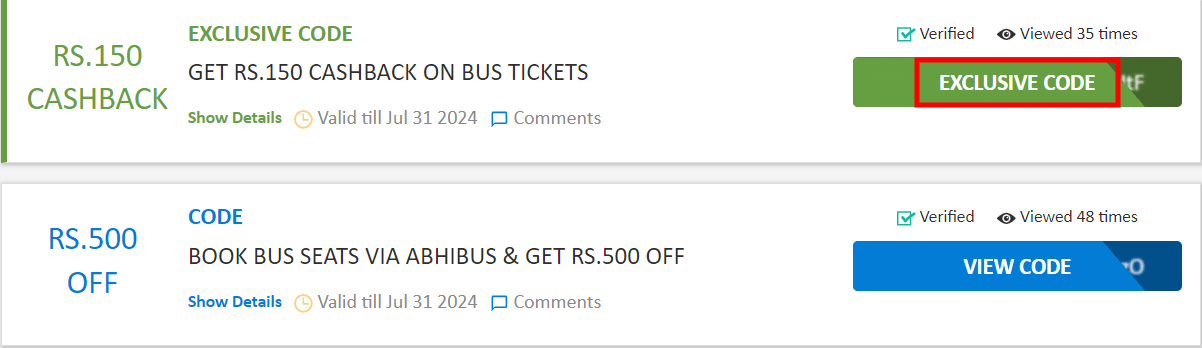
Step 1: Visit Zoutons and click on the Abhibus coupon code.
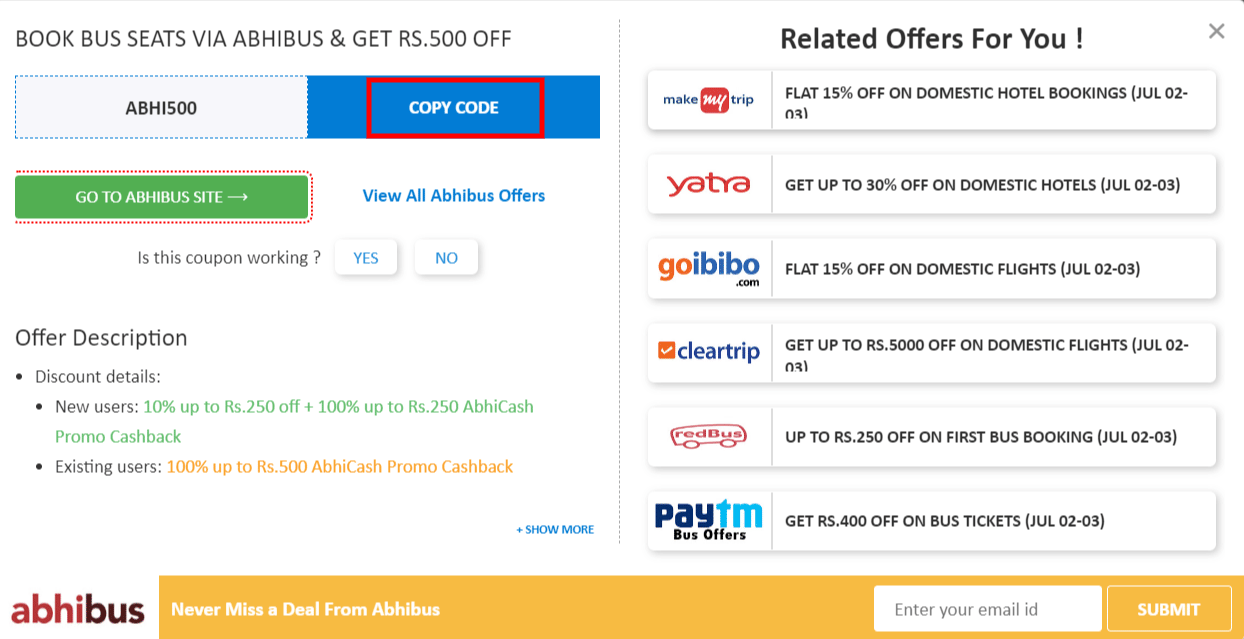
Step 2: Click on the "Copy Code" button
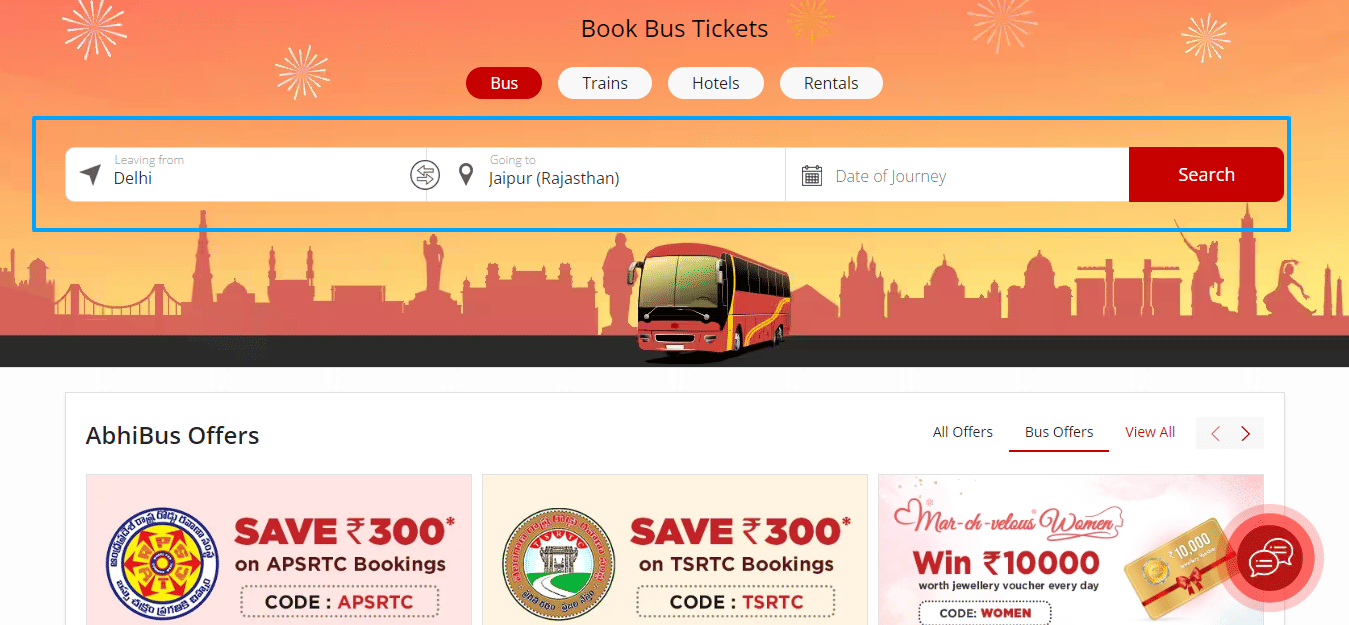
Step 3: Provide your details for the journey and search for the available buses on that route
Step 4: Select your seat and mention further details
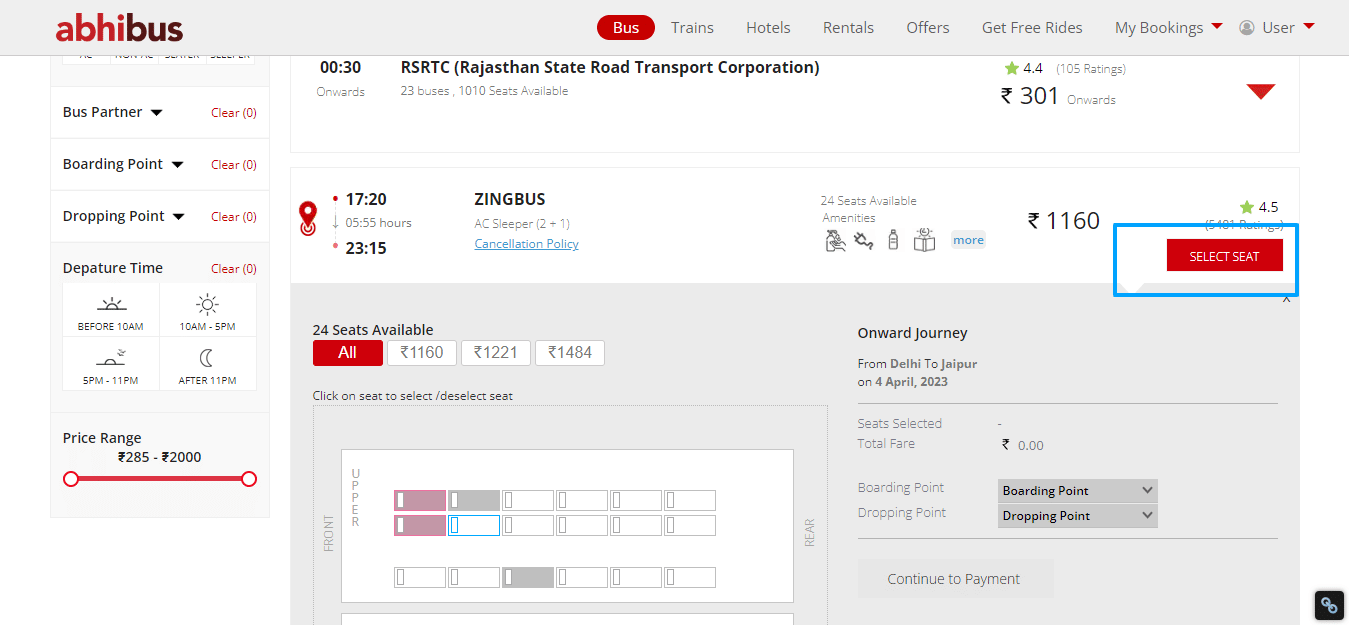
Step 5: Review your journey details
Step 6: Apply the coupon code

Step 7: The discount has been applied. Now complete your payment and booking.